

As a reader of the Tico Times, you are probably aware that Costa Rica is a country known for many things. Lush scenery, beautiful natural wonders, amazing people, and rich culture.
But one of the most popular things about Costa Rica is its coffee. Costa Rica was the first country in Central America to grow and process coffee for commercial purposes. In fact, the country produced coffee so well that it boosted its economy to a point where farmers didn’t want to grow coffee anymore.
And one of the things Costa Rican coffee was most famous for was the ways they were processed. Because of how the climate is in Costa Rica, coffee can be processed using a couple of different methods.
In this article, we’re going to take a close look at each of these techniques and the effects it has on the coffee in Costa Rica.
THE 3 MAIN TYPES OF COFFEE PROCESSING
The three common ways that coffee is processed in Costa Rica are the natural method, the washed method, and the honey method. There are other, less used ways of processing coffee such as wet hulled but that done is mostly done in Indonesia.
The Natural Method
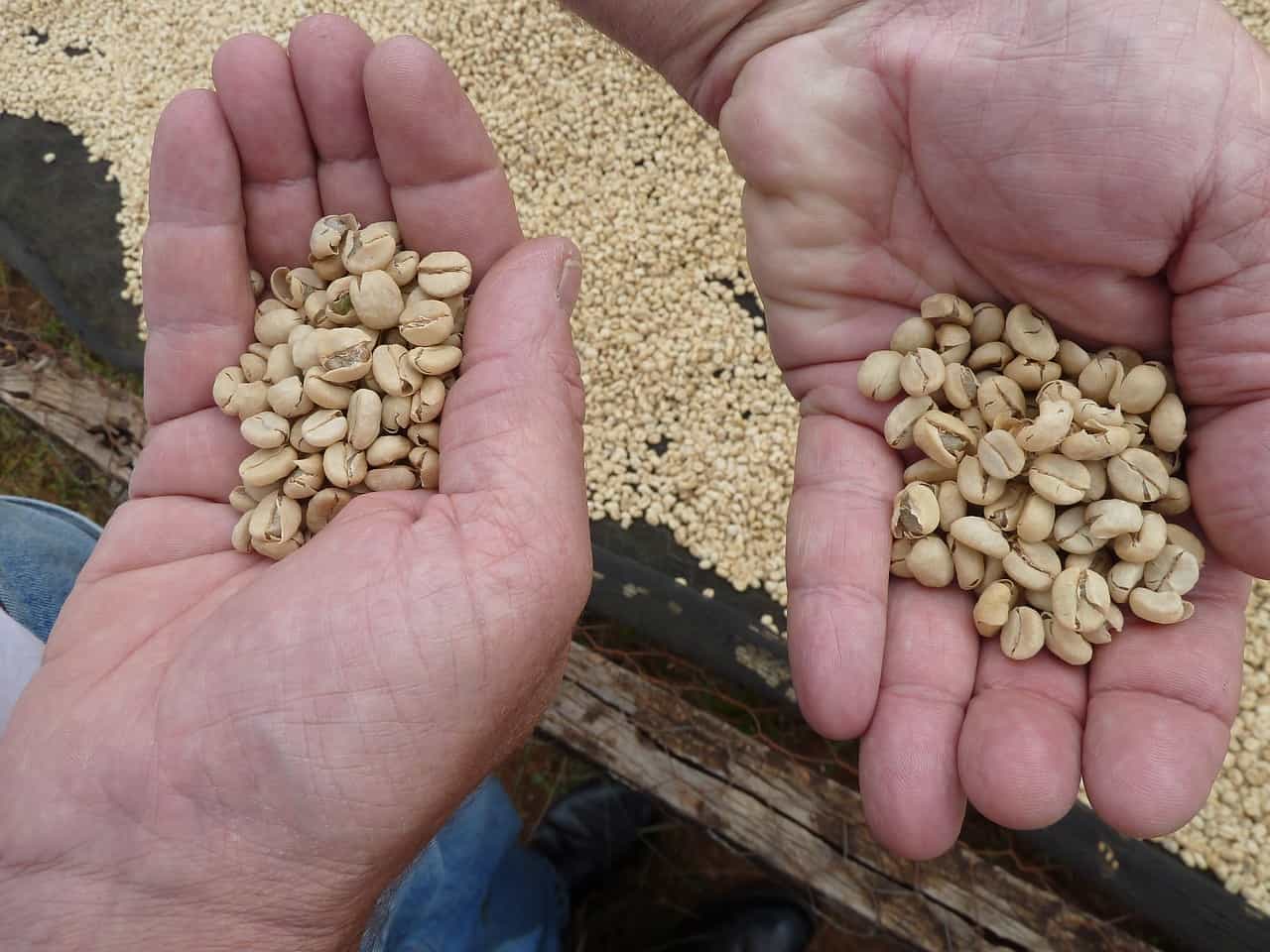
This is the oldest way to process coffee. And it’s also one of the simplest. When using this method, farmers will get freshly harvested coffee cherries and spread them out on beds under the sun. This dries the cherry very well, but it takes a lot of time and effort to do properly.
On average, it will take around 35 days for the coffee cherries to reach the desired moisture level of 11%, and to make sure the cherries are dried evenly, they have to be flipped, rotated, and covered at night.
While this method is the most time consuming and arduous one, the result is well worth it. The natural method will allow the flavors and sugars from the cherry and the skin to be absorbed by the coffee bean, resulting in a very complex flavor profile.
Costa Rica is one of the only countries where this method can be used as the country has very low humidity levels. For best results, the cherries have to be perfectly ripe when picked.
The Washed Method
This is the most common process used for coffee and is actually used around the world. When the cherries are harvested, the pulp has to be separated from the bean. From there, the beans get sorted out by size and weight, all while passing through large water drums. Once they are separated, they are then moved into a fermentation tank filled with water where the beans will stay until the mucilage has completely dissolved.
This takes anywhere from 12 to 48 hours, and after that, the beans are then dried out either by machine or a good old fashioned sunning. This process will result in a very balanced flavor profile and only takes about a week to complete. It’s because of this that coffee makers usually choose the washed method as their favorite way of processing coffee.
The Honey Method
This is a fairly rare method, but it’s one that is used commonly in Costa Rica. This method requires a lot of precision and expertise to get right. The term “Honey Method” doesn’t come from actual honey. The “honey” that’s being referred to in this method actually means the mucilage layer of the bean. This layer is usually slimy and thick, which is why it’s called honey.
To process coffee using this method, the harvested cherries need to pulped. That means separating the pulp from the bean. However, unlike the washed method, you have to leave some of the mucilage on the bean. After that, the beans are laid out on a bed and dried for 10-15 days.
The result of this process is a bean that has more acidity than when the natural method is used but less than when the beans are washed. This unique balance is what makes this method very popular amongst coffee aficionados, and you can see this method used to process a lot of the beans in Central America, especially Costa Rica.
Final Thoughts
And that’s about it for the coffee processing techniques used in Costa Rica. All of these three techniques are used by different farmers to acquire different results. If you want a complex flavor, naturally processed beans might be the way to go.
If you want something more acidic, washed coffee beans will probably serve you best, and if you want a balanced profile, than you should definitely go for coffee processed using the honey method.
But if you find yourself in Costa Rica, you have to make sure to try their coffee, regardless of how it was processed, because it’s some of the best coffee you’ll find on the planet!





