

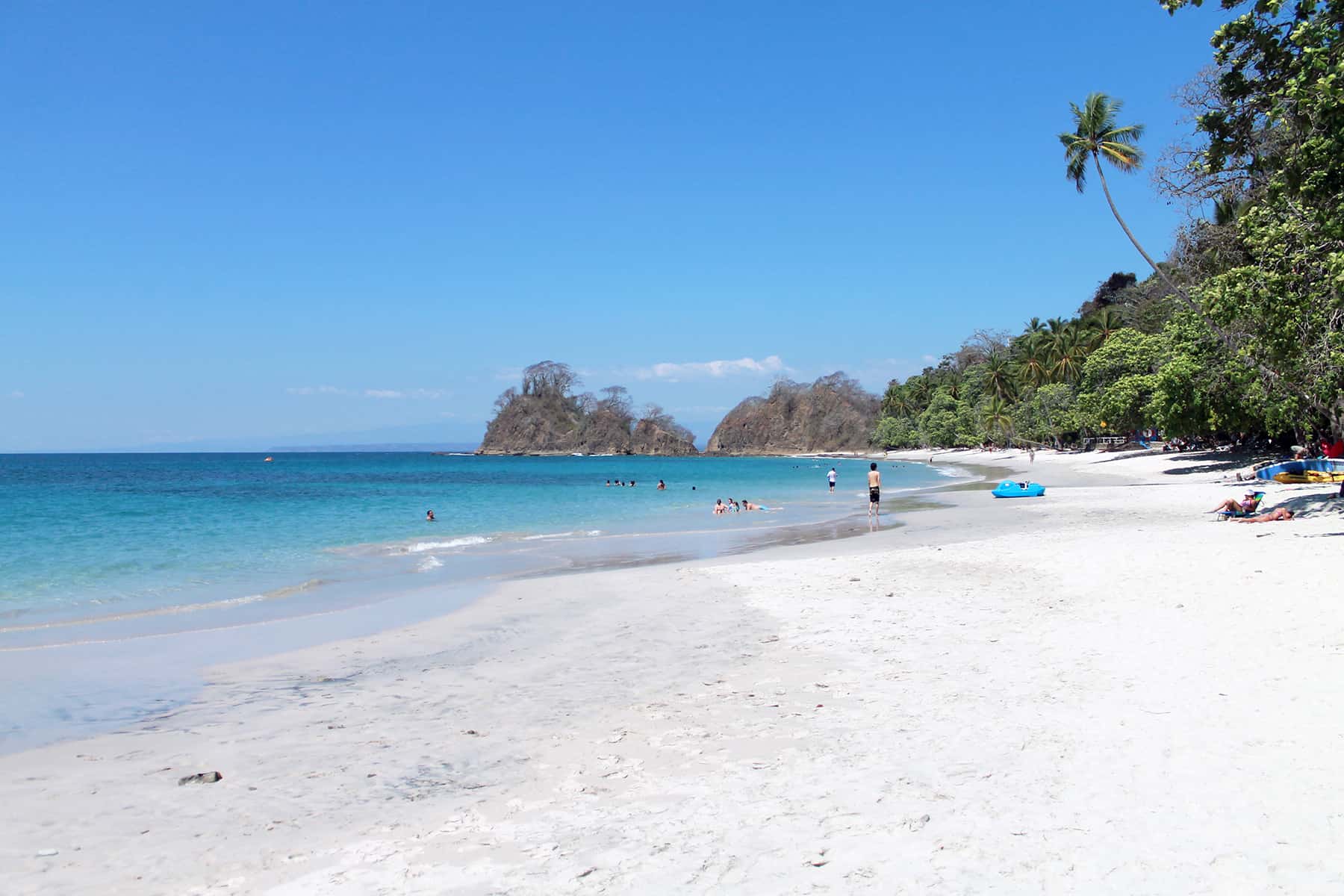
Garabito Mayor Francisco González has questioned how roads, terraces and other structures were built at Playa Blanca, a beach southwest of Punta Leona on Costa Rica’s Central Pacific coast that has been protected as a marine wetland since 1994. He spoke from the beach two days after the Contentious-Administrative Court provisionally suspended visitor and vehicle access to the Playa Blanca Marine Wetland.
In the order, Judge Víctor Orozco Solano found that the request met the threshold of necessity and extreme urgency given the potential harm to the right to a healthy environment. The suspension remains in effect while the case proceeds, and the Environment and Energy Ministry (MINAE) and the National System of Conservation Areas (SINAC) must determine through a scientific carrying-capacity study how many people and vehicles the wetland can receive without damage.
The order responded to a request from environmental lawyer Walter Brenes, who argued that the wetland still lacks a management plan and a carrying-capacity study more than three decades after its designation. In late August, the Constitutional Chamber upheld a separate appeal filed by Brenes and gave MINAE and SINAC 12 months to produce a General Management Plan for the wetland, which is home to seagrass beds, corals, parrotfish and sea turtles.
Brenes has argued that visitation and environmental damage increased after the municipality opened access to the beach in June. That month, municipal crews removed the gate that controlled passage through the Punta Leona resort, with González arguing that the road had been declared a public street in 2001. Punta Leona maintains that the route crosses private land, and the dispute over the road remains before the courts.
After the opening, González announced plans for a concert and other activities at Playa Blanca, prompting concern among some neighbors about the impact of large, noisy events on marine life. In his remarks at the beach, González asked why structures had been built there if the site had been a marine wetland since 1994. He said he does not know precisely how much territory the designation covers, or whether it applies only to the sea or also reaches the public strip of the maritime-terrestrial zone.
Under Costa Rica’s Maritime-Terrestrial Zone Law, the first 50 meters (164 feet) inland from the high-tide line form a public zone where private occupation and construction are generally prohibited. González pointed to terraces, infrastructure and an access road serving nearby condominiums that, according to him, lie within that 50-meter strip.
He also referred to structures built along the cliff above the beach. If SINAC and MINAE are obligated to protect the wetland, he asked, under what permit had anyone built on the ground where he was standing.
González directed part of his criticism at his own institution, saying the law clearly bars construction in public areas. He described his comments as almost a self-accusation, stating that municipal administrations at least two or three decades ago had allowed what he called brazen construction in the public zone.
The mayor drew a line between the wetland designation and the separate dispute over the access road, saying the opening of the road has nothing to do with the wetland. If SINAC decides to close the beach, he said, it should close the beach and not the road that leads to the homes.
In the same remarks, however, González acknowledged that the road’s location raises its own legal question. He said he wonders whether it can remain open if it lies within the 50-meter zone, which he said it does. González closed by criticizing what he described as a habit of blaming the general public, and Costa Ricans in particular, for disorder at Playa Blanca. He said bonfires, concerts and mansions hanging over the public zone deserved at least as much scrutiny as ordinary use of the beach.
Neither MINAE nor SINAC had publicly responded to the mayor’s remarks as of publication. Punta Leona has previously said it does not block public access to Playa Blanca. For now, the court order keeps Playa Blanca closed to visitors and vehicles until the carrying-capacity study is completed or the court rules otherwise.





