

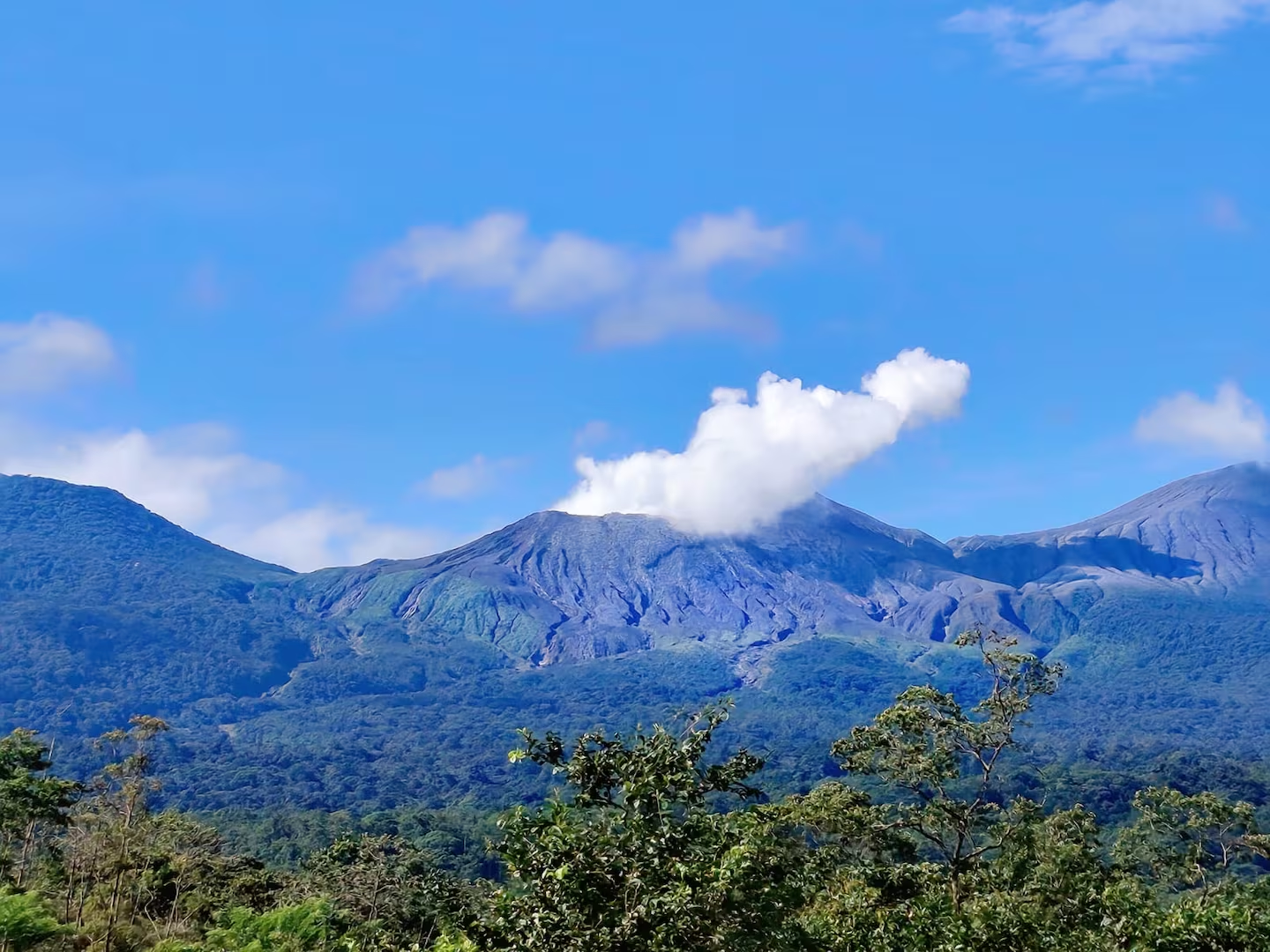
Rincón de la Vieja volcano continued producing small eruptions and releases of gas today, a day after a moderate eruption sent a plume as high as 2,000 meters, or about 6,560 feet, above the crater. Costa Rica’s Volcanological and Seismological Observatory (OVSICORI) said today that several small eruptions and exhalations had been recorded during the previous 24 hours. The volcano remains at Activity Level 3, or Precaution, meaning its behavior is above normal and authorities continue to watch it closely.
The most significant recent eruption occurred at 12:44 a.m. yesterday when OVSICORI measured it at an acoustic magnitude of 3.9, which refers to the strength of the pressure wave produced by the explosion rather than the earthquake magnitude scale most people are familiar with.
OVSICORI volcanologist Cyrill Müller said the eruption produced a plume that rose between 1,000 and 2,000 meters above the crater and consisted mainly of water vapor but no lahars were produced during that eruption. Lahars are fast-moving flows of water, mud, rocks and volcanic debris that can travel down rivers and ravines around the volcano. They are one of the main concerns for communities on the northern side of Rincón de la Vieja, particularly during periods of heavy rain.
The volcano has been going through a particularly active stretch since early July. OVSICORI counted 249 steam-driven eruptions between July 2 and September 19, with nine producing lahars along rivers on the volcano’s northern side. These steam-driven, or phreatic, eruptions happen when underground water is heated rapidly by the volcano and turns to steam. Pressure builds until it is suddenly released, sometimes throwing hot water, rocks, gas and other material from the crater.
Three moderate eruptions were recorded on September 18, 21 and 23. Their acoustic magnitudes dropped from 4.7 to 4.2 and then 3.9, although OVSICORI has not said that the decrease means the current period of activity is ending. Scientists who visited the crater this week also worked to repair a MultiGas monitoring station. The equipment measures carbon dioxide, hydrogen sulfide and sulfur dioxide, gases that help specialists track changes inside the volcano.
Today’s report showed that gas continues to escape steadily from the crater, with occasional stronger bursts. Instruments are also detecting continuing volcanic tremor, or vibration beneath the volcano. Sulfur dioxide measurements have remained relatively low for several days.
The increased activity has already led Costa Rica’s National Emergency Commission to place parts of Liberia and Upala under a green alert. Authorities have urged residents and visitors to be particularly careful around rivers and streams draining the volcano because lahars can arrive quickly following an eruption or heavy rain.
Rincón de la Vieja, in northern Guanacaste, is one of our most active volcanoes. OVSICORI continues monitoring it with seismic instruments, gas sensors, acoustic equipment, cameras and field visits as the current stretch of activity continues.





