

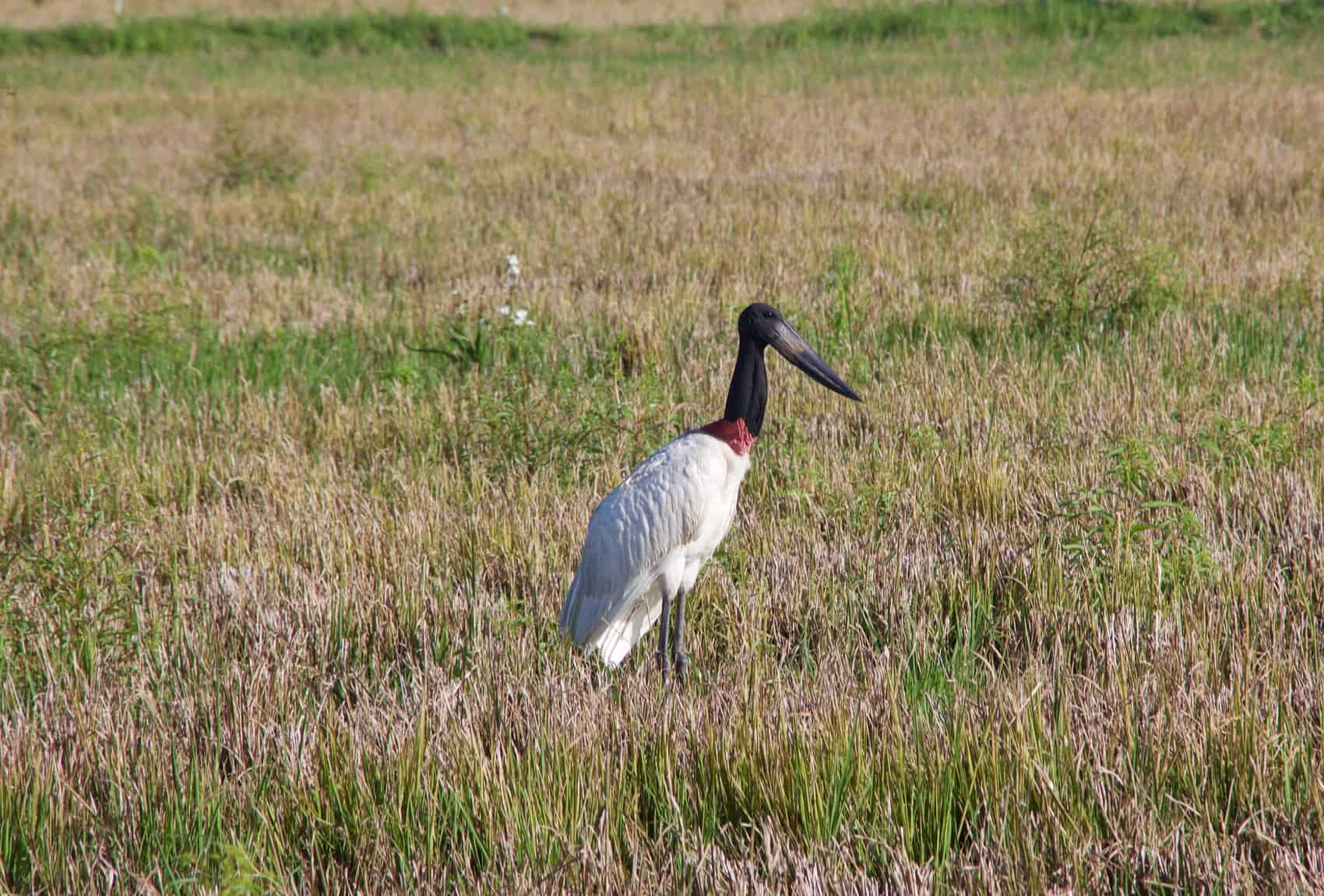
Costa Rica’s latest national jabiru count recorded nine active nests and 19 chicks during the 2026 breeding season, offering cautious hope for one of the most threatened wetland birds here. The monitoring also produced a minimum population estimate of 148 jabirus in Costa Rica.
Researchers reached that figure by inspecting historic nesting locations and conducting simultaneous counts across the Tempisque and Frío river basins, the species’ two principal habitats. The jabiru (Jabiru mycteria) is Costa Rica’s largest stork. Its white body, black head and neck, and distinctive red throat make it one of the most recognizable birds found in the wetlands of Guanacaste and the Northern Zone.
The new numbers suggest that Costa Rica continues to support an active breeding population. However, the count represents a minimum estimate rather than a complete population total, and researchers have not described the results as evidence that the species is out of danger.
The findings form part of the Ecology and Conservation of the Jabiru in Costa Rica project, which has monitored the bird for more than three decades. The long-running research provides annual information about nesting activity, breeding success, population size and the condition of the wetlands on which the species depends.
Monitoring takes place through two complementary programs. During the Jabiru Expedition in February, researchers inspect every nesting site recorded historically in Costa Rica to determine which nests are active. Separate counts are then conducted on the first Saturdays of March and April at lagoons and other observation points throughout the Tempisque and Frío river basins.
Combining the two methods helps researchers determine how many pairs reproduced successfully while also producing a broader estimate of the number of jabirus present during the breeding season. The birth of 19 chicks is particularly important because reproductive success can provide an early indication of whether the population is stable enough to replace older birds. Nest counts also help conservationists identify areas where human activity, fires or habitat damage could place breeding pairs at risk.
Costa Rica’s wetlands appear to play a wider regional role beyond supporting resident breeding birds. In May, researchers recorded at least 100 non-breeding jabirus gathered at Laguna Jicote in the Tempisque River basin. The birds remained for only several days before leaving Costa Rica again.
The temporary gathering indicates that wetlands in northern Costa Rica provide feeding and resting habitat for jabirus arriving from other parts of the region. Their movements remain less understood than those of the country’s breeding population, but the observation reinforces the ecological importance of protecting connected wetland areas.
Much of that protection will depend on private landowners. More than 75% of Costa Rica’s known jabiru nests are located on privately owned land rather than inside national parks or other protected areas. Farms and rural properties often contain the tall trees the birds use for nesting, placing landowners in a central conservation role.
Protecting a nest may require preserving the nesting tree, limiting disturbances during the breeding season and controlling fires near wetlands. Responsible tourism is also important because excessive noise or people approaching nests can disturb adult birds and place chicks at risk.
The principal threats identified through long-term monitoring include the destruction and degradation of wetlands, the cutting of nesting trees, forest fires, uncontrolled tourism near breeding sites and the effects of climate change. These pressures mean the latest figures should be viewed as encouraging but not definitive evidence of a lasting recovery.
The jabiru is considered an indicator of wetland health because it requires extensive feeding areas, suitable water conditions and large trees for nesting. Measures that protect the bird therefore also help conserve wetlands used by fish, reptiles, mammals and numerous other bird species.
Costa Rica’s nine active nests and 19 chicks provide a positive snapshot of the 2026 breeding season. Maintaining that progress will depend on whether the country can protect wetlands and nesting trees both inside and outside its formally protected areas.





