

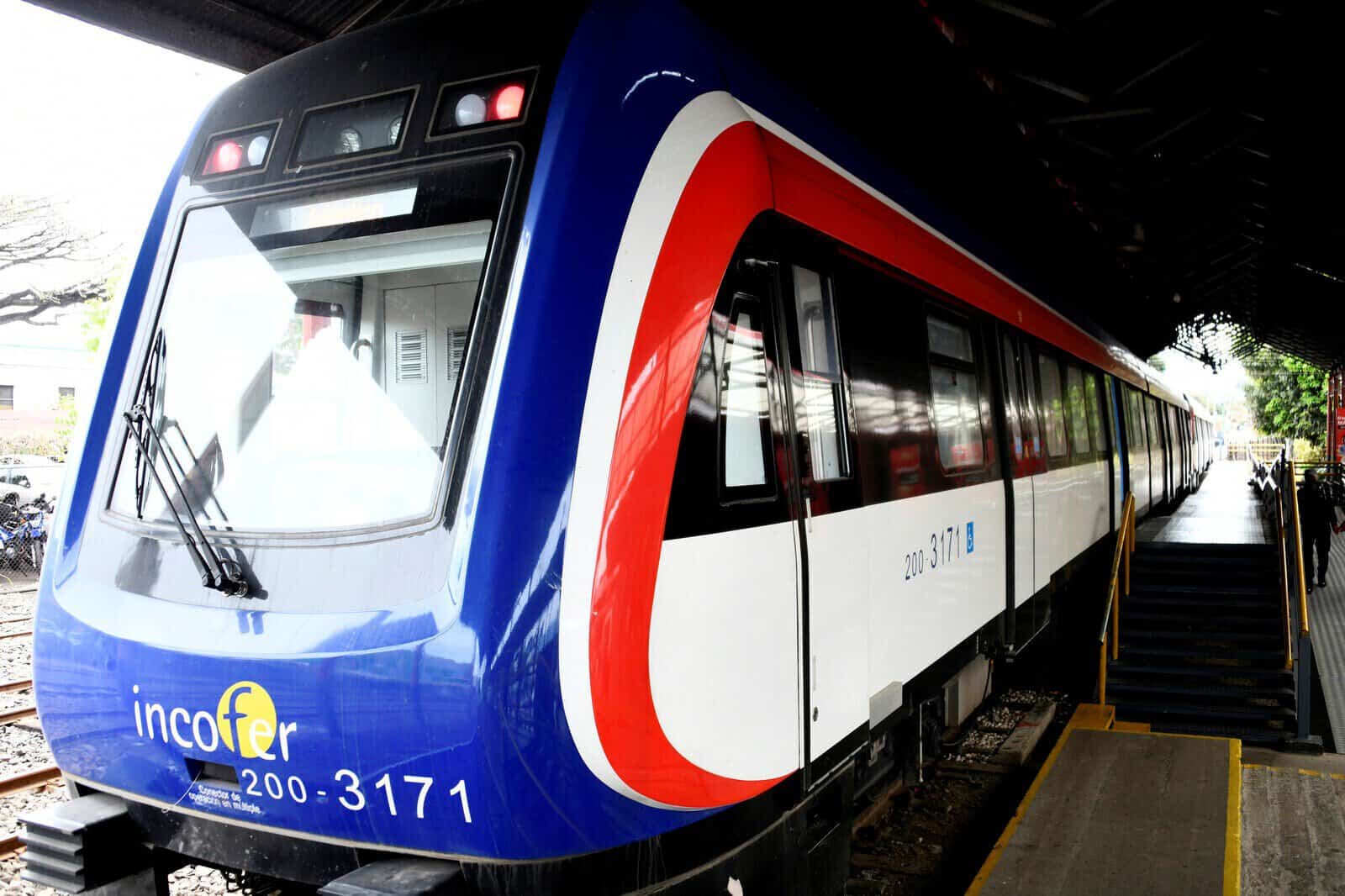
Costa Rica’s national railway institute is pushing to link the country’s trains, buses, and taxis into a single coordinated network, a plan its backers say could finally give commuters in the capital region a faster alternative to sitting in traffic.
The Instituto Costarricense de Ferrocarriles (Incofer) is promoting what it calls an intermodal public transport system, designed so that different modes of travel connect smoothly rather than competing for the same passengers. The aim is to shorten travel times and improve mobility across the Greater Metropolitan Area, the densely populated ring of cities spanning San José, Alajuela, Heredia, and Cartago where most of the chronic congestion is concentrated. Incofer is developing the scheme alongside the Cámara Nacional de Transportes (Canatrans), the national transport chamber that represents the country’s bus operators.
The plan is built around the Tren Eléctrico de Pasajeros, the electric passenger train that Incofer intends to make the backbone of public transport in the region. Under the proposal, buses would operate as feeder routes, carrying passengers from their neighborhoods to nearby rail stations, where they could transfer and continue by train to destinations elsewhere in the metropolitan area.
Taxis and other services would handle the shorter first- and last-mile connections at either end of a journey. Incofer and Canatrans argue that coordinating routes this way would cut the wasteful duplication that has buses and trains running parallel to one another today, and make transfers quick enough that public transport becomes a real option for people who now drive.
Technology is central to the pitch. The project envisions tools that would let a passenger plan a full trip across several modes at once, potentially including unified payment and real-time information on routes, schedules, and fares, so that moving from a bus to a train feels like one continuous journey rather than a series of disconnected legs.
Canatrans has framed the effort as a way to reduce dependence on private vehicles, which it identifies as one of the main drivers of the region’s gridlock. With Costa Rica recently ranked among the worst countries in the world for traffic, authorities hope that drawing more commuters onto a coordinated public network would ease that pressure over time.
The intermodal plan rests on a project that has moved unusually fast this year after decades of false starts. In May the Legislative Assembly approved the international financing for the electric train, tracked under file number 25.291, and President Laura Fernández Delgado signed the financing law shortly afterward. Incofer executive president Álvaro Bermúdez Peña called the approval a historic step toward a modern, efficient transport system.
The financing package draws on international lenders that include the Central American Bank for Economic Integration, the European Union, and the Green Climate Fund. As designed, the system would run along roughly 52 kilometers (32 miles) of double electrified track connecting the four Greater Metropolitan Area provinces, add a fleet of new electric trains, and lift daily ridership from about 16,000 passengers today toward a target of 100,000.
As of now, the intermodal component remains a framework rather than a finished plan. Neither Incofer nor Canatrans has published implementation timelines, the investment required to reorganize bus routes, or the locations of the transfer points where the connections would happen. Both institutions maintain, however, that no amount of new rail infrastructure will relieve congestion on its own, and that the trains only deliver on their promise if the buses and taxis around them are organized to feed passengers in and out.





