

Costa Rica’s Traffic Police have begun enforcing license and registration rules for “bicimotos,” the small motorized two-wheel vehicles that have become common on city streets and delivery routes across the country.
The move follows an internal Traffic Police instruction sent June 11 to national and regional traffic chiefs. The 16-page document tells officers how to apply existing traffic rules to motorcycles with pedals and similar vehicles, ending the perception that many of these units can circulate like regular bicycles.
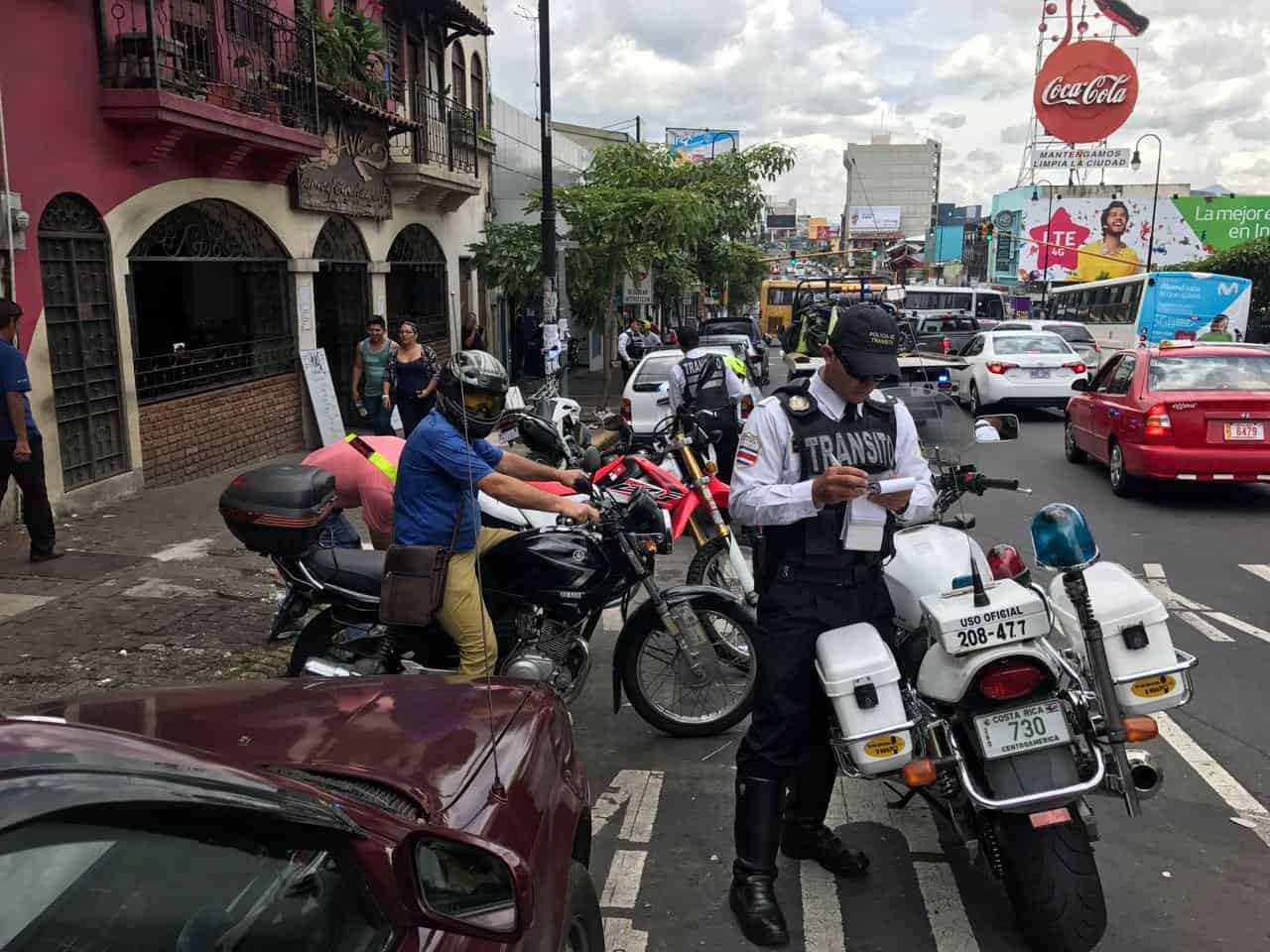
The first focused operation took place Monday near Plaza González Víquez in San José, where authorities seized six bicimotos. Officials said enforcement will be gradual, rather than through permanent checkpoints aimed only at bicimotos, but drivers are now expected to bring the vehicles into compliance.
Under the instruction, a vehicle is not considered a bicycle if it has an electric, combustion or hybrid motor that can move it without direct and continuous pedaling. In practice, that means many vehicles sold or used as bicimotos may be treated as motor vehicles, even if they still have pedals.
Drivers must carry the proper license. For common low-cylinder combustion models up to 125 cc, authorities cited the A-1 motorcycle license category. Vehicles that qualify as motor vehicles also must be registered, carry a license plate, have the annual marchamo, Costa Rica’s mandatory road circulation payment and insurance, and pass technical vehicle inspection.
The rule does not erase the distinction between bicimotos and pedal-assisted bicycles. Bicycles that still depend on human pedaling and use a motor only for assistance are treated differently. Those vehicles do not require a driver’s license or technical inspection, although riders must still follow safety requirements such as using a helmet, reflective gear and lights at night.
The issue has been building for years. Bicimotos have grown popular because they are cheaper than motorcycles and are widely used for delivery work and short urban trips. But officials have warned that some models were operating in a legal gray area, without plates, inspection, insurance or licensed drivers.
Safety concerns also pushed the discussion. Earlier reviews cited reports of more incidents involving motorized bicycles and bicimotos in areas such as Pococí, Puntarenas, Guanacaste and the Zona Norte. Fire officials warned about improvised motors with fuel leaks and poor electrical connections, while Traffic Police inspectors reported noise levels between 96 and 110 decibels in some units.
The Ministry of Public Works and Transport and Cosevi are also preparing a broader regulation that will go to public consultation. That regulation is expected to more clearly separate bicimotos, motorcycles and pedal-assisted bicycles.
The key test is whether the bicimoto can move on motor power without constant pedaling. If it can, authorities may treat it as a motor vehicle. That means the driver can be fined and the vehicle can be removed from circulation if it lacks the correct license, plate, marchamo or inspection.
The rule is especially important for residents who use bicimotos for commuting, delivery work, errands or short neighborhood trips. Before putting one on public roads, owners should confirm whether the vehicle must be registered and whether they hold the proper license category to drive it legally.





