

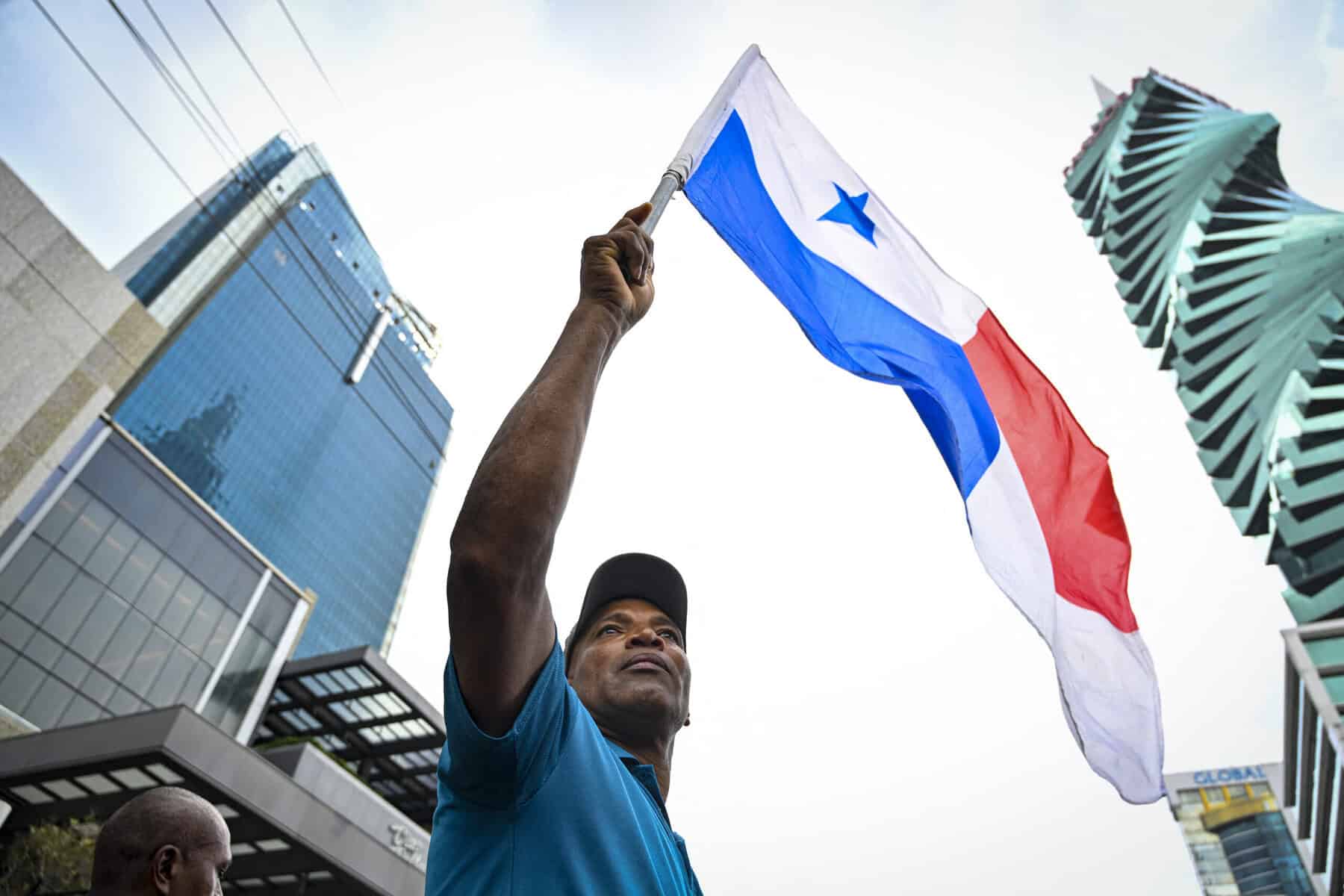
The International Trade Union Confederation placed the three Latin American nations in that group in its Global Rights Index released Monday. The list also includes Belarus, Egypt, Eswatini, Myanmar, Nigeria, Tunisia and Türkiye. All three countries fall into category 5, the lowest rating in the annual survey of labor standards across 169 nations.
Workers and unions in Panama lack guarantees regarding their basic rights and face constant oppression from employers and the state, the confederation said. The report marks Panama’s entry into the bottom group. It reflects a broader deterioration across the region. Argentina joined the list this year after falling to category 5, the second consecutive year of decline in its rating.
Conditions for workers and unions have become increasingly repressive and hostile under the government of President Javier Milei, the study said. Authorities have instituted an anti-blockade protocol to maintain public order in the event of roadblocks, authorizing the indiscriminate use of police force.
Argentina’s rating has worsened for the second consecutive year, placing it in category 5, the worst level the South American country has reached in the index. This represents a sharp and unprecedented drop from category 3 to category 5 in just two years, the study said.
The decline reflects a shift from regular violations of rights to a situation in which workers have no guarantees of their rights. In Ecuador, lawmakers enacted a law in 2025 that allows surveillance without a court order, as well as the interception of communications and the collection of private data.
Category 5 corresponds to countries where rights are not guaranteed. Countries in this rating “are the worst countries in the world to work in,” the confederation said. While legislation may list certain rights, workers effectively have no access to them. The Global Rights Index tracks violations of core labor standards, including freedom of association, collective bargaining and the right to strike. It draws on international labor organization conventions and national laws.
Ratings worsened in several countries this year, including Argentina and Panama. The report noted that four nations overall saw their scores decline amid a wide-ranging assault on unions.
ITUC General Secretary Luc Triangle said the 2026 index shows the crisis for workers’ rights is no longer confined to the margins but now sits at the heart of democracies. Governments are failing to protect working people and in many cases are actively undermining them, he added.
The findings come as unions in Latin America report increased pressure on organizing efforts. In Panama, the confederation highlighted ongoing oppression from both private employers and state authorities. Argentina’s placement follows a series of policy moves that the report links directly to restrictions on protest and union activity. The anti-blockade measure has drawn particular attention for its potential to enable broad police intervention.
Ecuador’s 2025 legislation, according to the index, expands government powers to monitor communications without judicial oversight, raising concerns about the environment for union activity. The index assigns ratings from 1 to 5-plus. Category 1 indicates no known violations of rights. Higher numbers signal increasing levels of problems, with category 5 marking the most severe cases.
This year’s edition reinforces trends seen in recent reports. Ecuador has appeared in the bottom group before, while Argentina and Panama recorded notable drops that pushed them into the worst category. The confederation evaluates each country based on documented cases of violence, arrests, dismissals and legal barriers facing union members. It relies on reports from its affiliates and verified incidents rather than government self-assessments.
No immediate government response from Panama, Argentina or Ecuador to the index appeared in official statements as of Monday. The ITUC represents 191 million workers through 340 national affiliates worldwide. It releases the Global Rights Index annually to draw attention to patterns of labor rights erosion.
Monday’s report arrives amid ongoing debates in Latin America over economic reforms, protest rights and digital surveillance. Unions in the region have described the findings as confirmation of long-standing complaints about shrinking space for collective action.
Panama’s inclusion highlights challenges in a country where construction, port and public-sector unions have faced repeated confrontations with authorities in recent years. The confederation did not detail individual incidents in the summary release but pointed to systemic issues with guarantees for basic rights.
The full 2026 index covers developments through late 2025 and early 2026. It will serve as a reference for international labor monitoring bodies and advocacy groups in the coming months.





