

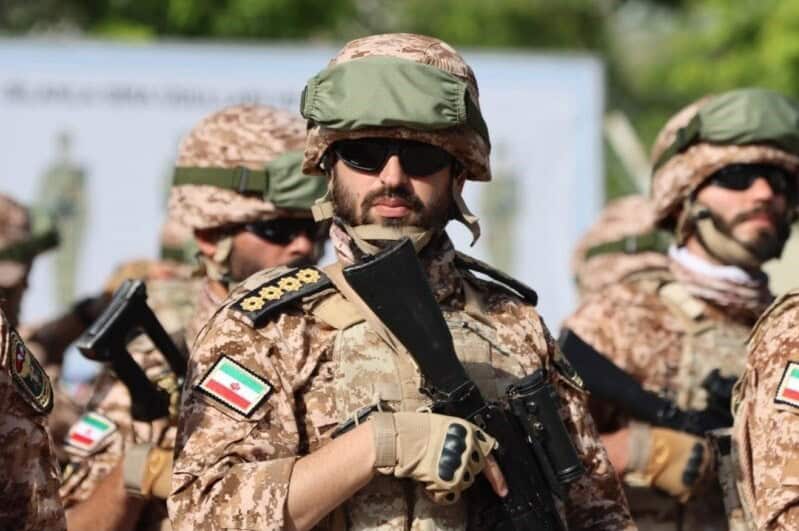
Costa Rica has formally designated Iran’s Islamic Revolutionary Guard Corps as a terrorist organization, placing the country alongside a growing group of governments in Europe and Latin America that have taken the same step in recent months. The measure also applies to Hezbollah, Hamas and Ansar Allah, better known as the Houthi militia.
The announcement came Wednesday night from Costa Rica’s Foreign Ministry, which said the National Security Council adopted the decision during its April 6 session. The ministry said the move followed a review of available background information and was made in line with Costa Rica’s international commitments in the fight against terrorism and terrorism financing.
Costa Rica said the designation is meant to give intelligence agencies and the judiciary stronger tools for prevention, investigation and criminal prosecution. The ministry said the new classification will help authorities act more forcefully against any logistical or financial support networks that could be operating in Costa Rican territory, while also seeking to block any activity or influence by those groups inside the country.
The IRGC is a branch of Iran’s armed forces with major military, political and economic influence inside Iran. Its inclusion is the part of Costa Rica’s decision with the broadest international significance, because the corps has become a growing focus of Western and allied security policy. The European Union formally added the IRGC to its terrorist list on February 19, a step that brought asset freezes and a ban on making funds or economic resources available to the group within the bloc.
That European move has since widened. Albania, Bosnia and Herzegovina, Montenegro, North Macedonia and Serbia aligned themselves with the EU decision, as did Iceland, Liechtenstein, Moldova and Ukraine, adding to the sense that the designation is no longer limited to a small group of countries.
In Latin America, Argentina designated the IRGC as a terrorist organization on April 1. Buenos Aires tied the decision to the IRGC’s backing of Hezbollah, which Argentina blames for the 1994 bombing of the AMIA Jewish community center in Buenos Aires, the deadliest terrorist attack in the country’s history. Reuters reported that the move aligned Argentina more closely with Washington.
Costa Rica’s decision now places it in that same recent wave. While the Foreign Ministry statement focused on domestic security and anti-financing efforts, the broader effect is diplomatic as well. The move signals that Costa Rica is willing to take a harder line on organizations linked to Iran and to match steps already taken by Western allies and some regional partners.
The designation may also raise new questions about financial compliance, law enforcement cooperation and how Costa Rica monitors possible support structures tied to blacklisted groups. The ministry did not announce separate sanctions, arrests or active cases in its statement, but it made clear that the purpose of the measure is to strengthen the state’s ability to respond if such networks are found.
For Costa Rica, the move stands out because our country does not often take headline-grabbing steps in international security policy. But with Europe broadening its stance and Argentina having moved just last week, Costa Rica has now joined a trend that has been building across multiple regions in 2026.





