

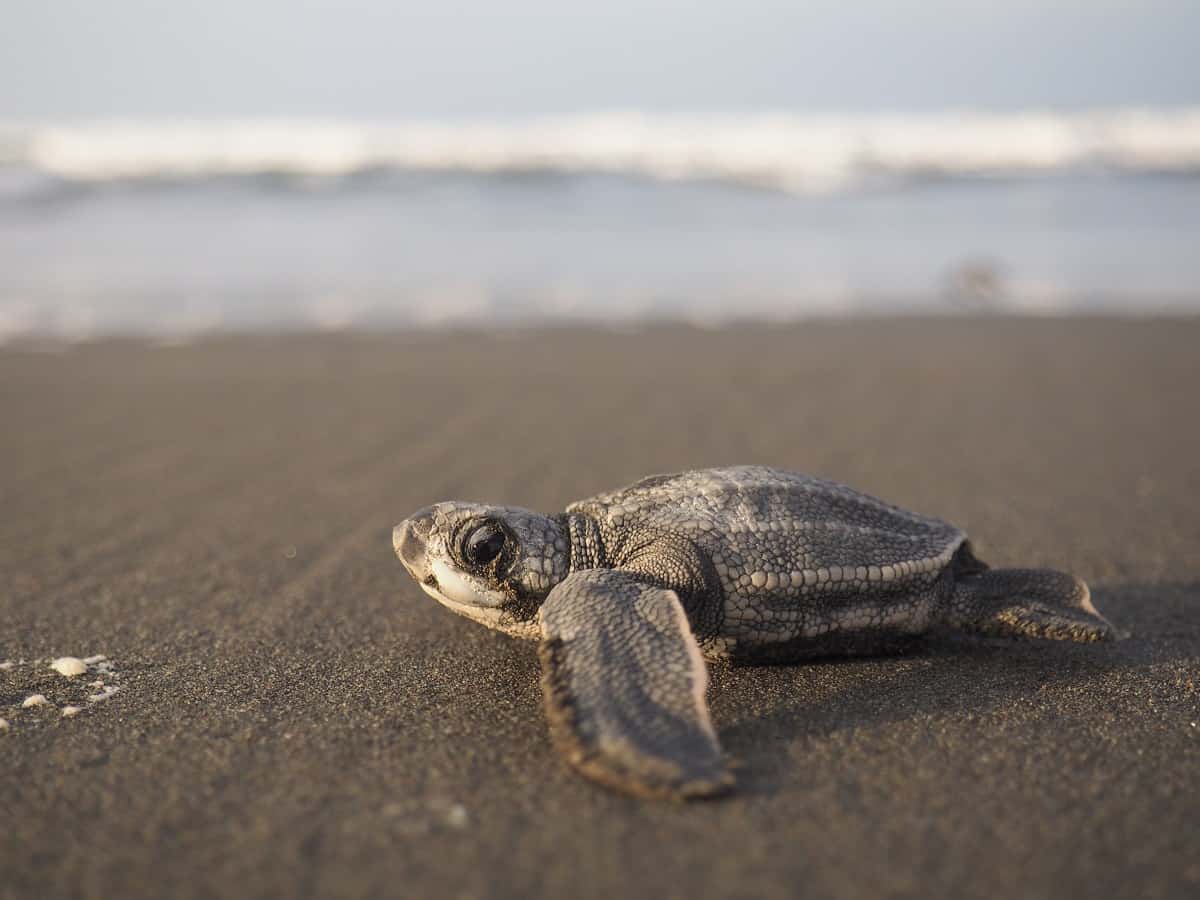
Costa Rica’s Caribbean leatherback season is getting underway, with conservation groups and park-linked patrols on the coast already reporting the first turtles of the 2026 nesting cycle. Rangers at Tortuguero and Cahuita confirm first major arrivals 10 days ahead of schedule, opening up an unexpected early window for one of our country’s most awe-inspiring wildlife spectacles. New guided nighttime viewing slots are now available to small groups, giving visitors a rare chance to witness these gentle giants in action without the summer crowds.
That matters for travelers because leatherbacks arrive earlier than Tortuguero’s better-known green turtles. According to SINAC here in Costa Rica, Tortuguero leatherback season is between March and June, while Cahuita identify March and April as the main arrival period on one stretch of beach. The Sea Turtle Conservancy also lists Tortuguero as an important nesting site for leatherbacks, alongside its more famous green turtle population.
Night tours are the main way visitors can watch nesting without disrupting the animals. Commercially available Tortuguero tours for 2026 are already advertising guided nighttime outings in small groups, and park-linked operations continue to use controlled dispatch systems with limited group sizes and assigned time slots to reduce disturbance on the beach. One Tortuguero operator page updated in March says tours run in two nightly windows, with groups of up to 10 sent out when a tracker confirms an active turtle.
The bigger draw for many wildlife travelers is timing. Green turtle tours dominate headlines later in the year, but March through May is the quieter season for people hoping to see leatherbacks—the largest sea turtles on Earth—on Costa Rica’s Caribbean coast. Travel and conservation sources consistently place the leatherback peak in spring, making April one of the better months for visitors who want a less crowded turtle experience in Tortuguero and nearby Caribbean monitoring areas.
Travelers in the area should still expect tight rules. Guided walks are designed around conservation first, with local experts leading small groups, keeping distance, and limiting light and noise. That controlled format has become part of the appeal: a quieter, more carefully managed wildlife experience at the moment Costa Rica’s Caribbean coast begins one of its most important natural seasons.
Why Leatherbacks Are Special
Leatherbacks (Dermochelys coriacea) can weigh up to 1,500 pounds (680 kg) and stretch nearly 8 feet (2.4 m) long. Unlike other sea turtles, they have a soft, leathery shell instead of a hard bony one. They dive deeper and travel farther than any other reptile, crossing entire oceans to return to the same beaches where they hatched. On the Caribbean coast, they nest individually rather than in the massive arribadas seen with olive ridleys on the Pacific—making each sighting feel personal and intimate.
Practical Tips
- Book early: Night tours sell out fast once word spreads about early arrivals. Most operators require reservations 24–48 hours in advance and work directly with SINAC rangers.
- Best time to go: Tours typically depart after sunset (around 8–9 p.m.) and last 1.5–2 hours. Expect to walk on soft sand in the dark—wear closed-toe shoes and bring insect repellent.
- Where to stay: Tortuguero village or lodges inside the national park offer the easiest access. Cahuita and nearby Puerto Viejo provide a more relaxed vibe with easy day-trip options to southern beaches.
- Cost: Expect US$35–60 per person, including the park fee and guide. Children under 12 are often not permitted on night tours to minimize disturbance.
- Conservation etiquette: No flash photography, no touching the turtles or eggs, and absolute silence. Your guide will explain the “red-light only” rule to protect the turtles’ night vision.
A Prime Post-Holy Week Window
If you’re lingering on the Caribbean coast after Easter, this early start is perfect timing. The beaches are far less busy than they will be in July–October when green turtles arrive en masse. It’s an ideal moment for eco-conscious travelers, photographers, and families to experience Costa Rica’s wild side responsibly—while helping support the local guides and conservation projects that protect these ancient mariners.
Pura vida—and may your flashlight stay pointed at the sand!





