

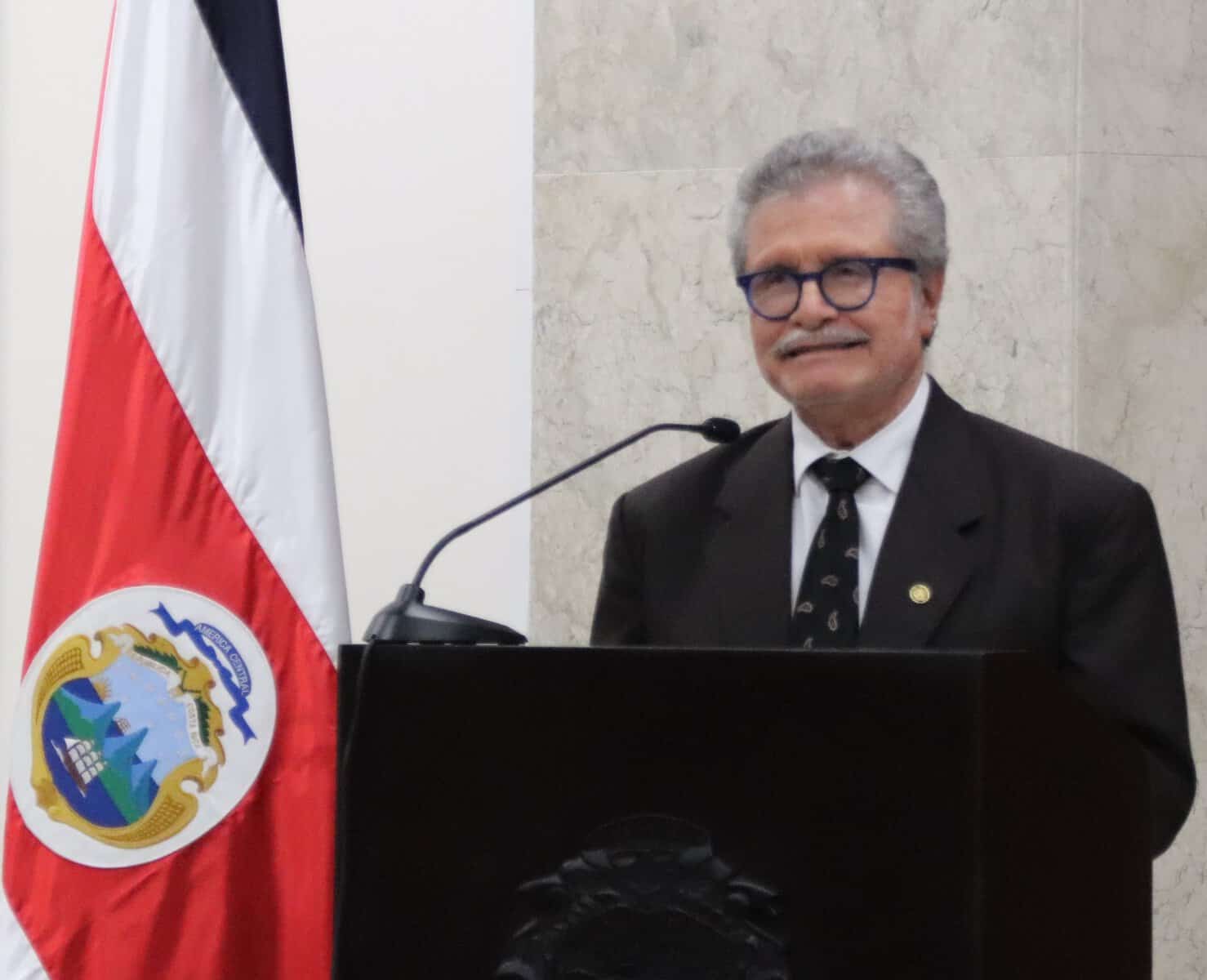
The Donald Trump administration has revoked the U.S. entry visa of Fernando Cruz, a magistrate of Costa Rica’s Constitutional Chamber (Sala IV). The measure was confirmed by his communications office. Cruz himself had previously stated that he had not received any email or other type of formal notification regarding the decision.
The visa revocation is widely seen as connected to Cruz’s judicial record on migrant rights. On February 22, Northwestern University’s Pritzker School of Law honored him with its 11th annual Global Jurist of the Year Award, presented by the Center for International Human Rights.
The recognition was tied specifically to his work on a Constitutional Chamber ruling defending migrants who had been transferred to Costa Rica from the United States and held at the Temporary Migrant Care Center (CATEM) detention facility. Those migrants had come from countries including Afghanistan, Russia, Armenia, Iran, and China, and had no personal ties to Costa Rica.
Cruz is a former president of the Supreme Court of Costa Rica and has served more than 20 years in the Constitutional Chamber, where he has been a consistent advocate for the application of international human rights law. Cruz is not the first magistrate from the Constitutional Chamber to face such action. Months prior, the U.S. government also revoked the visa of fellow magistrate Paul Rueda.
The revocations are part of a broader pattern of diplomatic pressure targeting Costa Rican officials. Earlier this year, three lawmakers also had their visas withdrawn. Secretary of State Marco Rubio visited Costa Rica in February, where he stated that the U.S. would help President Rodrigo Chaves “punish” the attitudes of officials who, in his words, were “not working for the good of their national interests.”
Rubio estimated at the time that the U.S. had already pulled more than 300 visas. Many of the revocations have been linked to U.S. efforts to counter Chinese influence in Costa Rica, particularly around the country’s 5G network infrastructure.
Another prominent case involves former Costa Rican President Óscar Arias, an 84-year-old Nobel Peace Prize laureate, who also had his visa revoked. Arias initially stated that he had not received any email notification about the decision — only to confirm hours later that the notification had arrived.
U.S. Embassy workers told Arias his visa was revoked due to his close ties with the Chinese government, stemming from his decision to formalize diplomatic relations with China during his second administration. Arias also said he suspected that his public criticism of Trump — in which he compared the U.S. president to a “Roman emperor” — may have played a role in the decision.





