

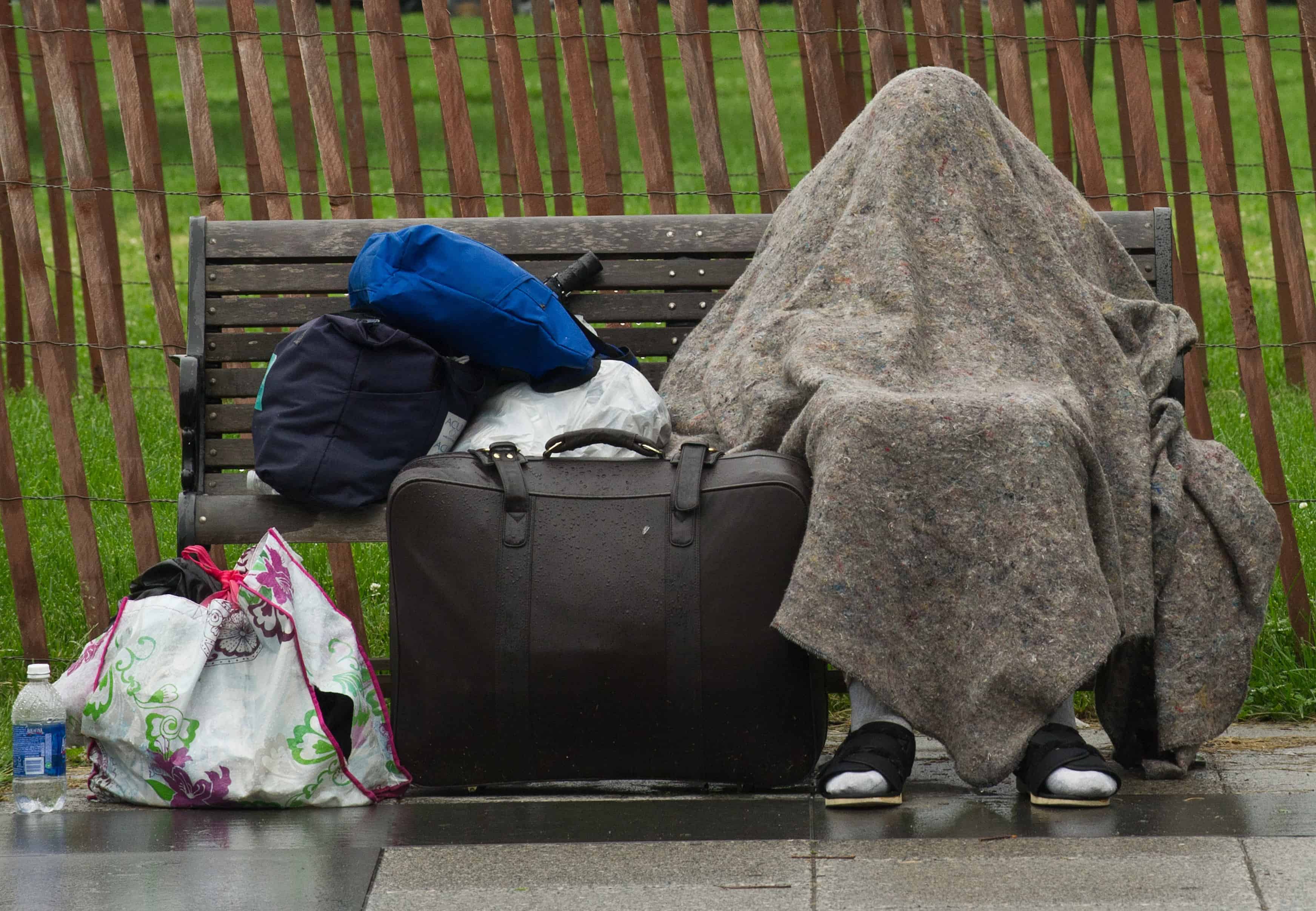
The streets of Costa Rica’s capital have, unfortunately, become a home for hundreds of people who, for various reasons, have ended up living on the streets. Walking through San Jose, you can see cardboard, blankets, and belongings packed into bags, as many struggle to get through their days searching for food, rest, and safety.
According to San José’s Deputy Mayor, Yariela Quirós, there are currently 2,273 homeless people in the central district of San José alone. Nationwide, organizations such as Fundación Lloverá estimate that the number is around 9,000 and continues to rise. The number of homeless people has shown steady growth in recent years. According to the San José Deputy Mayor, the central canton has seen a 150% increase over the past ten years. Nationwide, the increase was 123%.
Over time, many people develop their own routes around the city to get by. They know which parks, bus stops, or spots they can rest in for a few hours without being turned away. Esteban Blanco, founder of Fundación Lloverá, explained that in downtown San José there were 1,800 people in this situation in 2012. By 2016, that number had risen to 3,600, and today, including the neighborhoods near the city center, the figure is around 6,000 people.
The post-pandemic period accelerated this growth, compounded by a wave of migrants who passed through the country and ended up living on the streets. Other factors, such as the influence of organized crime and the drug trade, also played a role. For Blanco, the streets and drugs are not the root of the problem but rather its consequences. According to him, dysfunctional families, plagued by addiction, domestic violence, trauma, and poverty, create the conditions that lead a person to end up living on the streets.
Substance use is a reality for a significant portion of this population. According to Blanco, more than 90% of people living on the streets have some form of addiction or abuse of psychoactive substances. However, he cautions that this should not be used to stigmatize them. Blanco noted that there are more people addicted to drugs in the general population than among those living on the streets. However, they do not face the same judgment as those who are homeless.
On the other hand, many people develop mental illnesses as a result of substance use or end up on the streets with a preexisting mental condition that was never treated. Over time, many people develop what Villalobos calls an “attachment to the street.” Those who have been living on the streets for decades face not only substance dependence but also an emotional and psychological bond with that environment, which makes the reintegration process very difficult.
Blanco explained that the longer a person remains homeless, the more difficult the process of social reintegration becomes.





