

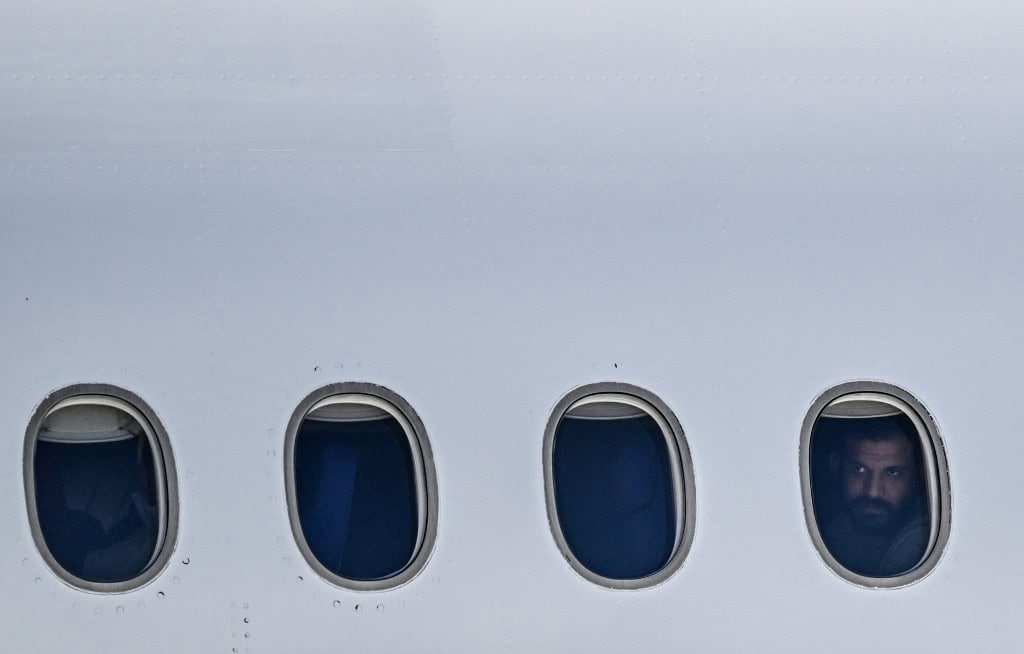
A Spanish airliner touched down in Caracas, reopening European commercial routes to Venezuela after months of airspace restrictions tied to U.S. military actions. An Air Europa Boeing 787-9 Dreamliner from Madrid landed at Maiquetía International Airport near Caracas shortly after 9 p.m. local time on Tuesday. Flight tracking data showed the aircraft arriving at 9:07 p.m., carrying passengers eager to reconnect with family and business ties disrupted by recent events.
This marks the first direct flight from Europe since airlines halted services in November amid U.S. warnings of heightened military risks in the region. The resumption signals a broader easing of travel barriers following Maduro’s removal, potentially boosting economic exchanges in Latin America where Venezuelan migrants and trade networks play key roles.
Airlines pulled back after the U.S. Federal Aviation Administration issued alerts in November about dangers from military operations near Venezuelan airspace. Those tensions culminated in a U.S. raid on January 3 that captured Maduro and his wife, Cilia Flores, from a fortified compound in Caracas.
U.S. forces flew the pair to New York, where Maduro faces federal charges including narco-terrorism and drug trafficking. Flores remains detained as well. In late January, Trump directed the Transportation Department to reopen Venezuelan airspace to commercial traffic after speaking with Delcy Rodríguez, Maduro’s former vice president who took over as acting leader on January 5.
Rodríguez was sworn in by the National Assembly, backed by the military and the Supreme Court, which cited Maduro’s “forced absence” to justify her role without calling immediate elections. The airspace reopening has prompted a wave of airline returns. Colombian carrier Avianca restarted daily Bogotá-Caracas flights on February 12. Panama’s Copa Airlines resumed in mid-January, offering connections to Miami.
Copa’s low-cost arm, Wingo, plans to relaunch Medellín-Caracas service on March 1. Portugal’s TAP aims to restart Lisbon-Caracas flights by March 30. Turkish Airlines targets March 3 for Istanbul-Caracas. Spain’s Iberia, which operated five weekly Madrid-Caracas flights before the suspension, is reviewing security before resuming in April.
American Airlines filed in mid-February to restart daily Miami-Caracas and Miami-Maracaibo routes using regional jets, pending approvals. It would be the first U.S. carrier back since 2019 suspensions over safety concerns. These developments stem from Venezuela’s political shift. Maduro had ruled since 2013, succeeding Hugo Chávez. His 2024 reelection was widely disputed, leading to U.S. indictments in 2020 that set the stage for his capture.
Trump has described Rodríguez as cooperative, stating the U.S. would manage Venezuela until a stable transition. He emphasized securing oil assets, given Venezuela’s vast reserves. Rodríguez has balanced defiance—calling Maduro the “only president”—with pragmatism, releasing over 400 political prisoners since January 8 and reforming oil laws to allow foreign majority stakes.
She met U.S. envoy Laura Dogu on February 2 to discuss energy and trade. Analysts see this as stabilizing short-term, but regional impacts loom. Neighboring Colombia, hosting 2.8 million Venezuelan migrants, benefits from easier family visits and commerce.
Brazil and Guyana watch oil moves amid border disputes. The Caribbean relies on Venezuelan fuel under Petrocaribe deals, which could revive. Yet challenges persist. The U.S. State Department maintains a “do not travel” advisory, citing crime and instability. Venezuela’s economy, shrunk 70% since 2013, faces inflation risks.
Airlines stress safety protocols, with some like Copa limiting to daytime flights. Next steps include Rodríguez’s proposed amnesty law covering 1999-2026 political violence, due for debate soon. Trump has hinted at elections, but no timeline exists. U.S. officials aim for a transition by mid-2026, with oil production targets doubling to 2 million barrels daily.
As flights increase, Venezuelan diaspora—over 8 million abroad—may return, aiding recovery.





