
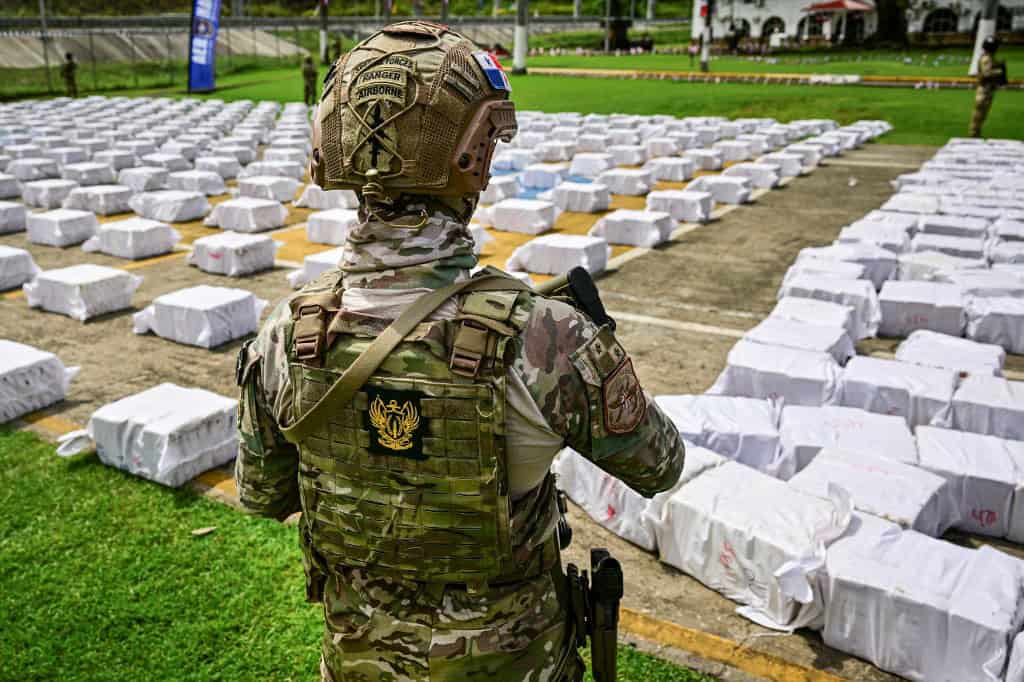
Panama ruled out on Wednesday that the Gulf Clan, Colombia’s largest drug-trafficking cartel, maintains a permanent presence in its border areas, though it reported growing “pressure” from Colombian criminal groups. The Gulf Clan, designated a terrorist organization by the United States, has been linked by authorities to drug smuggling toward the U.S. and Europe, as well as illegal mining and migrant trafficking through the harsh Colombia–Panama Darién jungle.
The group has also been accused of planting anti-personnel mines near joint checkpoints used by the Colombian army and Panamanian police. But the organization “does not have a permanent presence anywhere in the Republic of Panama,” Panamanian Security Minister Frank Ábrego said in response to a question during the presentation of his ministry’s operational report in the city of Colón.
Ábrego acknowledged, however, that criminals “have been advancing around” the binational checkpoints. In his report, Ábrego said 2025 was a “particularly challenging” year for Panama due to “overproduction of drugs in the region,” as Colombia has been registering a sharp increase in cocaine supply.
“This increase has generated greater pressure from criminal structures on our borders, routes, and nearby communities,” the minister said. Ábrego announced that in 2025 Panamanian authorities seized 118.6 metric tons of drugs, including a record 13,500-kilogram haul last November, with cooperation from the United States and Colombia.
Since 2023, Panama has seized more than 360 tons, mainly cocaine. The country is Central America’s entry point for the drug, which—coming largely from Colombia—tries to reach the United States, its main consumer. However, over the past two years, seizures in Caribbean ports in Panama have increased for shipments bound for Belgium, France, Spain, and the United Kingdom.
U.S. President Donald Trump has maintained a military deployment to target alleged drug-trafficking vessels in the Caribbean and the eastern Pacific, which has resulted in around a hundred deaths and prompted Venezuela to accuse the United States of actually seeking to overthrow Nicolás Maduro’s government.
The Colombian government and the Gulf Clan agreed on December 5 in Qatar to continue talks aimed at the group’s disarmament and the pacification of territories it controls.