

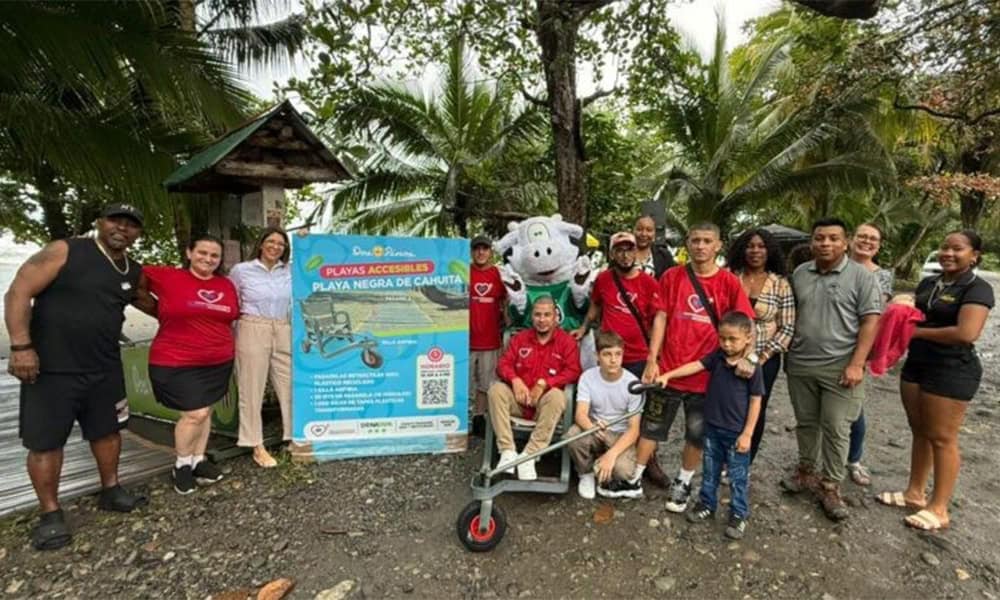
Cahuita residents and visitors can now access Playa Negra more easily, as the community has installed new infrastructure made from recycled materials to support people with disabilities. The project turned 1,000 kilograms of plastic caps from Dos Pinos beverages into a 30-meter walkway and an amphibious chair.
This setup allows individuals with mobility challenges to reach the shoreline and enter the water safely. The effort marks the third accessible beach on Costa Rica’s Caribbean coast, joining Playa Cieneguita in Limón and Playa Manzanillo in Talamanca.
Local leaders and organizations worked together to complete the installation. The Dos Pinos Milk Producers Cooperative supplied the caps through nationwide collection drives. The DONATAPA project, run by the Costa Rican Accessible Tourism Network, processed the materials into durable plastic wood. This partnership highlights how everyday waste can support public access.
Stephanie Sheehy, executive director of the Costa Rican Accessible Tourism Network, described the change. “This expands the spaces where people can enjoy the sea, no matter their physical condition,” she said. She noted that the caps came from collections across the country, turning potential trash into functional paths.
For Dos Pinos, the work fits into larger goals of recycling and community support. Sofía Valverde, the cooperative’s communications and community relations manager, explained the impact. “Each cap recovered turns into access and opportunity,” she said. “This beach stands as a sign of respect for people and the environment we share.”
Two local restaurant owners will manage the site. They handle equipment upkeep, track visitors, and provide free restroom access for those with disabilities. This local involvement ensures the facilities remain reliable and open to all.
Cahuita, known for its black-sand beaches and national park, draws travelers seeking natural settings. Playa Negra offers calm waters and shade from trees, making it a spot for relaxation. Until now, uneven terrain limited who could fully experience it. The new walkway bridges that gap, letting more people walk from the entrance to the water’s edge. The amphibious chair, with large wheels, helps users move across sand and float in the sea.
The initiative began with public campaigns encouraging people to save and donate caps. Schools, businesses, and families joined in, gathering materials over months. Processing plants then melted and shaped the plastic into boards strong enough for outdoor use. This method reduces landfill waste while creating jobs in recycling.
Similar projects have succeeded elsewhere in Costa Rica. Playa Cieneguita’s accessible features, added in recent years, boosted visitor numbers and local pride. Manzanillo followed, showing a pattern of expanding access along the coast. Cahuita’s addition strengthens this network, potentially attracting tourists interested in inclusive destinations.
Community members see the project as a win for equality. It lets families with disabled relatives share beach days without barriers. Tour operators can now promote Cahuita as a place open to everyone, which may increase bookings. Environmental groups praise the reuse of plastics, addressing pollution in coastal areas.
Dos Pinos has led other green efforts, like tree-planting drives and sustainable packaging. Valverde added that such actions build equity. “Transforming plastic into access paths shows inclusion as a basic right,” she said.
As Costa Rica pushes for sustainable tourism, projects like this set examples. They combine care for nature with support for people, creating sites that serve broad needs. In Cahuita, the new features at Playa Negra invite all to connect with the Caribbean’s shores.





