
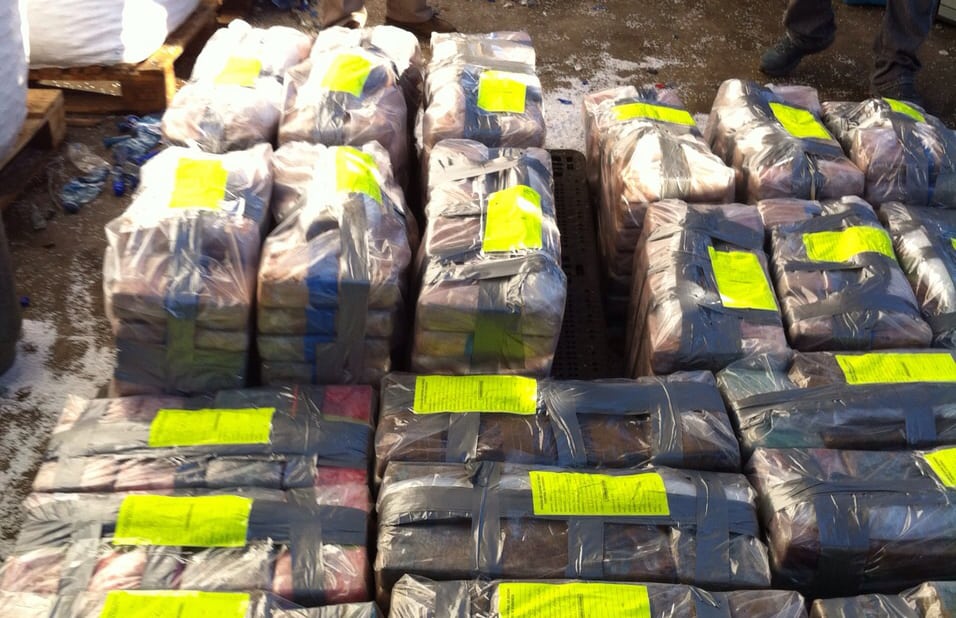
Colombia, the world’s biggest cocaine producer, set a new record last year for the manufacture of the drug and cultivation of the coca leaf it is made from, a United Nations report said Monday.
Coca leaf cultivation was 13 percent higher last year than in 2021 while cocaine production rose from 1,400 tons to 1,738, according to the UN Office on Drugs and Crime (UNODC).
These were the highest numbers since the UN started monitoring in 2001. Most Colombian cocaine is destined for the United States and Europe. Coca leaf production now spreads over 230,000 hectares in the country.
Nearly two-thirds of coca crops are grown in the southern departments of Narino and Putumayo bordering Ecuador, itself battling a scourge of drug gang-related violence, and in North Santander on the border with Venezuela.
Around half of Colombia’s drug crops are found in Indigenous reserves, forest reserves and natural parks, according to the report.
The new numbers came out a day after Colombia’s first-ever leftist president Gustavo Petro and his Mexican counterpart Andres Manuel Lopez Obrador criticized the “failed” US-led so-called “war on drugs.”
The campaign has benefited only drug cartels and fueled violence, without addressing the root causes of crime such as poverty and unemployment, Petro said at a Latin American summit in Cali to discuss new ways of approaching the drug trafficking problem.
About two dozen leaders of Latin American and Caribbean countries attended. Colombia and Mexico were the “biggest victims” of the American-led “war,” which has criminalized and impoverished many rural people, the president added.
New policy coming
Petro, who took office last year, has mooted an amnesty for drug traffickers willing to give themselves up and abandon the trade in pursuit of his quest for “total peace” in the violence-torn country.
The president has also proposed purchasing arable land to redistribute to small farmers to make a living from legal crops free from the violent yoke of the drug gangs they rely on to make a living.
Coca cultivation is illegal, but a mainstay for many in the South American country of 50 million people. Much of the sector is controlled by armed groups, whether they be leftist guerrillas, rightwing paramilitaries or drug cartels.
Colombia remains the world’s biggest producer by far, followed by Peru and Bolivia. The country is set to adopt a new drug policy soon, the government had said, aimed at dismantling criminal organizations with the least possible harm to poor, rural producers.