

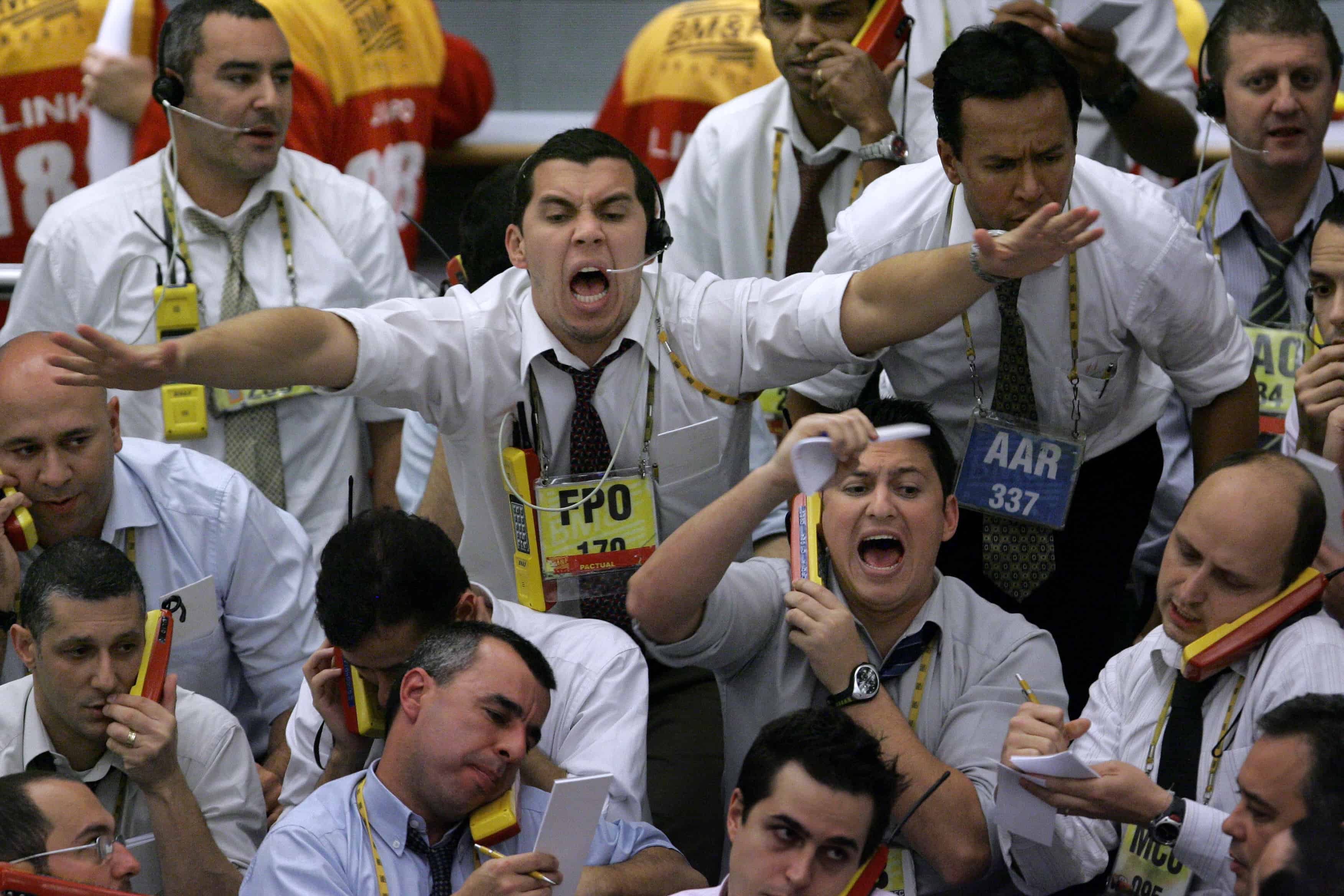
SÃO PAULO — Latin American currencies slid to a 22-year low and stocks joined a global selloff Monday on speculation that the region’s economic contraction will deepen as Chinese growth slows down.
The Bloomberg JP Morgan Latin America Currency Index sank to the lowest since at least November 1992 as Colombia’s peso fell the most since 2008. The MSCI gauge for the region’s shares fell 4.1 percent, led by Brazilian miner Vale and oil producer Petroleo Brasileiro.
More than half of the companies in the Ibovespa, which is in a bear market, have dropped to at least one-year lows in the past week. Mexico’s peso weakened to a record, and the nation’s shares are at a so-called technical correction after plunging more than 10 percent from their September peak.
“It is a bloodbath,” said Bernd Berg, a London-based strategist at Societe Generale. “We see panic selling due to global growth fears and uncertainty about the next Fed move.”
Stocks and currencies in developing nations have plummeted amid a rout in global markets spurred by concern that Chinese growth is slowing faster than expected just as the Federal Reserve prepares to increase interest rates. Corruption scandals from Brazil to Mexico and a collapse in commodities have also contributed to the selloff at a time when Latin America is already forecast to contract for the first time since 2009.
The Ibovespa slid 3 percent to 44,336.47 at the close of trading in São Paulo, while the iShares MSCI Brazil Capped exchange-traded fund sank to a decade low. The real dropped 1.5 percent to 3.5526 per dollar. Brazil’s bond risk, as measured by credit-default swaps, surged to the highest in six years. Colombia’s peso retreated 4 percent to a record low of 3,237.38 per dollar.
Traders are turning bearish on Latin America as Brazil, the region’s largest economy, heads toward the longest recession since the 1930s amid a political crisis and a sweeping graft scandal at the state-run oil company. Rising borrowing costs have slowed down consumer purchases, pushing President Dilma Rousseff’s approval rating to record lows and dimming prospects for corporate earnings.
See also: Brazil in crisis means 93 company downgrades just the beginning
It’s not much better elsewhere on the continent. The world’s highest inflation rate has left Venezuela struggling with shortages of food and medicine, while Argentina is battling with hold-out creditors following last year’s default, and Mexico tries to revive growth. Chile and Peru, which are among the biggest producers of copper and zinc, have seen export revenue tumble as prices for the metals have fallen.
The plunge in stocks has pushed valuations across Latin America to below historical levels. Colombia’s Colcap index is now trading at 12 times estimated earnings, or 24 percent lower than its five-year average, according to data compiled by Bloomberg. Brazil’s Ibovespa is at the cheapest level since January.
“We can’t say we’ve reached the bottom yet,” Jason Vieira, the chief economist at Infinity Asset Management, said from São Paulo. “It’s not the time to buy anything, because both the domestic and international scenarios are so uncertain. Investors are moving away from riskier assets.”
Brazil’s Vale, the world’s largest iron-ore producer, sank to an 11-year low after plunging as much as 12 percent Monday. Mobile-phone company Oi tumbled 9.7 percent to a record. Steelmaker Metalurgica Gerdau led the Ibovespa’s losses, falling as much as 16 percent.
Trading patterns that measure the velocity of price moves indicate that currencies in Mexico, Chile and Colombia are all oversold, according to data compiled by Bloomberg based on relative-strength indexes.
Colombia’s peso tumbled the most among 31 global major currencies. Central bank Governor Jose Dario Uribe said in an interview with Caracol Radio Monday that the nation has received a very strong shock from oil, which accounts for half of its exports. The Colcap stock index slumped to the lowest level since 2009 as Grupo Aval Acciones y Valores SA, the nation’s biggest banking group, plunged.
Fomento Economico Mexicano, the owner of Latin America’s biggest convenience store chain, helped spur a five-day slide in the IPC index. Mexico’s peso fell for a fourth day, weakening beyond 17 pesos for the first time since its 1993 revaluation.
Swings with Brazil’s real were the biggest among 16 global major currencies over the past month. While the government is working on its own macroeconomic stability, there’s nothing yet to say about any potential coordinated action with other emerging markets to reduce volatility, Planning Minister Nelson Barbosa told reporters Monday.
— Contributors: Andrea Jaramillo in Bogota, Sebastian Boyd in Santiago, Ben Bain in Mexico City and Filipe Pacheco in Sao Paulo.
© 2015, Bloomberg





