

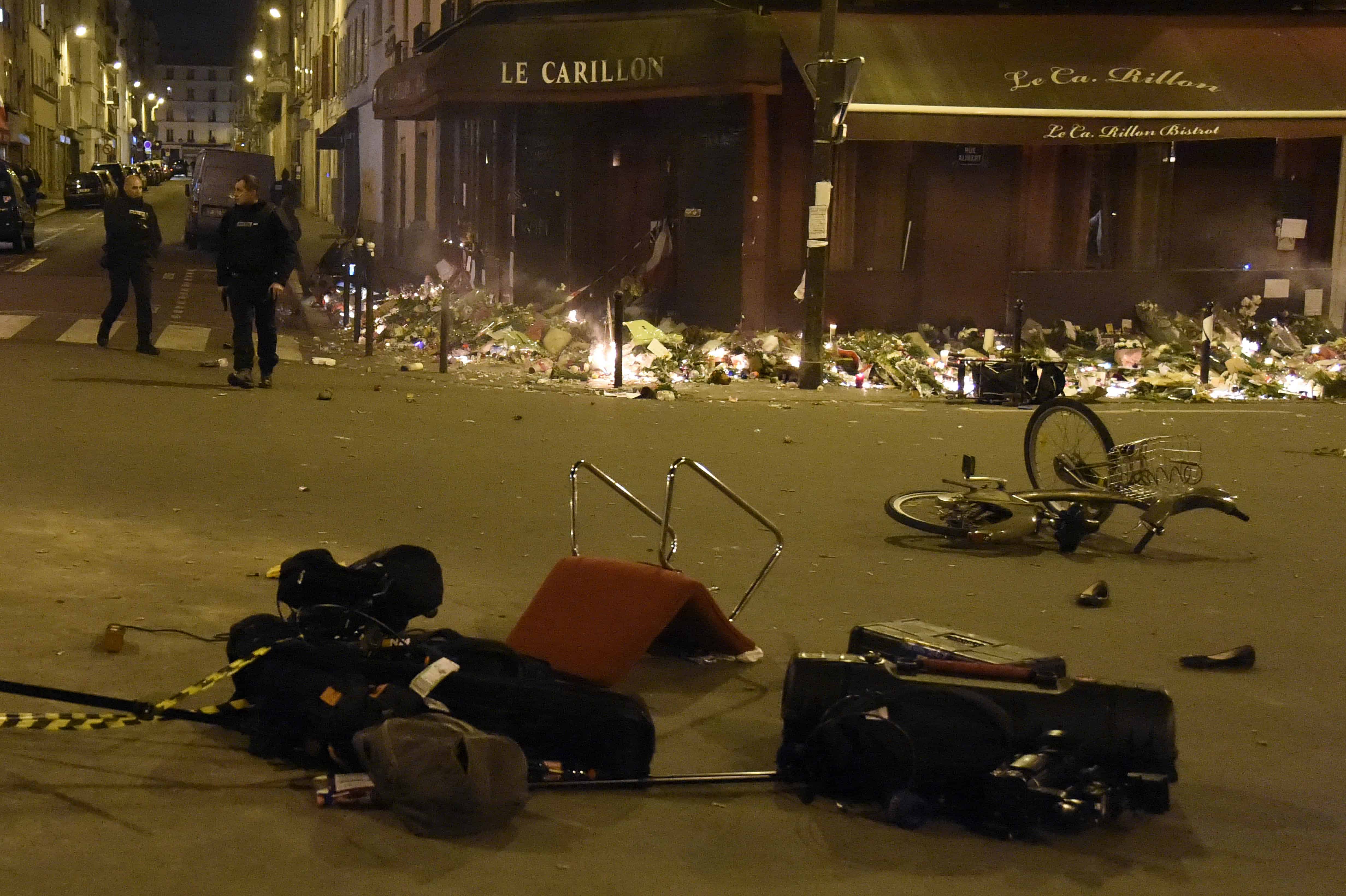
Last week, U.S. President Barack Obama said that the Islamic State is “contained” in Iraq and Syria, but the group’s attacks in Paris soon afterward showed that it poses a greater threat to the West than ever. The Islamic State is executing a global strategy to defend its territory in Iraq and Syria, foster affiliates in other Muslim-majority areas, and encourage and direct terrorist attacks in the wider world. It has exported its brutality and military methods to groups in Libya, Egypt, Afghanistan and elsewhere. Now it is using tactical skills acquired on Middle Eastern battlefields to provoke an anti-Muslim backlash that will generate even more recruits within Western societies. The United States and its allies must respond quickly to this threat.
The Islamic State’s strategy is to polarize Western society – to “destroy the grayzone,” as it says in its publications. The group hopes frequent, devastating attacks in its name will provoke overreactions by European governments against innocent Muslims, thereby alienating and radicalizing Muslim communities throughout the continent. The atrocities in Paris are only the most recent instances of this accelerating campaign. Since January, European citizens fighting with the Islamic State in Iraq and Syria have provided online and material support to lethal operations in Paris, Copenhagen and near Lyon, France, as well as attempted attacks in London, Barcelona and near Brussels. Islamic State fighters are likely responsible for destroying the Russian airliner over the Sinai. These attacks are not random, nor are they aimed primarily at affecting Western policy in the Middle East. They are, rather, part of a militarily capable organization’s campaign to mobilize extremist actors already in Europe and to recruit new ones.
The strategy is explicit. The Islamic State explained after the January attacks on Charlie Hebdo magazine that such attacks “compel the Crusaders to actively destroy the grayzone themselves. … Muslims in the West will quickly find themselves between one of two choices, they either apostatize … or they [emigrate] to the Islamic State and thereby escape persecution from the Crusader governments and citizens.” The group calculates that a small number of attackers can profoundly shift the way that European society views its 44 million Muslim members and, as a result, the way European Muslims view themselves. Through this provocation, it seeks to set conditions for an apocalyptic war with the West.
Unfortunately, elements of European society are reacting as the Islamic State desires. Far-right parties have gained strength in many European countries. France’s National Front is expected to dominate local elections in northern France this winter; on Saturday, Marine Le Pen, its leader, declared “those who maintain links with Islamism” to be “France’s enemies.” The Danish People’s Party gained 21 percent of the vote in national elections in June on a nationalist, anti-Islamic platform. The anti-foreigner Sweden Democrats is steadily growing in popularity.
The Paris attacks will surely prompt an anti-Muslim backlash, as demonstrated by protesters who brought a banner saying “Expel the Islamists” to a vigil in Lille, France. The Islamic State does not have to invent tales of Western hatred: It can simply publish photos of Dutch politician Geert Wilders, who recently proclaimed, “The less Islam, the better.” Arsonists conducted scores of attacks on asylum seekers and shelters in Germany this year, while extremists have targeted Muslim citizens in France. The continuing influx of hundreds of thousands of refugees and migrants from the Middle East and Africa creates a perfect environment for the Islamic State’s campaign.
None of these anti-Islam activities justifies the horrors that the Islamic State has committed, nor have they caused those atrocities; Europe could be as welcoming as any could wish, and still the Islamic State would send fighters and recruit disaffected locals. But backlashes against Muslims who have no part in the Islamic State’s ideologies or actions make the situation much worse. Europe must avoid the trap that the Islamic State is setting by focusing its responses to the Paris attacks and other outrages against the perpetrators and their supporters.
Most urgently, however, Europe and the United States must accept the reality that protracted sectarian warfare in the Middle East is a clear and present danger to their safety and security at home. The wars in Syria and Iraq are mobilizing radicals from across the world. They are arenas in which terrorists can acquire the skills of warfare to bring directly into the West. Our complacency about those conflicts must end. We must also avoid the temptation to back dictators such as Syria’s Bashar al-Assad in hopes that they can defeat an enemy to which they have given rise and contain a conflict that they themselves have driven.
The Paris attacks must become calls to action to end the wars that are tearing the Middle East apart and flooding the world with desperate refugees. They are yet more proof that we cannot live in peace at home while millions of people are engulfed in war.
Gambhir is a counterterrorism analyst at the Institute for the Study of War.
© 2015, The Washington Post





