
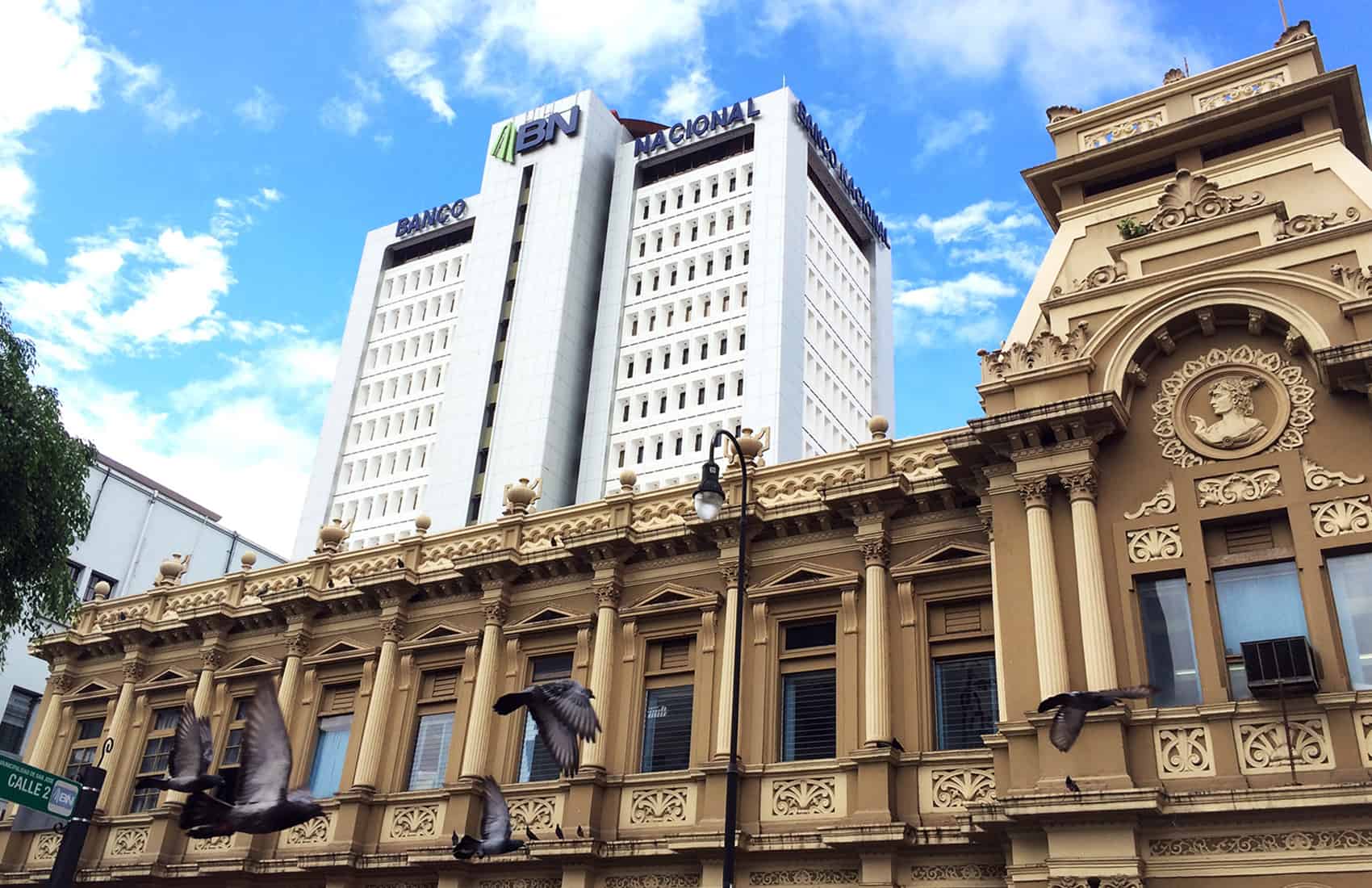
The Constitutional Chamber of the Supreme Court, or Sala IV, ruled in favor of the daily La Nación in a case against state-owned Banco Nacional (BN). La Nación’s suit indicated that the bank reduced its advertising purchases with the newspaper following the publication of various stories about irregularities at the bank.
The court released the main aspects of the ruling in a news release on Monday evening. Sala IV justices described the bank’s actions as “perverse,” a “coercion mechanism,” a form of “prior censorship” and an “undemocratic way of using public funds to influence public opinion.”
The case before the court stems from a series of publications over the past year that, in July, led La Nación to report that the Banco Nacional had unleashed an offensive to silence the paper by gradually cutting down on its advertising budget for La Nación.
The first of La Nación’s recent stories on the bank reported that the Banco Internacional de Costa Rica (BICSA), in which the Banco Nacional is a 49 percent shareholder, faces serious financial risks and is vulnerable to money laundering.
Another report alleged that Banco Nacional board members had acted improperly to secure seats on the boards of some of its subsidiaries that provide insurance and stock market investments services. That publication resulted in the resignation of various board members.
The daily also denounced what it argued was Banco Nacional inaction regarding claims against BICSA Vice Chairman Jennifer Morsink. Another state-owned bank, the Banco de Costa Rica (BCR), shut down Morsink’s BCR accounts in November 2015 due to suspicious transactions of several million dollars.
The BCR demanded that the Banco Nacional dismiss Morsing as a board member of both the BN and BICSA, but Banco Nacional downplayed the situation, La Nación reported. Following the publication, the Banco Nacional announced that Morsink would be temporarily replaced for health reasons.
The bank then began reducing its advertising purchases with the daily, La Nación reported.
BN General Manager Juan Carlos Corrales admitted before the Legislative Assembly Committee on Public Spending that he approved the action against La Nación. He also admitted that the bank was evaluating options to file legal actions against the reporters who wrote the stories.
“It’s not that the information is inaccurate, but it is not balanced and placed us in serious trouble,” Corrales told lawmakers in August.
President Luis Guillermo Solís told La Nación on Wednesday evening that he supports the Sala IV’s ruling.
“I certainly believe that Costa Rica deserves a state where public opinion is not censored, or injured, or pressured in any way,” he said.
In a written response the BN’s communications office responded that the bank will respect the court’s ruling and that they will not further comment on the decision.
The ruling
The Sala IV justices ruled unanimously in favor of La Nación and ordered the Banco Nacional to maintain its approved media investment plan. They also ordered the bank to refrain from engaging in such censorship practices in the future.
The ruling says that justices found that the bank, starting in February and following Corrales’ orders, gradually reduced its La Nación advertising “as a means of coercion and in an attempt to solve an alleged lack of fairness.”
This damages freedom of expression and citizens’ right to access accurate information, justices said.
Justice Paul Rueda noted individually that he believes the mechanism implemented by the bank to reward or punish media through advertising depending on their editorial line “is one of the most reprehensible forms of violation of press freedom.”
Regional report
The Inter American Press Association (IAPA) issued a report last week noting the misuse of government advertising in Costa Rica.
The assembly’s final report states that in many countries, such as Costa Rica, Nicaragua, Mexico and Bolivia, public funds for advertising are “used to reward or punish the media depending on the news they publish.”
The IAPA event gathered 450 media executives and journalists for six days to discuss the state of press freedom in the Western Hemisphere.