

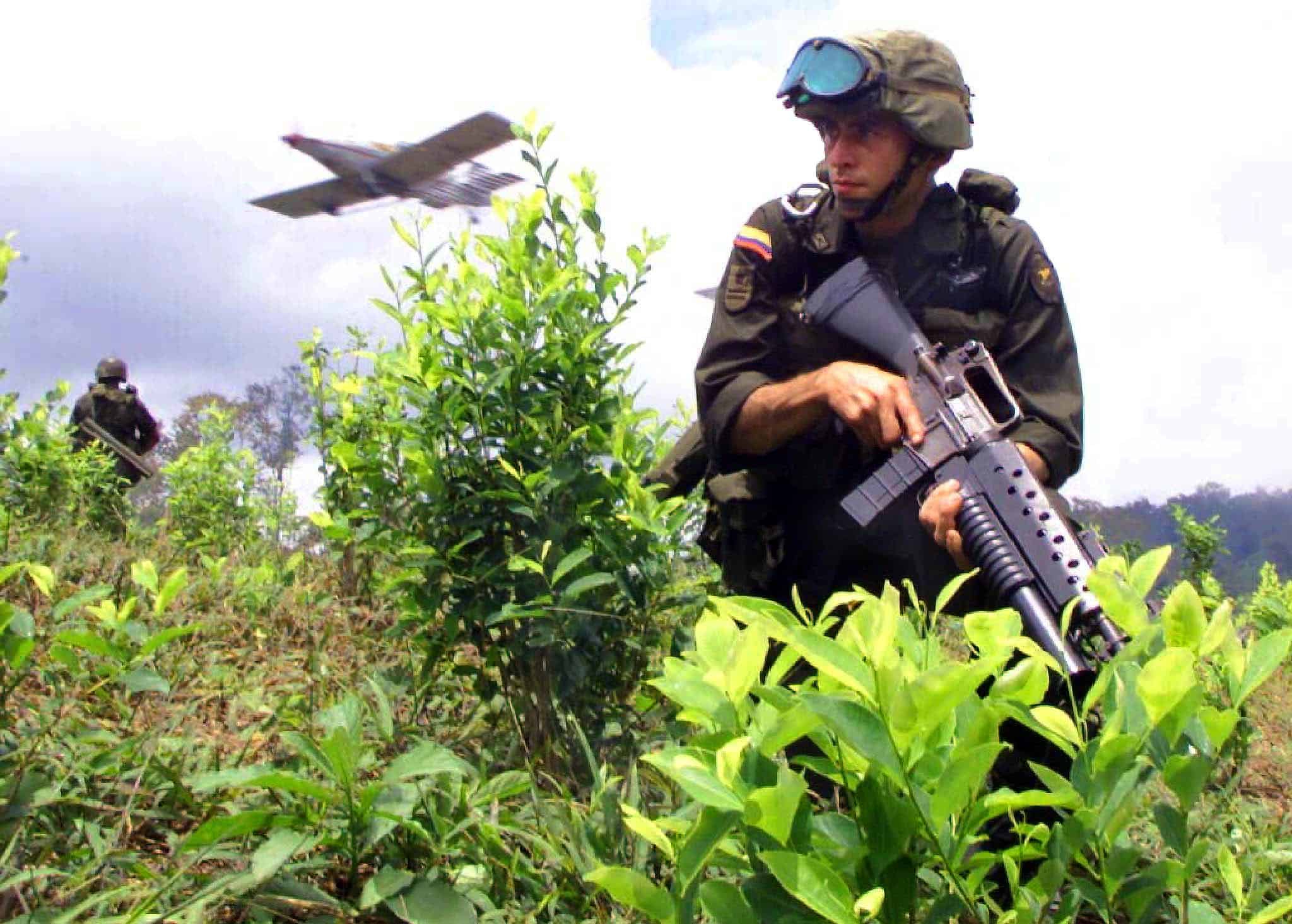
Few question that the “war on drugs” has been costly and ineffective. Inappropriate policies resulting from the war have destroyed countless lives, incarcerated millions of people, fuelled HIV and Hepatitis C epidemics, kept countless other millions from accessing essential pain medicines, and created unfathomable levels of violence and destabilization around the world. The question now is not whether to end the “war on drugs,” but what to replace it with.
In a new report entitled “After the Drug Wars,” we and our colleagues at the London School of Economics propose a new global framework: End the “war on drugs” and redirect its considerable resources to supporting the existing U.N. Sustainable Development Goals program, which aims to reduce poverty, fight inequality and injustice, and tackle climate change by 2030. We believe that the current strategies have not worked, and that “development-first, drug-control-second” policies will yield the best results, a view endorsed by five Nobel Prize winners, a plethora of internationally renowned academics, and the president of Colombia.
Take the case of Colombia. At a recent conference in Bogotá, President Juan Manuel Santos of Colombia said, “It is time for the world to recognize that the fight against drugs enacted 40 years ago has not been won and that’s because we are doing something wrong.” Colombia would know. They have fought this long and desperate war, at a dreadful cost to their political structures, security services and population. Now that Colombia is on the verge of an historic peace agreement to end the decades-long conflict between the government and left-wing FARC rebels, it also has the opportunity to move beyond the failed strategies of the drug war.
Related: Cost of drug war in Costa Rica too high, says former police officer
Our plan presents a path to drug peace: Move beyond a singular focus on eradication and repression, towards policies grounded in political and socioeconomic integration. In Colombia, 300,000 people (65,000 households) rely on the illicit trade for their livelihood. The root causes of this reliance are often the same issues addressed by development efforts: chronic poverty and protracted states of insecurity. Address these issues and the drug supply problem becomes far easier to solve.
Contrarily, hard line criminal justice and militarized approaches will only exacerbate the problem. Untargeted policing strategies, such as “stop and search” methods, have a disproportionate negative effect on minority ethnic groups and low-level members of the illicit drug market. As decades of experience show, sending in the military to eradicate crops in regions outside the control of the central government, where there is no alternative economic infrastructure for affected households, simply won’t work. These approaches alienate entire communities and regions, and spark unrest that could set back the struggle for peace by decades or more.
On the consumption side of the ledger, we need treatment services instead of trying to criminalize all people who use drugs. Unsafe injection practices contribute more than 30 percent of all new positive HIV cases outside of Sub-Saharan Africa. The public health benefits of services such as syringe exchange or Opioid Substitution Therapy cannot be overstated. The right set of policies will be discovered through innovative scientific experimentation, and enforced through strict legal regulation. Uruguay, for example, has de-penalized marijuana use and possession, and implemented a system of growers’ clubs and a state-controlled marijuana dispensary regime. Many other countries look set to follow.
In April of this year, U.N. member states will meet for the first U.N. General Assembly Special Session on Drugs since 1998. At the last meeting the international community committed to achieving a “drug free world.” This time it can move into the post “war on drugs” era by affirming a sustainable development approach to drug policy. It can reject the blind pursuit of prohibition and repression in favor of new, rigorously evaluated health, development and human rights based policies that work. That is a clear map leading out of the current global drug war quagmire.
Professor Michael Cox is Director of LSE IDEAS. Dr. John Collins is Executive Director of the LSE IDEAS International Drug Policy Project.
© 2016, The Mark News, www.themarknews.com.





