

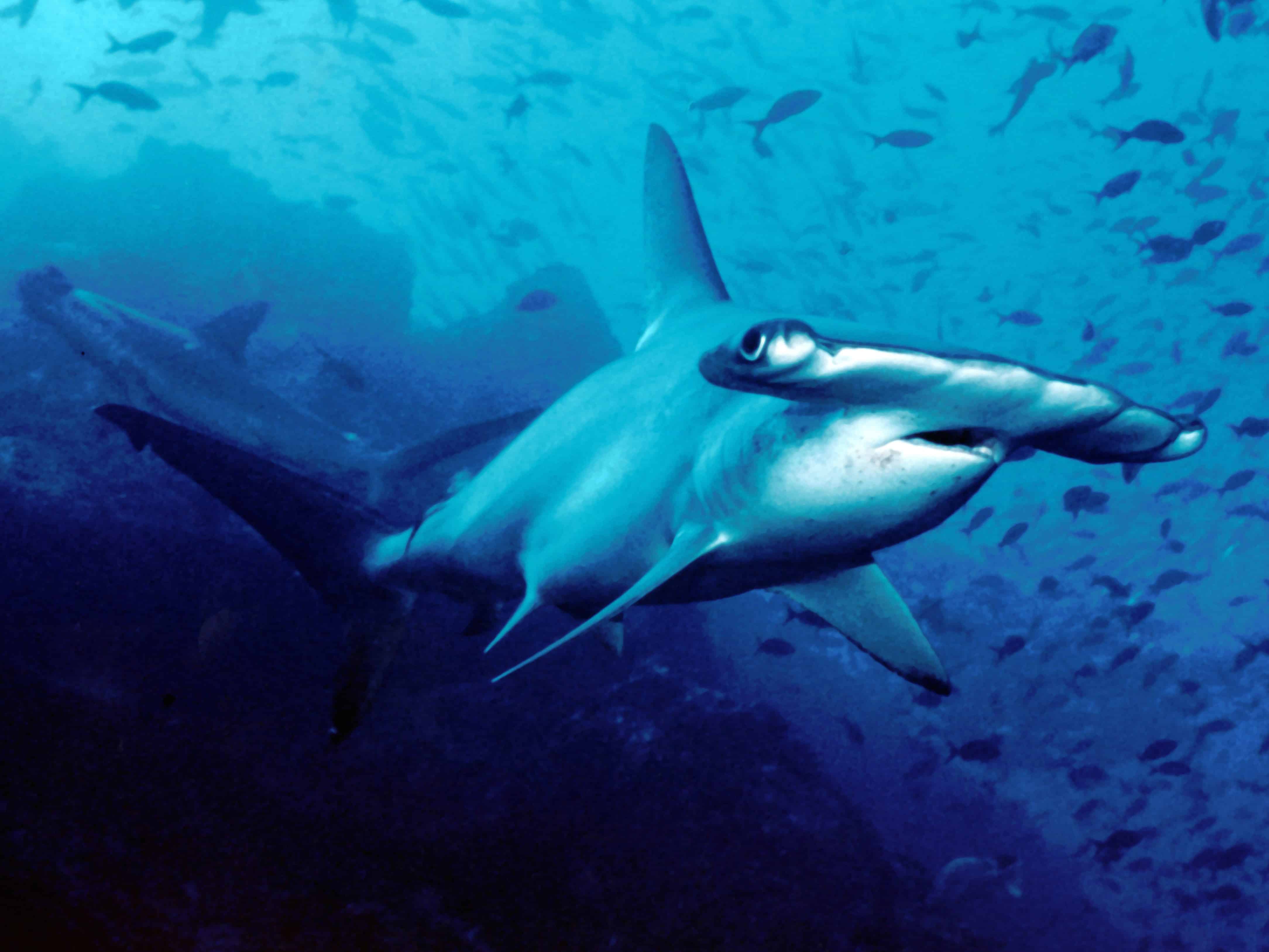
Costa Rica’s National System of Conservation Areas placed a one-year moratorium on the exportation of hammerhead sharks last Thursday. The moratorium will put Costa Rica in compliance with the Convention on International Trade in Endangered Species of Wild Fauna and Flora, known as CITES, after more than a year of the country having skirted regulations.
Members of the National System of Conservation areas, or SINAC, passed the new moratorium after obtaining results from studies from the CITES Scientific Authority (CRAC-CITES), which determined that the commercialization of products from the common hammerhead (Sphyrna lewini), great hammerhead (Sphyrna mokarran) and smooth hammerhead (Sphyrna zygaena) would be detrimental to their populations. The studies — which can result in what is known as a non-detrimental finding, or NDF — were ordered in March, six months after CITES regulations for the three species of hammerheads should have gone into effect.
Costa Rica was a leading country that pushed for global regulations on hammerhead species, and at a 2013 CITES meeting the sharks were added to Appendix II of the convention. Unlike species on Appendix I, those included in Appendix II can be commercialized if a member country proves that their sale is not detrimental to local species populations. Although Costa Rica’s CITES delegation proposed the regulations, the country still failed to meet its own deadline. Costa Rica should have finished its NDF studies and placed any restrictions on hammerhead sale and export by September 2014. Instead, SINAC approved the export of more than 411 kilograms of hammerhead shark fins last November and another of up to 490 kg in February.
The exports prompted outrage among conservationists, and SINAC quickly issued a temporary moratorium until the NDF studies could be completed.
In August, CRAC-CITES released the results and recommended an export ban. The scientific body noted that there has been a shark population reduction, but recommended the Costa Rican Fisheries Institute to determine the actual size of the local populations and to conduct studies in order to develop better technical justifications for minimum-catch sizes. CRAC-CITES also noted that the current export process in Costa Rica does not have reliable traceability to ensure exported sharks are the same sharks landed at docks.
The moratorium comes one month after the Costa Rican government announced it would no longer support or propose any additional international protections for commercially viable shark species.





