

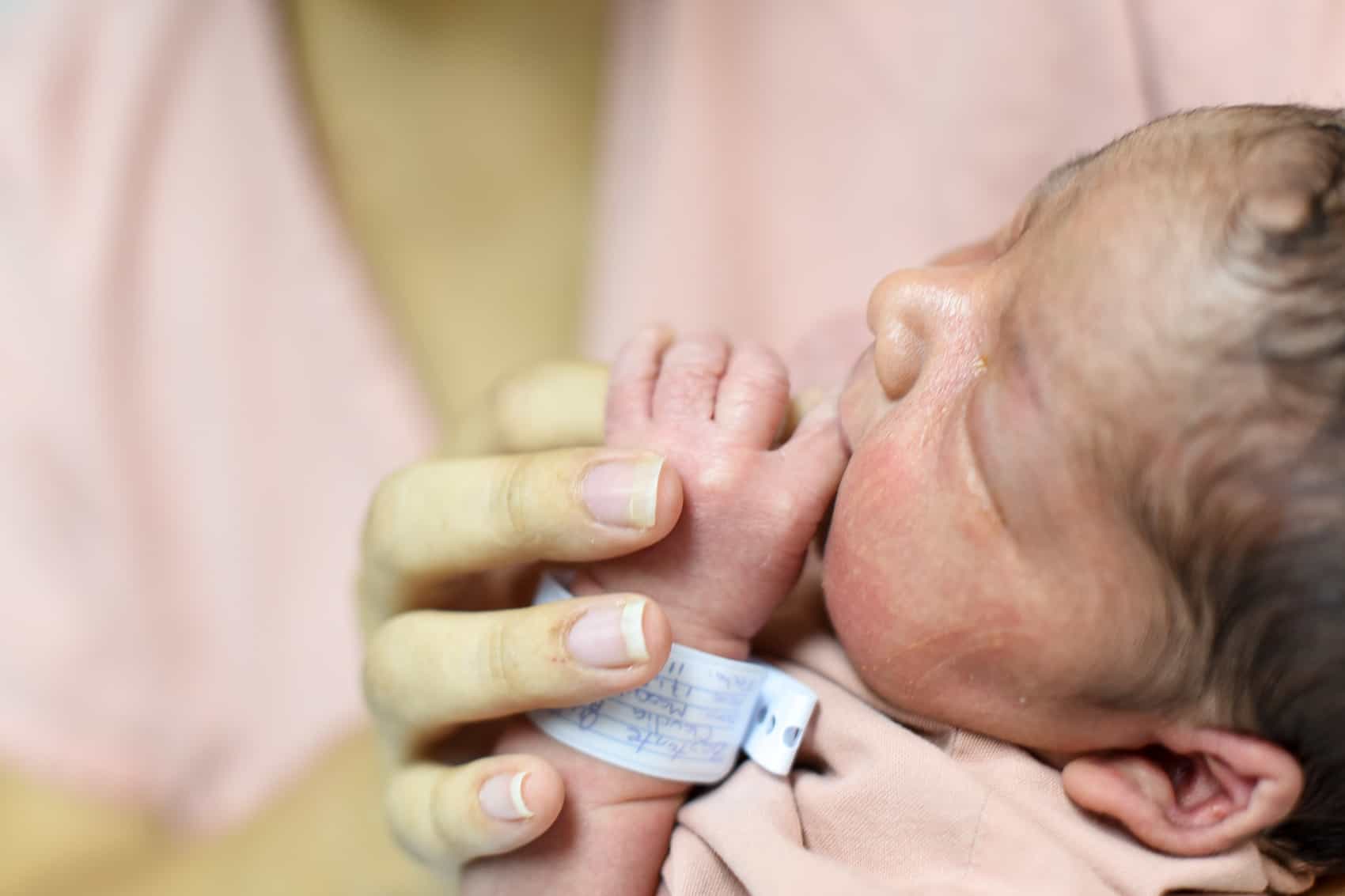
To have a child in another country is to take on an entire nation as your mother-in-law. It’s a new family, or culture, into which you’ve married, and which once accepted you without much comment, but now has plenty to say about your every move. At least, it’s like that in Costa Rica, where the usual level of advice-giving bestowed upon a new mother reaches epic proportions.
My actual mother-in-law is very relaxed and has never given me any unsolicited parenting advice whatsoever, now that I think of it. Of course, she doesn’t need to, because cashiers, waitresses, random passersby, and even our neighborhood drunk have been more than happy to instruct me. I’m not complaining – not much, anyway – because this interference goes hand-in-hand with unbelievable kindness and support. But especially in the first few months of motherhood, the incessant instructions from total strangers can be a bit trying.
It’s also quite edifying. Here are a few things Costa Ricans have taught me about parenting. To clarify, these are lessons I’ve been taught, but not all are things I’ve learned. There’s a difference. Like any mother-in-law’s advice, some are gems, and others you hold at arms’ length. To wit:
1. It’s never too hot out to wrap your baby head-to-toe in another fleece blanket.
I knew this one was coming years before I became a mother. I was out running on a scorching day, sweat pouring not only from my forehead but from every inch of skin on every person I passed, when I spotted a tiny baby wearing thick woolen pajamas, mittens, bunny slippers, and a Russian-ushanka-style hat with ear flaps. I’m dead serious.
Why more babies aren’t hospitalized for heat exhaustion, I don’t know. I’ve been reprimanded for insufficiently clothing my baby more times than I can count, including once on a muggy bus where we were all fanning ourselves desperately and my daughter was sensibly clad in a sleeveless cotton dress. The woman next to me commented on the extreme heat, mentioned that the baby looked hot as well, and then asked, “But that’s all you put her in? Aren’t you worried she’ll catch a cold?” At which point I whipped out an ushanka and blanketed my baby’s ears in fur. (At least, I think that would have been the only acceptable response.)
2. Chamomile tea solves everything.
This is one I’ve taken on board wholeheartedly. In fact, it’s strange to think that there was a time in my life when I didn’t think of chamomile tea in almost any situation, for babies or adults. Gas or colic? A little tea in the bottle, and more for a breastfeeding mom. Heading off for vaccinations? Put some washcloths in a jar of tea in the fridge so they’re nice and cool to reduce swelling afterwards. Teething? Rub a special chamomile powder directly on the gums.
Bump on the head? Stressful day? Heart attack in the works? Everything deserves a little té de manzanilla. It represents a broader characteristic of Costa Rica that I admire tremendously – an affection for simple, plant-based cures, not because they’re trendy, but because they’re simple, cheap and effective.
3. Baby carriers are unnecessary torture devices.
I love the trusty canvas baby-carrier that has allowed me to get around San José without a car, hopping in and out of buses with the greatest of ease, striding over damaged and holey sidewalks that would derail a stroller. The carrier makes it easy to protect both parent and baby with a single umbrella, essential during the rainy season. However, I received many unfriendly stares and comments such as, “Poor thing. I suppose she’s used to that contraption” – this as my daughter was peacefully sleeping, or joyfully bouncing up and down.
There’s a good reason for this. In Costa Rica, parents are used to simply carrying their babies in their arms. Imagine that! A good friend in the States told me a story about a fellow mom who’d left her car seat at home, or something, and couldn’t figure out how to get her baby along a sidewalk from point A to point B.
My friend said, “In your arms, perhaps?” and was met with astonishment. Back in the US of A, we like to have equipment for everything, duly JPMA-certified and with an instruction manual the size of the Old Testament. In Costa Rica, this madness has simply not set in, partly for economic reasons (why on Earth is an Ergo so expensive, by the way?) and partly for cultural ones.
That doesn’t mean I no longer get nervous watching a mother leap off of a rickety, steep bus staircase onto a crumbling curb while rocking mile-high stilettos, all with a week-old baby cradled in the crook of her arm. I think there’s a happy medium to be sought here – see item number 5.
4. Get over yourself with your organic quinoa baby food and five-point high-chair harnesses.
When I was preparing for motherhood, I was reading the same articles and scouring the same websites as any U.S. mother, but in a country with nowhere near the same range of products to buy. I worried that I wasn’t going to be able to buy my baby the right things, that she’d be unsafe and filled with chemicals and so on and so forth.
The Costa Rican side of the family tended to greet my concerns with calm, compassionate smiles and not much else. I came to realize what was behind those smiles – the knowledge that babies really don’t require as much stuff, or information, as overly-connected new moms tend to seek out. I’m not knocking organic food or quinoa or five-point harnesses. I’m knocking the level of stress that, from what I can see, surrounds so much of U.S. babyhood, at least for people with the time and economic means for such things. (A New York Times article even described the way that some people are choosing not to have kids just because they want to avoid the materialism that goes along with it.)
That said…
5. Every culture gets silly about babies in its own way.
This is the most important thing I’ve learned, and it’s why I believe any parent, from any country, would benefit from living or traveling abroad. It might sound trite to say that there’s no correct way to raise a child, but receiving parenting advice from more than one culture really drives that home. Costa Ricans go overboard wrapping their babies in wool on sweltering days, just as estadounidenses are obsessed with having a specific piece of baby equipment for every single conceivable occasion. A Costa Rican mother might run around town with her baby in her arms, while a Gringa might be more relaxed about letting her baby play in the dirt. It’s all summed up by the common phrase cada loco con su tema: every nut has his own pet subject. It’s especially true for parents, who are crazy with love.
I think the answer is to learn from each other’s oddities and obsessions: the Tica mother taking off that extra sweater, the Gringa carrying her baby to her neighbor’s in her arms. The answer is to remember that the reason we’re so nuts is that we want our kids to be okay. The answer is to teach each other the one thing that almost any parent needs to learn, and learn, and learn again: that really, all of us are making it up as we go along.
Happy Mother’s Day.
Read previous Maeology columns here.
Article written by Katherine Stanley Obando





