

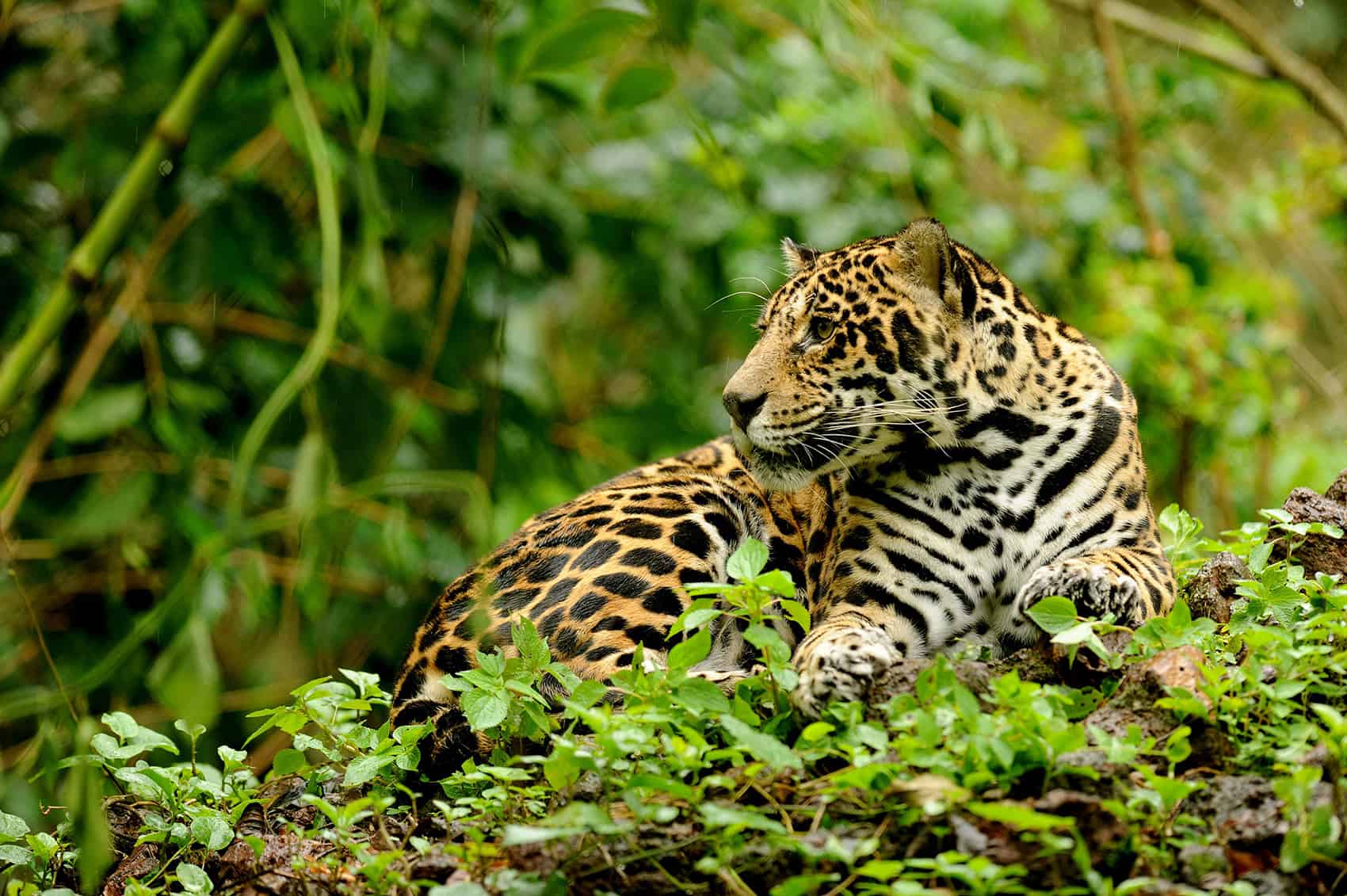
It’s not easy for humans and wildlife to live next to each other, and in Costa Rica, one of the primary examples of this has long been the conflict between people and jaguars. However, a project getting under way in Guanacaste and the Osa Peninsula – Costa Rica’s northwestern and southwestern regions, respectively – is trying to ease tensions between farmers, or ranchers, and jaguars.
The objective of the program, sponsored by the National University (UNA), is to find ways for farmers to protect their cattle without killing the big cats.
The human-jaguar struggle dates back to the introduction of cattle by the Spaniards, but worsened in the 1970s when the Costa Rican government inadvertently placed the two species at odds through simultaneous programs:
One, a homesteading initiative, encouraged farmers to set up shop in isolated and inhospitable places, thus infringing on animals’ habitats; the other, the country’s budding conservation movement, designated protected areas and refuges in those same areas. In recent years, a number of initiatives have emerged to try to address the problem and provide farmers and communities with alternatives while protecting jaguars.
Today, the situation is bad in Osa, said Carolina Sáenz-Bolaños, who coordinates the UNA Jaguar Program. Hunting, gold mining, loss of habitat and loss of prey have reduced the population there. In Guanacaste, on the other hand, jaguar numbers seem to be increasing, along with the risk of conflict.
The idea of this latest initiative of the Jaguar Program is to work with local people in both regions to show that they can live with wildlife while also protecting their cattle and other domestic animals. In the weeks to come, Sáenz-Bolaños and colleagues will meet with farmers and ranchers at cattle auctions to explain the project and test their interest.
Similar programs are working in Venezuela, Brazil, Mexico and other places, but need to be adapted to Costa Rica and to the size and type of farming in the target areas. Some solutions are easier than others.
For example, explained Sáenz-Bolaños, if the cattle drink in a river, farmers can provide them with water in a more secure area. Corrals can be used to protect cattle, especially at night. Radio music will make the cats think people are nearby. Dividing a pasture into quarters and moving the cattle every day will make them harder to find.
Lights, even firecrackers, can be useful in keeping jaguars at bay. Burros, or donkeys, can be added to the herd, because they make noise that alerts the cattle about the presence of cats; older cows and bulls with big horns tend to warn off jaguars as well, and moving cattle away from wooded areas will also help.
And then there are water buffalo. In Venezuela, Sáenz-Bolaños said, they have herds of buffalo that are able to resist attacks yet provide as much milk as cows, if not more, and Costa Rica has herds of its own that provide an alternative here as well.
These are a few of the tricks that keep cattle safe. However, Sáenz-Bolaños said program workers will analyze each participating farm by size, location and other factors to determine the best methods.
The Jaguar Program is part of a larger, umbrella organization, the International Institute for Conservation and Managing Wildlife (ICOMVIS), an interdisciplinary program that borrows students and teachers from different departments to study and implement conservation projects.
Their work with jaguars began in 1990 in Corcovado National Park to study their habits and food sources. Later, they began using cameras to capture images of the cats and identify them.
Jaguars range through forested areas, in the Caribbean area, Osa, Guanacaste and national parks. Their diet is meat; wild pigs are most common, but monkeys, deer, turtles, sloths and other animals also are prey. The powerful cats can weigh up to 200 pounds. The brown-colored pumas, or mountain lions, are smaller and share wooded areas with jaguars. Both species are endangered and protected.
Another new phase of the Jaguar Program is educational outreach to address underlying cultural issues. Education students and teachers from UNA have been working with schools in the areas to show that jaguars and pumas are not the terror that legends and tales speak of, but are part of an ecosystem.
“If the children learn now, when they are small, they will be less likely to hunt them or destroy their environment” later on, Sáenz-Bolaños said. A coloring book about the life of jaguars is one of the tools the program uses. Teachers write stories about jaguars, and students have used radio campaigns and other media to reach the public.
“It’s about changing the mentality of the people,” Sáenz-Bolaños explained. “People trust the university and have been receptive.”





