

The 21st century will present gloomy challenges for Costa Rica and the rest of Latin America, such as the collapse of wildlife habitats, animal extinction, water scarcity and the spread of disease in an already vulnerable population.
The United Nation’s Intergovernmental Panel on Climate Change (IPCC) laid out this forecast on March 31, as one of its region-by-region follow-ups to the September global assessment on climate change. The reports collect over 12,000 peer-reviewed scientific papers looking at climate’s future impact on environments and society, with the intention of preparing regional leaders to adapt.
The report said Latin America has the highest biodiversity on the planet, but many of its habitats, especially in Central America, are highly vulnerable to climate change.
“Coral reefs, seagrass beds, mangroves, rocky reefs and shelves, and seamounts have few to no areas left in the world that remain unaffected by human influence,” the report’s chapter on Latin America said.
Sea rise, ocean warming, acidification, overfishing, habitat pollution and invasive species all threaten these ecosystems. One-third of coral building species already are threatened with extinction. The report estimated that the Mesoamerican Barrier Reef would collapse by approximately 2060, and that all studied species of coral would go extinct by the century’s end. The Ocean Health Index ranked Central America’s countries as the some of the worst in the world in terms of sustainable fishing policies, marine biodiversity, coastal protection and other parameters.
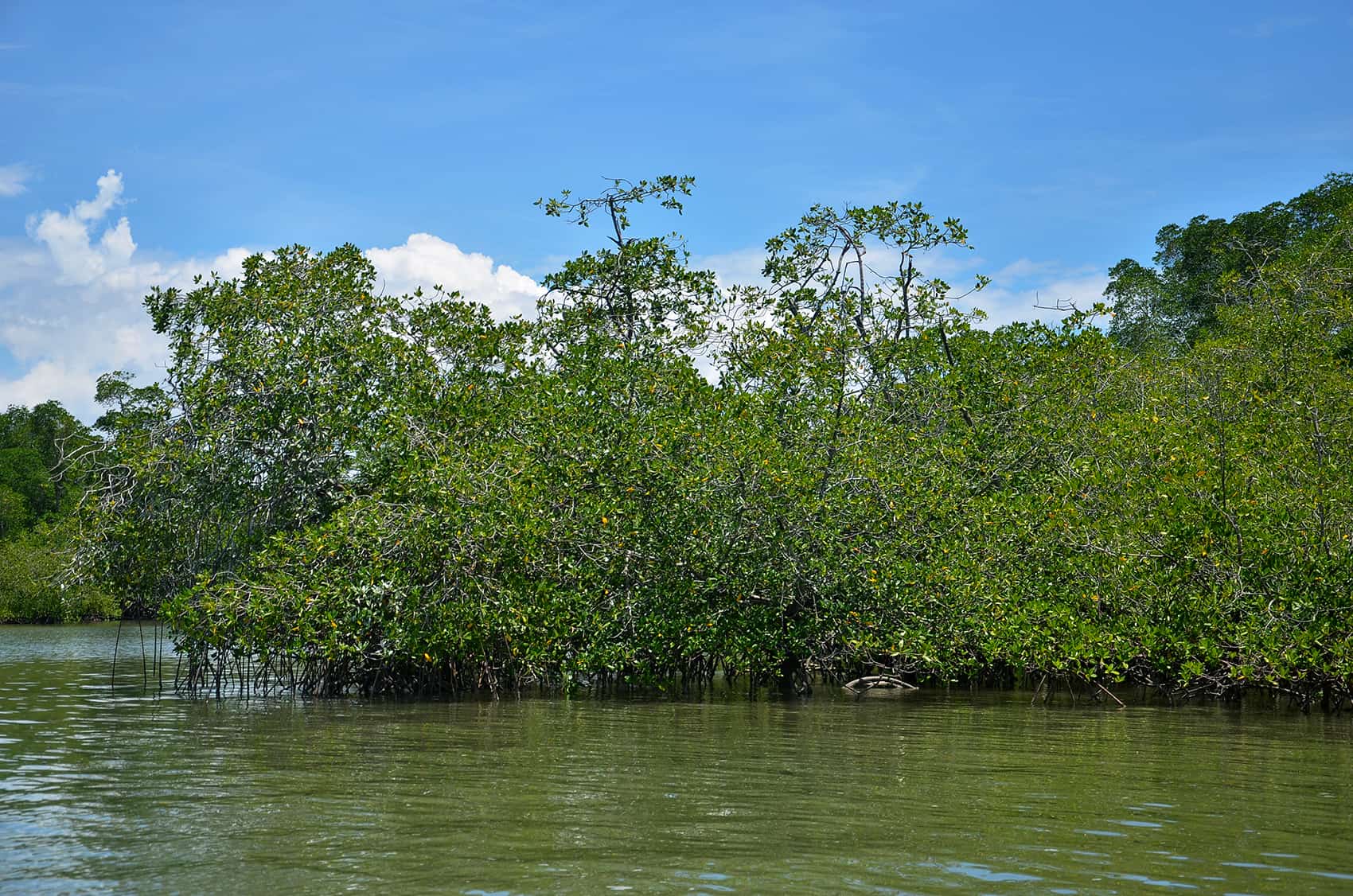
Additionally the report said mangrove species could go extinct in the same timeframe, due to deforestation, land conversion, increased agriculture and shrimp ponds. The mangroves along the Pacific and Atlantic coasts of Central America are among the least healthy in the world, with 40 percent of their species already threatened with extinction.
In a relatively short period of time, tropical forests in the region will be replaced by savannas. Current savannas, grasslands and shrub lands are under threat from forest fires and agricultural grazing.
Across North and South America the report predicted 10 percent of all vertebrate species would become extinct by 2100.
Since 1970, Latin America already experienced a temperature shift of approximately 0.85 degrees Celsius (1.2 Fahrenheit). The report predicted a shift of 1.6-4.0 C (2.2-5.6 F) by the century’s end. The one exception to temperature change was the coastal region of Chile and Perú, which actually experienced a slight cooling during this period.
The changing climate will increase the number of extreme weather events, a trend that already has been observed, according to the report. In the 1980s, 15 hurricanes struck Central America, and in the ’90s only 9. In the first decade of the 21st century, there were 30. The report said 630 extreme weather or climate events struck Latin America during this first decade, causing 16,000 deaths and affecting 46.6 million people. Climate change cannot explain any single extreme event, such as a hurricane or drought, but it increases the tendency for these disasters to occur.
Social vulnerabilities
One of the Latin America section’s authors, climatologist Eric Alfaro from the University of Costa Rica, said Central America is particularly vulnerable due to a strong dry-wet season cycle.
“The diminished capacity to recover is particularly true for the countries in Central America, a region characterized by societies affected with large hydroclimatic variability and contrasts,” Alfaro said in an email.
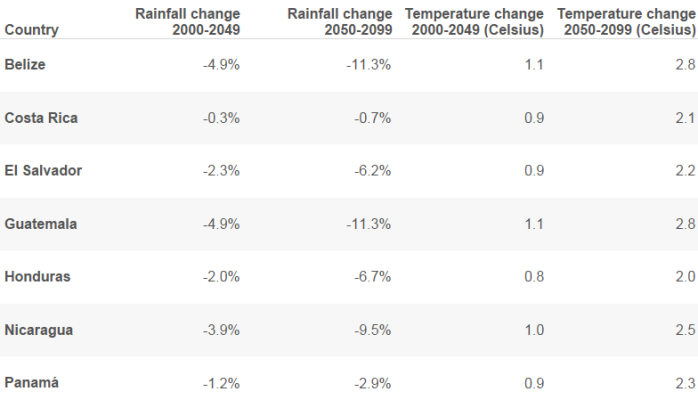
Alfaro pointed to a pair of 2012 studies he co-authored, which said climate change will exacerbate the economic differences between the northern Central American countries and the southern pair of Costa Rica and Panama. Specifically, Alfaro’s work pointed to Guatemala, with its high birth rates, high levels of poverty and forecasted drying climate.
“Guatemala shows dire conditions at the end of the century,” one of Alfaro’s studies said.
The IPCC report said tropical diseases will flourish in Latin America over the century. There already has been an observed increase in dengue in the last 25 years in Colombia, Venezuela, Argentina and French Guiana. The report estimated the disease costs countries of the region some $2.1 billion annually in health care costs and productivity loss. Costa Rica had a record number of dengue cases last year.
Malaria has seen an increase over the past five decades in Colombia alongside temperature increases. Further south, the disease has ascended to previously unseen high-altitude zones in Bolivia, aided by increased temperatures. The report predicted increases in other diseases such as cholera, hantavirus, the parasitic worm disease schistosomiasis and leishmaniasis.
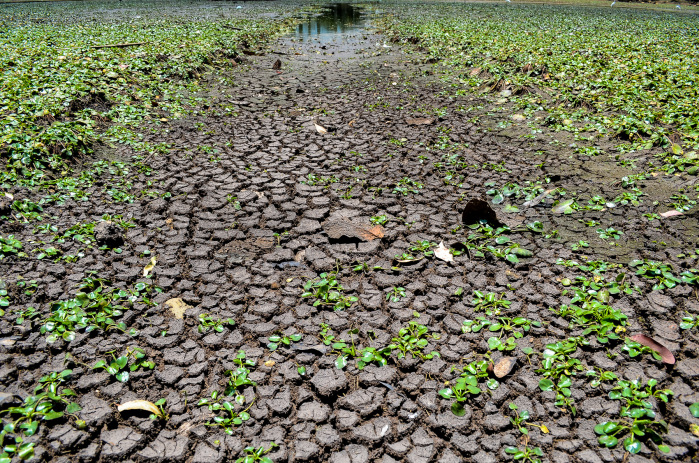
Climate change already has caused a later start to the wet season in Central America, according to the report. Effects of this have been observed in Costa Rica, where water rationing and electricity rationing are increasingly implemented due to a reliance on hydropower. The IPCC report said that Costa Rica, Brazil and Colombia receive almost 80 percent of their electricity from hydroelectric dams. In the late dry season, Costa Rica often turns to burning petroleum or resource rationing. The report forecasted this trend would continue, meaning the lost electricity will have to be replaced.
Brazil and deforestation
Coming under special scrutiny in the section was Latin America’s largest and most populous country, Brazil. The report singled out Brazil’s forest management as a culprit in climate change.
“Tropical deforestation is the second largest driver of anthropogenic climate change on the planet, adding up to 17-20 percent of the total greenhouse gas emissions during the 1990s,” the report said.
Specifically, Brazilian deforestation accounted for 2-5 percent of annual carbon dioxide emissions from 2005-2009. The report said that by 2030, the Amazon rain forest is predicted to shrink by 24-33 percent, due to agricultural expansion and development.
“Brazil is by far the country with the highest area of forest loss in the world,” the report said.
The IPCC said that 39 percent of all annual deforestation happens in Brazil, with nearly 22,000 square kilometers cleared per year.





