

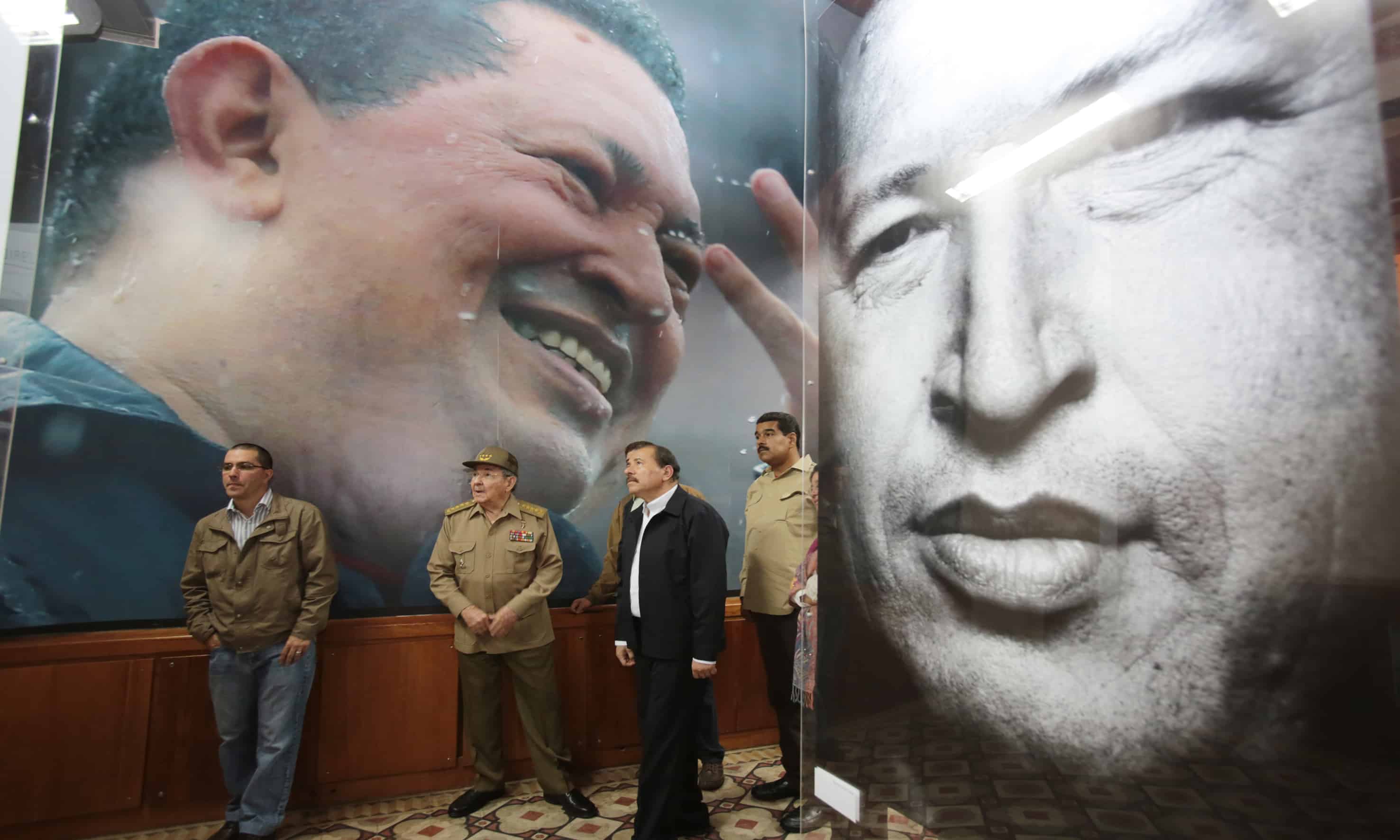
When Hugo Chávez came to power 12 years ago, Venezuela had the highest per capita income in Latin-American, imported less than 20 percent of its food, pumped 3 million barrels of oil a day, and its currency – the Bolivar – was one of the strongest currencies in South America.
Let’s look at Venezuela today:
- In the past six months, Venezuela’s economy has contracted by 12 percent – the worst performance by any country in Latin America.
- Annual inflation has been 30 percent or higher since December 2007.
- Oil production has dropped from over 3 million barrels a day to 2 million barrels a day.
- Venezuela suffers from rolling blackouts over most of the country.
- Venezuela today imports more than 70 percent of its food and suffers scarcity of even the most basic items.
- The salary for the average Venezuelan is 33 bolivars a day, while a container of margarine costs 45 bolivars – when it can be found.
- The lack of potable water, especially outside of Caracas, has reached crisis levels.
- The Chávez government has plenty of oil but not enough cash to meet all of its obligations.
- Chávez has recently devalued the bolivar by 50 percent. Venezuela now has the weakest currency in Latin America.
- The Royal Bank of Scotland predicts that Venezuela faces a rise in consumer prices of 40 percent this year.
- Total foreign investment in Latin America last year was $126 billion, with $8 billion going to Colombia and $15 billion to Chile.In Venezuela, direct foreign investment totaled negative $3.1 billion dollars. This means businesses are taking money out of the country at a breathtaking rate. No one wants to invest in Venezuela because the government can decide to take over their business on a presidential whim. And if they challenge the president, they could end up being charged with a crime, as Chávez has already shown.
- Crime is growing at an alarming rate – the fastest increase in Latin America.
During Chávez’s nearly 12 years in power, Venezuela has received nearly $1 trillion in oil revenues. What happened to that money? Two words: Bolivarian Revolution. Chávez is a true believer in Fidel Castro and the benefits of a Cuban-style police state. Unfortunately for the Venezuelan people, the benefits all go to the maximum leader – in this case Chávez.
The fact that 28 million Venezuelans suffer is of no interest to Chávez. Like Castro, Chávez only cares about personal power. Along with the destruction of the Venezuelan economy, Chávez has been very busy locking up political opponents, closing down opposition radio and TV stations, and intimidating and threatening anyone who opposes him.
He has nationalized virtually every segment of Venezuelan commerce – banks, food distribution, agriculture, and the oil industry, among others. There are now more than 50,000 Cubans in Venezuela sent by Fidel. 20,000 of them are doctors and health care workers, and 30,000 of them are spread throughout the Venezuelan government ministries, helping Chávez transform Venezuela into a carbon copy of Cuba.
Last month, a Venezuelan general quit the army, saying, “I am tired of taking orders from the Cubans.” Why would anyone want to turn their country into Cuba? Cuba is a country that has failed on every level for 50 years. It’s a beggar nation that has been an economic basket case since Castro took power in 1959.
First the Soviet Union and now Venezuela have supported Cuba with $1 billion, while the long-suffering Cuban people have lived on ration cards and oppression. Thousands of Cubans have risked their lives on flimsy rafts trying to float to freedom in the United States. Cuba has been successful at only one thing: building the perfect police state.
Building a similarly perfect police state is Chávez’s goal for Venezuela, and President Daniel Ortega’s goal in Nicaragua. In Venezuela’s last municipal elections, the opposition candidate Antonio Ledezma won the mayor’s seat in the capital of Caracas. As soon as he was installed Chávez effectually neutralized Ledezma by stripping the mayor‘s office of all funding and setting up a parallel authority of Chávez cronies to govern greater Caracas.
Ledezma, the freely elected mayor, was barred from his office by Venezuelan Police. Transparency International scored Venezuela 136th out of 168 countries, making Venezuela one of the least transparent and most corrupt countries on earth.
In Nicaragua, Ortega is going down the same road, supported by a billion dollars sent to his personal bank account by Chávez. How will this end?
There is an old saying, “If the communists took over the Sahara desert, in two years there would be a shortage of sand.”
Chávez’s support among the poor – his main constituency – is also disappearing. A recent poll showed that 64 percent of Venezuelans do not want him to stay in power beyond his current term. Ortega has the support of only 20 percent of Nicaraguans.
Chávez is a buffoon and will fail no matter how much oil he has.
Unfortunately, he will take the Venezuelan people with him as he turns the country into a banana republic run by a caudillo. Ortega had better start thinking about where he will get his next billion dollars.
Building a dictatorship is expensive. And Nicaragua doesn’t have oil.
Howard Cox moved from Costa Rica to Nicaragua seven years ago. His wife is Nicaraguan and they have built a house and reside in Granada.





