

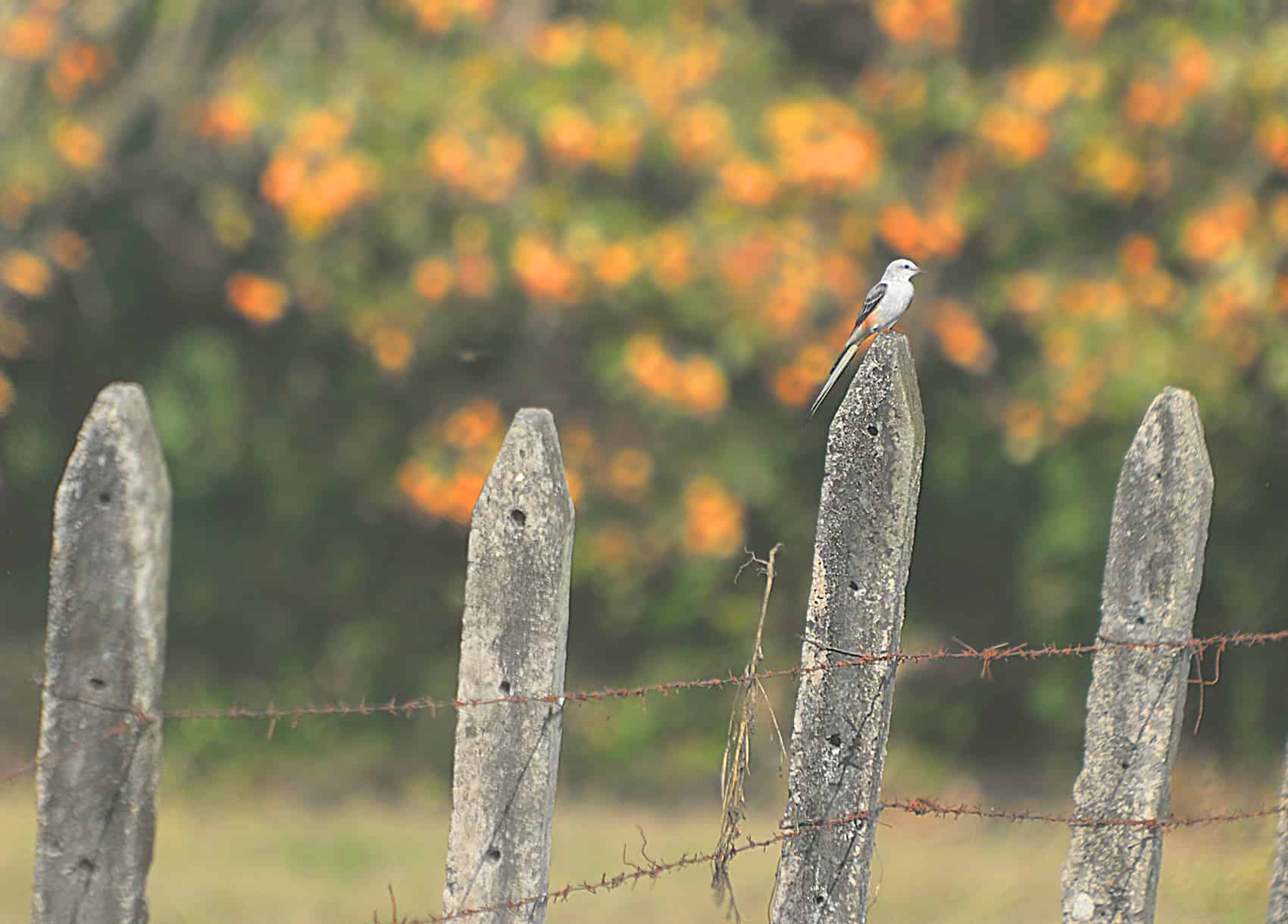
BY June, approximately 245 fewer species of birds will be flying through Costa Rica. No, a mass extinction is not on the immediate horizon, although scientists say destruction of habitats makes such a threat a possibility. These birds leave every year, flying north for the rainy season. UNLIKE its inverse – flying south for the winter – this phrase does not quite roll off the tongue.
This, however, could change if recent efforts by the Environment Ministry and the Costa Rican Ornithological Association (AOCR) to raise awareness and protection of migratory birds are successful. On Tuesday, Environment and Energy Minister Carlos Manuel Rodríguez signed an official decree declaring the second Saturday of April National Migratory Bird Day in Costa Rica.
ALTHOUGH one day alone will not protect the country’s migratory bird populations, the recognition is an important step toward accomplishing the association’s goals of education and protection, according to Ornithological Association president Mario Ossenbach.
While the migration of birds south during the winter months is a well-known phenomenon in North America, and the subject of legends, traditions, poems and celebrations, the flight of the birds back north as the rainy season begins has received much less attention in Costa Rica, Ossenbach said.
For example, did you know that the ruby throated hummingbird, a bird weighing 4 grams, can fly up to 800 kilometers without stopping during its migration between northern Minnesota and Costa Rica? Approximately 250 of the more than 850 species of birds documented in Costa Rica are migratory.
PROTECTING the habitats of migratory birds, even though they are fewer in number than permanent resident species, is much more difficult than protecting the habitats of the latter, Ossenbach said. “Protecting a bird that is only in one zone is relatively easy,” he said. “Protecting a bird that makes a migration (means) we have to protect the (flight) corridors, and when there are latitudinal migrations, we have to coordinate protection policies between countries.”
For example, the effort to protect the peregrine falcon included an international fight to ban the highly toxic pesticide DDT, according to the Illinois Raptor Center’s Web site. When ingested by peregrine falcons, DDT causes the birds’ eggshells to become thin and break easily. Although DDT is still used in some countries (not Costa Rica), the population has recovered and the birds – which can reach speeds of 200 miles per hour when hunting – can be seen in Costa Rica on their migration south.
THE reality that many birds’ habitats cross national lines is what inspired International Migratory Bird Day, which falls on the second Saturday in April in Central and South America, and the second Saturday in May every year in North America. The month difference is based on the departure of birds from the south and the arrival of the birds in the north, but the message is the same, Ossenbach explained.
Costa Rica has become a birdwatchers’ haven, not only for its resident populations of scarlet macaws and toucans, but also for the large variety of migratory birds seen here, including raptors, warblers, orioles and coastal birds such as sand pipers, boobies, terns and gulls.
THE migration of hawks and vultures in October and November is one of the most spectacular opportunities for birdwatching in the country, according to Ossenbach. Millions of the raptors can be seen during their migration to South America along Costa Rica’s Atlantic coast, from the northern plains to Limón. Because the birds do not eat during their journey, which can last two months, they must conserve energy by flying with air currents.
Rising hot air lifts the birds, which ascend in circles, until they reach considerable heights. They then glide with great speed until they lose too much height and must repeat the process. Peregrine falcons and ospreys also can be sighted during the raptor migration. There is a resident osprey population as well.
THE migrations of many smaller birds are shrouded by the darkness of night. Orioles, summer tanagers, rose-breasted grosbeaks and warblers prefer to travel in the dark, which hides them from predators and provides cooler temperatures. Birdwatchers often can see them eating during the day, beginning in September, on Costa Rica’s central plateau and in the northwestern province of Guanacaste.
Costa Rica also provides opportunity to catch glimpses of the five bird species that migrate north to Costa Rica from the south to lay eggs: the swallow-tailed kite, piratic flycatcher, sulphur-bellied flycatcher, plumbeous kite and yellow-green vireo. ALTHOUGH observing these birds can be fascinating – revealing things such as swallows catching and eating insects in flight – the Costa Rican Ornithological Association hopes to take birdwatching to new heights by increasing the study of ornithology in Costa Rica.
“The statistics of migration in Costa Rica are very recent and very limited,” said biologist and group member Julio Sánchez, adding that he thinks there are fewer than 10 ornithologists in the country. “What we do know is that the populations of the vast majority of species are declining,” he said.
Early studies suggest human impact has affected bird migration not just through destruction of habitat, but also by supplying needed resources, according to Ossenbach. Birds that find the food they need from birdfeeders put out by humans do not migrate, he said.
JOINT studies have been initiated between researchers in the United States and the ANAI Association in Talamanca to determine how many raptors leave the United States, and how many arrive in Costa Rica. Ornithological Association members hope such studies will be maintained for the long term. “Two, three, four years of study does not mean anything when talking about a species,” group member Hernán Araya said.
“We realize too late how we are impacting these birds.”





