

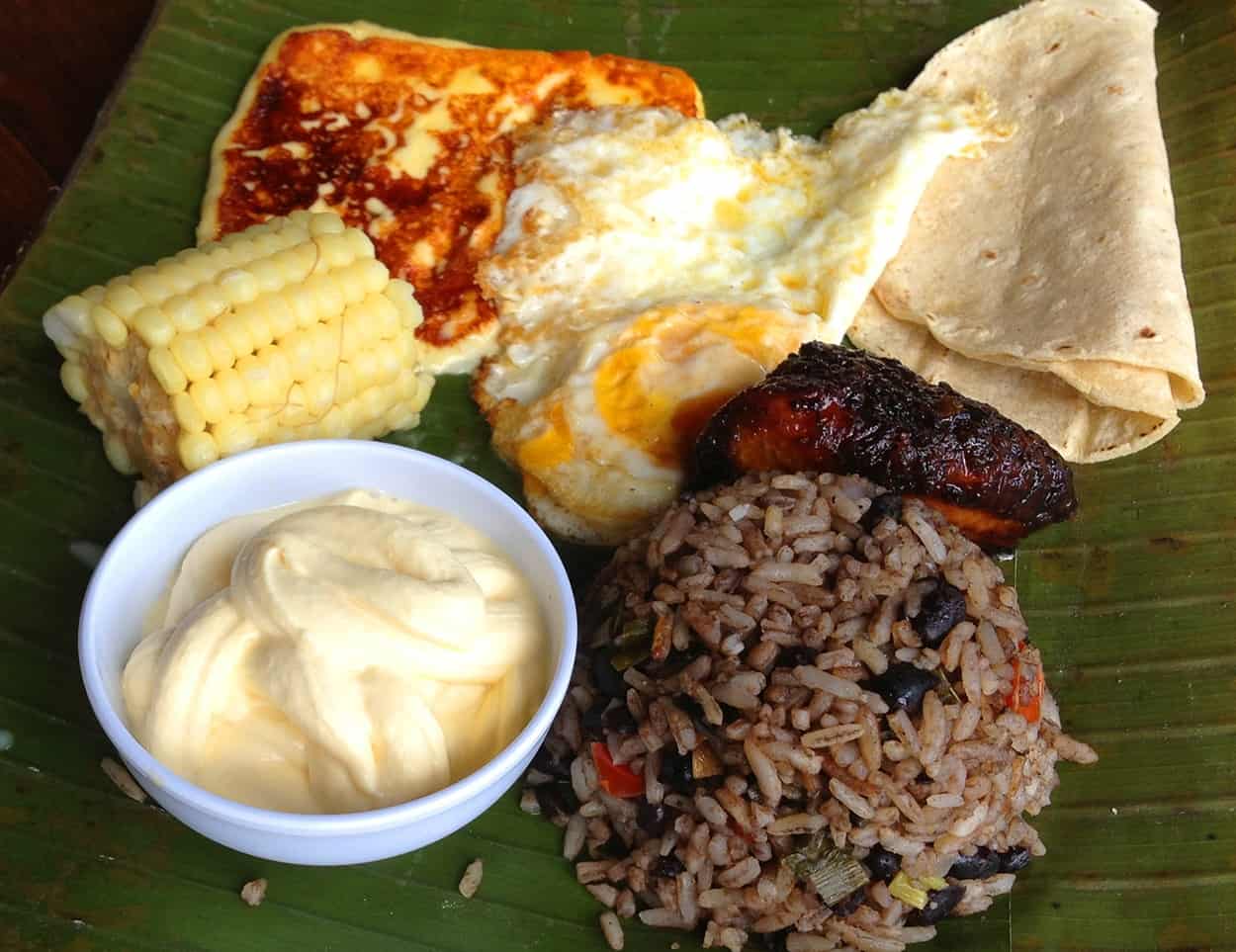
WHEN “The Best Recipes of Costa Rica” came our way this month, I jumped at the chance to peruse its slick, colorful interior in a quest to answer the single burning question on my mind: how can you fill 90 pages with a recipe for gallo pinto? Now, I know that’s unfair. Anyone who’s lived in Costa Rica is aware that there are many culinary delights to be discovered, particularly with influences from the south (such as sinful Argentinean empanadas) or north (Nicaragua, México and everything in between) in the mix.
But Costa Rica is not a country known for its cuisine or renowned for unique national dishes. Even the ownership of gallo pinto itself, that ubiquitous rice-and-beans breakfast favorite, is the subject of a fierce ongoing battle with Nicaragua. So I was curious to see what the “best recipes of Costa Rica” might be.
THE book, available in both Spanish and English, with recipes by Tatiana Coto and photographs by Mike Blum, is a beauty. Each recipe takes up two pages – instructions on the left, a full-page photograph on the right. There are beverages, from rompope (eggnog) to horchata (not a Costa Rican original, but a handy inclusion); appetizers, from ceviche (fish marinated in lime juice) to patacones (fried plantains); main courses, including arroz con pollo (chicken and rice) and smoked pork sausage with potato; and desserts, including sweet bean and plantain turnovers and an intriguing mango and coconut ice cream. Conspicuous in its absence, to my mind, was chifrijo, a mix of beans, rice and chicharrón (fried pork), but there are plenty of other options to try.
Sections on dressings and condiments, such as escabeche, the marinated vegetables found on the tables of many restaurants, and “coffee companions,” such as sweet corn pancakes or banana cake, are also included.
The book has a few offerings that anyone but a complete novice (a category I’ve only recently departed) could probably figure out alone, such as a “recipe” for refried beans and tortilla chips, or for a casado, the lunchtime staple that simply requires putting rice, beans, meat, salad and some sweet plantains on a plate (the recipes for the various ingredients appear elsewhere in the book).
HOWEVER, Coto has obviously made an effort to make the book accessible to newcomers or tourists who may not have the know-how – or, for those who take the book back home, the local ingredients – Costa Ricans would likely possess. Also, some of the seemingly odd choices for a national cookbook, such as “Shell Macaroni and Tuna Salad,” are sure to bring a smile to the face of any fan of Costa Rica, simply because it’s true: of Costa Rica’s comidas típicas, macaroni with tuna and mayonnaise is surely among the more prominent.
And some of the efforts to help out beginners are quite useful. The back of the book includes a glossary of common Costa Rican ingredients or cooking terms, along with simple recipes for rice, beans and fresh tomato sauce, always nice for beginner cooks.
The book also includes cultural notes about various dishes, helping orient the reader within the world of Costa Rican food. (The poetic introduction went a bit far for my taste, and I had to laugh over the assertion that “we love hot, spicy food; in fact, you could say that we Ticos are very spicy,” since I spend my life here in a constant quest for a taste of heat among the many mild flavors.)
WHEN I ran the recipes themselves by some Tico friends, there was no consensus: a few raised eyebrows from some, but general approval from others. In testing out a few recipes, I found myself diverging from the text here and there based on cooking tips I’d previously received – I’ve always been told it’s essential to fry the rice for your gallo pinto before adding the beans, in order to avoid sogginess, while this recipe had it the other way around – but overall I found them to be good guides.
While an experienced cook or Costa Rica devotee determined to make the most authentic local food possible, particularly Spanish-speakers, might do well to get additional information from other books or from Costa Rican neighbors and friends, “The Best Recipes of Costa Rica” is a good starting place, ideal for newcomers, tourists, nostalgic former visitors or even people who hate cooking – it would make a nice coffee-table book and memento of the country. It’d also make a great holiday gift.
And for all my snide remarks about Costa Rican food, this book has found a permanent place on my kitchen shelf.





