

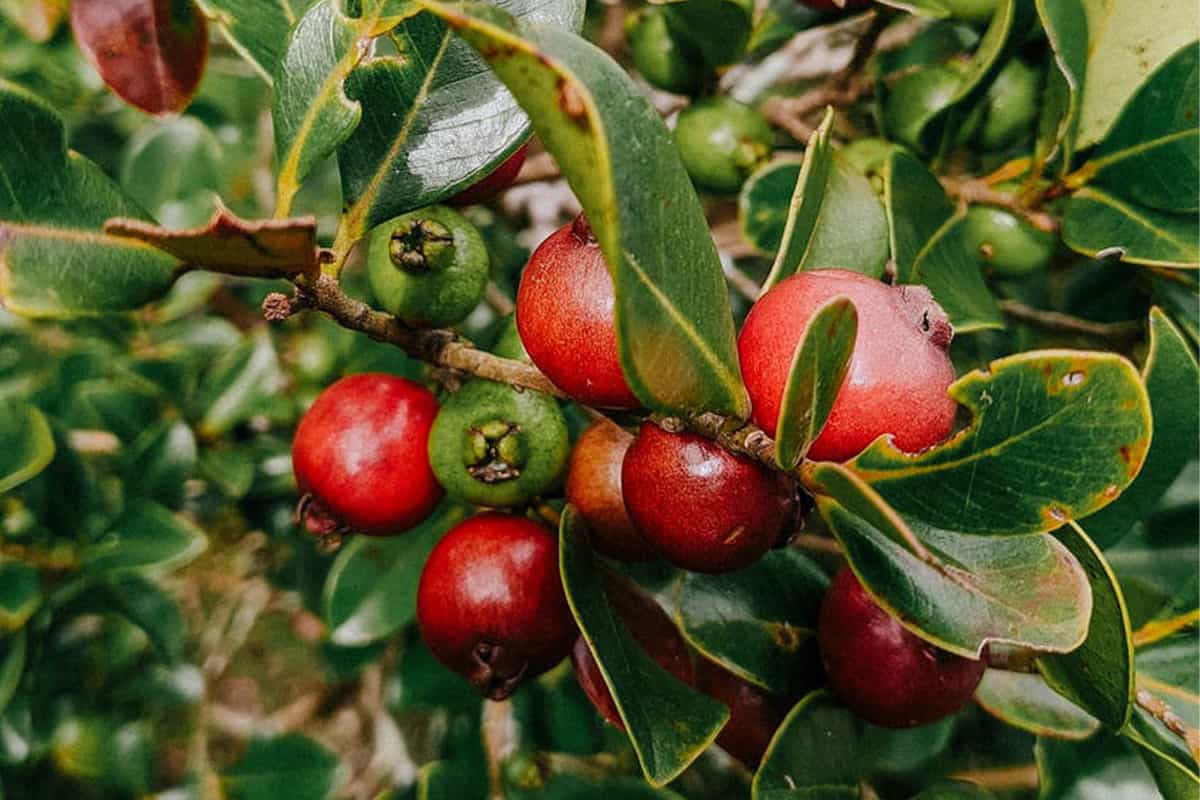
Here’s a tropical fruit that’s an ideal addition to any home garden in Costa Rica. I’m referring to the strawberry guava (Psidium cattleianum) or cas dulce, as it is called in Costa Rica. Most folks know the common guava, called guayaba here, with its pinkish fruits, found throughout the country, but it’s strange how infrequently one comes across the red strawberry guava.
And that’s a shame, because this little fruit tree serves as an ornamental, needs no special care and produces delicious fruit.
The strawberry guava is believed to be a native of the eastern Brazilian coastal region. Today, it is found in many parts of the planet in tropical and subtropical zones.
It can be found to a limited extent in Central and South America, the West Indies, Bermuda, the Bahamas, Jamaica, southern and central Florida and southern California. It has become very popular in Hawaii, where it is commercialized for strawberry guava juice.
This small, slow-growing shrub reaches 1.5 to three meters in height and has alternate, dark-green, glossy leaves. Some gardeners plant them close together to form a living hedge for privacy. Pruning keeps the shrubs low, with dense foliage.
The attractive, red fruits are small (2.5 to four centimeters) and round with a four to five parted calyx protruding from the bottom of the fruit. The seedy pulp of the fruit is white to pinkish, with a strawberry-like, spicy taste. You can eat the fruits directly from the tree or use them to prepare delicious fruit drinks, jams and jellies.
Unlike the common guava, the red strawberry guava is not prone to the attacks of the guava fruit fly. The only real trouble is getting to the fruits before the birds do.
These trees do well in a wide range of tropical soils, particularly red clay. Additions of aged compost and mineral amendments will increase growth and fruit production. Full-sun locations are recommended for best results.
Leading nurseries offer seedling trees, or you can try your hand at starting your own trees from seeds or cuttings. Try planting the seeds in pots or plastic nursery bags, keeping them moist during germination. Transplant young seedling plants to their permanent sites before they become root-bound in the pots or bags.
If you find a neighbor willing to give you a cutting of strawberry guava, you can start 30-centimeter cuttings in pots with prepared potting soil. Keep the cuttings very moist and in the shade until they begin to form new growth, and then slowly bring them out into the sun. These types of vegetatively propagated trees are usually ready to transplant in three to four months.
During the first year after transplanting, it’s a good idea to give them a weekly watering in the dry season, but once established they require no special care and suffer from no significant insect problems or plant diseases.
Highland gardeners will be pleased to hear that this fruit tree is hardy to colder temperatures.
It does well in just about all regions of Costa Rica, except beach areas with salt breezes. I’d suggest that three or four strawberry guava trees are sufficient to supply a good harvest of fruits for a family. Once your trees start producing, you may want to try one of these recipes:
Fresco de Cas Dulce
Though Costa Ricans prefer to cook most of their fruit before they make fruit drinks, I tend to like my fruit drinks blended from fresh fruit. This provides more of the vitamin and nutrient content.
Blend several handfuls of well-washed strawberry guavas in four cups of pure water. Be sure to blend them slowly and for a short time to avoid blending the seeds into the pulp, which tends to make the drink astringent and bitter. Strain the juice from the seeds, and add honey to taste and ice.
Puree
When you have a bumper crop of strawberry guavas, you can try this recipe. Cook six cups of diced strawberry guavas with one cup of brown sugar or tapa dulce. Strain the seeds and keep in a clean glass jar for toast, pancakes and fruit salad dressings. Keep refrigerated to prevent fermentation.





