

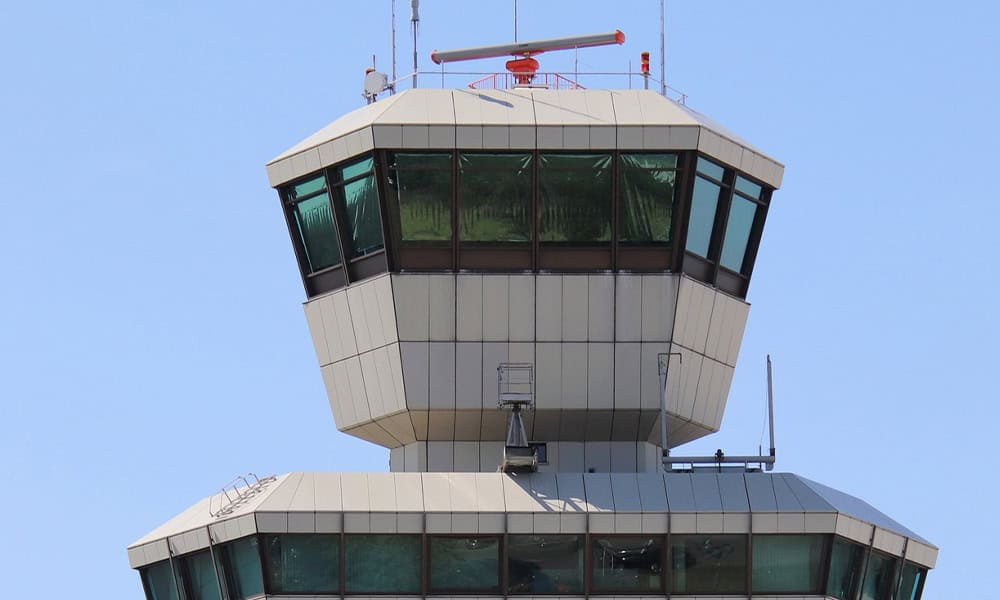
A power failure temporarily knocked out critical air traffic control systems at Costa Rica’s Juan Santamaría International Airport today, raising new concerns about the reliability of equipment at the busiest airport. The electrical problem affected the control tower for nearly an hour, reportedly leaving air traffic controllers without their usual radar screens, communication systems, weather information and radio equipment. During the outage, personnel were left relying on a portable backup radio to communicate with aircraft.
The failure prompted a temporary interruption in airport operations while technicians worked to restore the equipment. However, Costa Rican authorities said the situation was resolved quickly and maintained that scheduled flights were not affected. Public Works and Transport Minister Efraím Zeledón confirmed the electrical failure and said officials initially feared the disruption could last considerably longer. Technical crews were able to restore the affected systems before that became necessary.
Costa Rica’s Civil Aviation Authority also confirmed that normal operations had resumed, including both arrivals and departures. Aeris, the company that operates Juan Santamaría International Airport, said the control tower’s systems were fully restored. Nevertheless, the company advised travelers to contact their airlines directly to confirm their flight status.
The incident raises questions about the reliability of the airport’s electrical infrastructure and whether adequate backup systems are available when critical equipment fails. Air traffic controllers depend on radar, radio communications and weather information to safely coordinate aircraft approaching, landing and departing. When those systems become unavailable, airport authorities may need to restrict operations until normal service can be restored.
Today’s incident is not the first time technical problems have disrupted Costa Rica’s main international airport. On September 12, a truck damaged fiber-optic cables near the airport, temporarily interrupting radar communications, flight-processing systems and airline check-in services. The incident forced some airlines to process passengers manually and resulted in lengthy lines and flight delays.
An even more serious electrical failure occurred last September, when problems with the radar system forced Costa Rica to close its airspace for nearly seven hours. The disruption affected operations at both Juan Santamaría and Guanacaste Airport in Liberia, delaying, diverting or canceling numerous flights.
Following that incident, authorities announced plans to improve the electrical infrastructure supporting the airport’s radar equipment. The latest failure comes as Costa Rica continues to face questions about the reliability of its aviation infrastructure, including technical problems and shortages of air traffic controllers.
Although toay’s outage was relatively brief, it highlighted how quickly a technical failure can affect the systems responsible for managing commercial air traffic. Authorities have not publicly established the precise cause of the latest electrical problem or explained whether it was related to previous infrastructure failures.
For travelers, airport operations have returned to normal. Passengers departing from or arriving at Juan Santamaría are encouraged to check directly with their airlines for the latest flight information.