

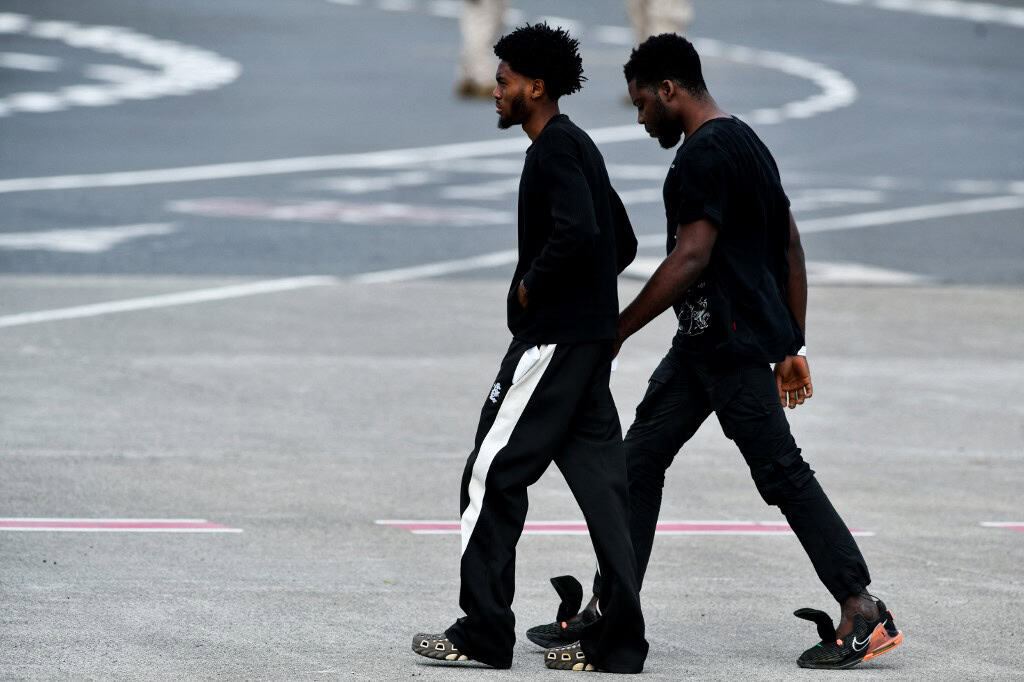
Costa Rica has quietly become an important destination in a growing U.S. deportation program that sends migrants to countries they are not from, leaving hundreds of people to decide whether to stay here, return home or try to move somewhere else. These are not Costa Ricans being deported back to Costa Rica but are people from countries including China, Mexico, Colombia, Brazil, Vietnam and several nations in Africa and Asia who were removed from the United States and flown here under an agreement between the two governments.
Between April 11 and September 3, Costa Rica received 424 people on 20 flights under the current program, according to figures from the Dirección General de Migración y Extranjería. They came from dozens of countries, making Costa Rica one of the more regular destinations being used by the United States for what are known as third-country deportations.
The term sounds complicated, but the idea is fairly simple. A third-country deportation happens when the United States removes someone but sends that person to a country other than his or her country of citizenship. Costa Rica agreed in March to accept proposed transfers of up to 25 people per week. Costa Rican authorities retain the right to accept or reject individual cases, while the United States provides funding for assistance coordinated through the International Organization for Migration, commonly known as the IOM.
The latest detailed government figures available through September 3 show that China accounted for the largest group, with 84 people, followed by Mexico with 68, Colombia with 52 and Brazil with 44. Of the 424 people received by that date, 187 were still in Costa Rica. Another 202 had already left the country, while 35 were in the process of arranging their departure.
What happens after they land is different from the detention system many experienced in the United States. Migrants are received by Costa Rican immigration officials and generally taken to hotels in the San José area. They are not being held as prisoners and are permitted to move around the country. They receive information about their options, which can include returning to their country of origin with assistance, seeking refugee protection in Costa Rica or looking at other legal ways to remain in the country.
That does not mean the process has been simple since some of those arriving speak languages that are uncommon in Costa Rica, including Mandarin, Russian and Arabic, creating challenges when officials try to explain immigration rules, work options and refugee procedures.
Costa Rican immigration authorities have said they receive information about incoming passengers ahead of the flights and arrange interpreters when necessary. Migrant advocates, however, have raised questions about whether everyone fully understands the choices available to them and whether they have enough access to independent legal advice.
International attention on Costa Rica’s role increased this week after reports examined the wider U.S. system of sending migrants to third countries. An international investigation coordinated by Forbidden Stories reported that at least 25,447 people had been deported by the United States to third countries through August 31, 2026. Most were sent to Mexico, but thousands of others have been transferred to countries in Latin America, Africa and the Pacific.
Costa Rica stands out partly because people sent here have more freedom than deportees placed in some other countries. They can leave their hotels, keep their documents and pursue immigration options in Costa Rica. An inspection by Costa Rica’s Defensoría de los Habitantes earlier in the program confirmed that the migrants it reviewed were not being held in custody and had been given regular immigration status, although the agency warned that providing adequate services could become more difficult as more people arrived.
There have also been disagreements over access to the migrants. Recent reporting noted that visits to the hotels by lawyers and migrant-rights organizations were temporarily suspended in August after authorities said some migrants were uncomfortable with the process. Advocates have argued that independent advice is particularly important for people deciding whether it is safe to return to their home countries.
For Costa Rica, the situation creates an unusual immigration challenge. Costa Rica has long received migrants and refugees from neighboring Nicaragua, Venezuela and other parts of Latin America. The U.S. agreement is different because Costa Rica is now receiving people who may have no previous connection to the country, may not speak Spanish and, in some cases, had originally hoped to seek protection in the United States.
Some leave Costa Rica quickly. Others are choosing to stay. As of September 3, nearly 44% of the people who had arrived under the current agreement were still in the country. Among them were 58 Chinese nationals, 33 Mexicans, 13 Vietnamese, 10 Brazilians and nine Colombians, along with smaller numbers from several other countries.
That means what began as a weekly arrangement involving relatively small flights is becoming a longer-term issue for Costa Rica’s immigration system. For the migrants themselves, landing at Juan Santamaría International Airport is not necessarily the end of their journey. For many, it is the beginning of another decision: go home, try another country or attempt to build a life in Costa Rica.





