

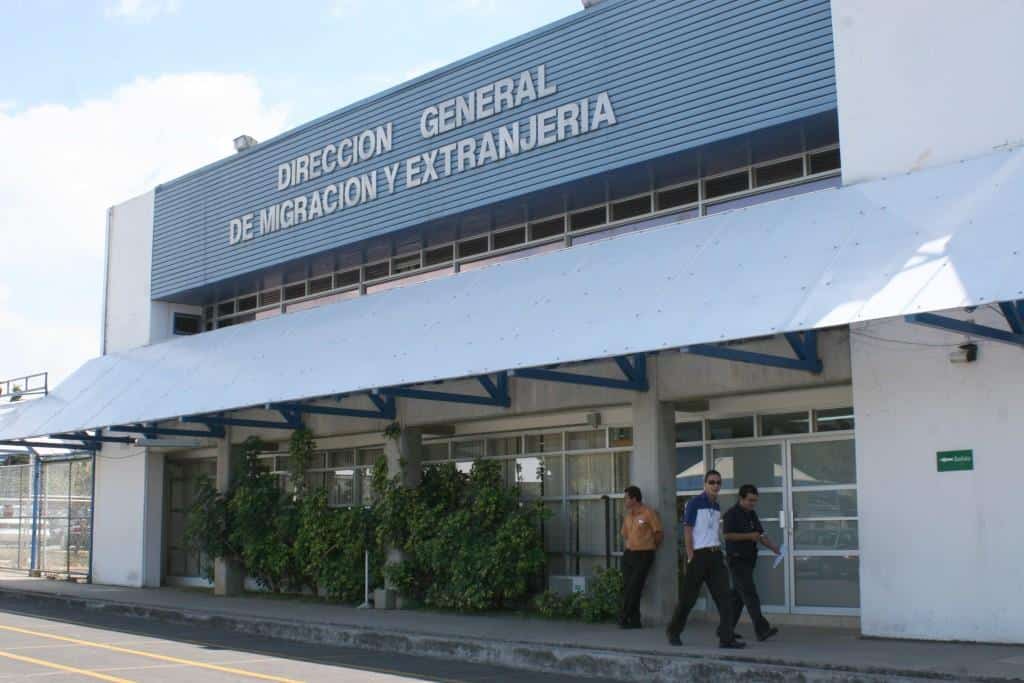
Nearly 100 foreigners applied on the first day of a new Costa Rican immigration program designed to give legal status and work rights to thousands of people whose refugee cases have been rejected or remain unresolved. The General Directorate of Migration and Immigration (DGME) received 98 applications on September 1, when the government began accepting requests under the new Complementary Special Temporary Category. The program is open to certain citizens of Nicaragua, Venezuela, Cuba and Colombia already living in Costa Rica.
Immigration officials estimate the program could eventually regularize around 10,000 people, although the number of applications could be higher. Approval is not automatic, and each case will be reviewed individually. The program is aimed specifically at people who previously applied for refugee status in Costa Rica but have spent years waiting for an answer or received a rejection and were left with few options for obtaining legal immigration status.
To qualify, applicants must have filed for refugee status between June 1, 2014, and May 7, 2026, and must have remained in Costa Rica since submitting that application. Their refugee case must still be pending, have been formally rejected or have been declared unfounded. People who already have another approved immigration status generally cannot use the program. Neither can applicants with another immigration regularization process underway outside their refugee case.
One of the most important benefits is the right to work legally in Costa Rica. Those approved may work for an employer or work independently. The immigration status is initially valid for two years and may be renewed for additional two-year periods as long as the person continues to meet the requirements. Approved applicants also do not need a special exit permit to travel outside Costa Rica, although they must follow the normal departure and reentry rules that apply to other special immigration categories.
The first day also showed a potential problem for applicants: incomplete paperwork. Cindy Molina, head of Migración’s Refugee Unit, said some of the 98 applications submitted on the opening day were missing documents, including criminal background checks or proof that the applicant has established ties to Costa Rica.
This is important because the rules require applications to be complete when submitted. Under the resolution establishing the program, Migración can reject an incomplete application immediately rather than giving the applicant additional time to supply missing documents. Among the documents applicants may need are a birth certificate, criminal background certificate, identification such as a passport or national ID, proof of fingerprints taken by Costa Rica’s Ministry of Public Security and documents showing that the person has established a life in Costa Rica.
Evidence of those ties can include school enrollment, records showing that an applicant’s children attend school in Costa Rica, medical records from the Costa Rican Social Security Fund, known as the Caja, or documents showing dealings with other Costa Rican public institutions. Applicants with criminal convictions for intentional crimes during the previous 10 years may be denied, as can people considered a threat to public security.
The status also does not automatically cover spouses, children or other dependents. Each eligible person must apply separately. Applications are being handled by appointment at Migración’s offices in La Uruca, San José. The application period remains open until September 1, 2027.
The program addresses a long-running problem within Costa Rica’s refugee system. Nicaraguans, Venezuelans, Cubans and Colombians account for roughly 90% of refugee applications, according to Immigration Director Omer Badilla. Many applicants have lived in Costa Rica for years while their cases remained unresolved or after their refugee petitions were denied.
For those who qualify, the new category provides something more practical than another pending case: a legal way to remain in Costa Rica, work and begin moving out of the immigration limbo in which thousands have been living.





