

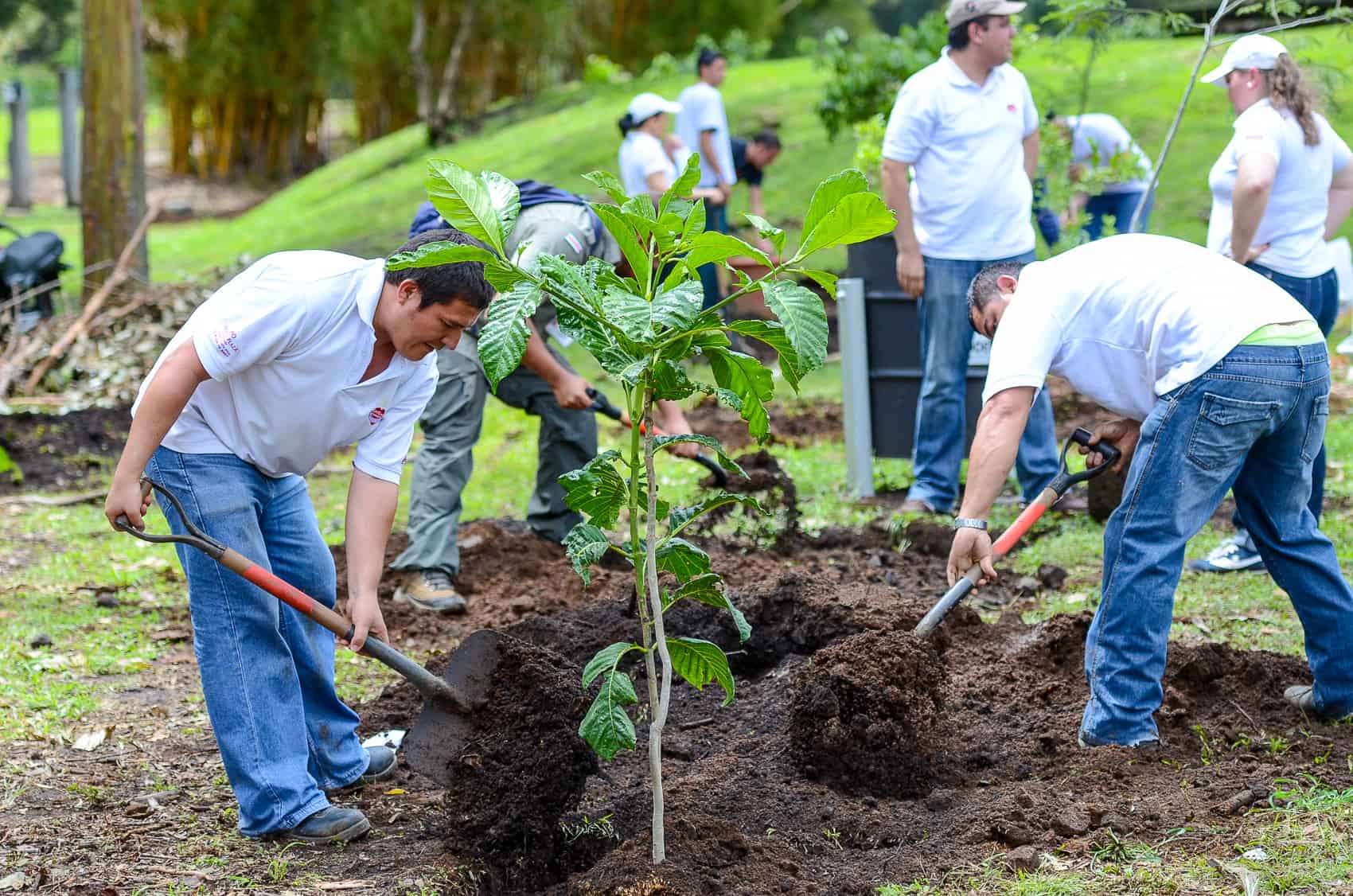
A piece of land about the size of two tennis courts is being turned into a densely planted urban forest in Curridabat.The project, called Bosque Tacaco, will place approximately 1,540 native plants in a 515-square-meter area, or about 5,540 square feet, next to the Aleste commercial development in Guayabos.
Around 200 volunteers were expected to take part in the planting this morning. Unlike a traditional park, where trees are normally planted several meters apart, the plants in Bosque Tacaco will be placed close together. The idea is to create competition for light and encourage the vegetation to grow upward quickly.
The project will include 74 native species. These will not all be large trees. The planting will also include shrubs, palms, heliconias, vines and plants that spread across the ground. Organizers say Bosque Tacaco will be the first pocket forest in Central America connected to SUGi Pocket Forest, an international organization that supports small urban forests. SUGi currently tracks more than 260 similar projects in cities around the world.
A pocket forest is essentially a miniature forest planted in a small, built-up area. Although it cannot replace a large natural forest, it can create food and shelter for birds, insects and other wildlife in places where little natural habitat remains. Bosque Tacaco will use the Miyawaki method, named after Japanese botanist Akira Miyawaki. The method begins with a detailed study of the soil and the plants that naturally belong in the area.
The soil is then improved before a large number of native plants are placed close together. The ground is covered with mulch to retain moisture and reduce weeds while the young plants become established. Supporters of the method say it can create dense vegetation faster than ordinary tree planting. They also say pocket forests can help rainwater soak into the ground, improve soil health and provide cooler spaces within cities.
However, some of the larger claims made about Miyawaki forests remain open to debate. Project organizers say the method can restore an urban space up to 10 times faster than natural forest growth. A scientific review published in 2026 found some evidence that Miyawaki plantings experience faster early growth, but researchers said there was not enough long-term information to support many of the strongest claims made about the method.
Bosque Tacaco will provide a local opportunity to test how well the system works in Costa Rica’s climate. The project includes plans to measure plant growth, temperature and changes in biodiversity. Community members and students are expected to participate in this monitoring through citizen science activities.
The forest will also be open to the public as a place for environmental education and quiet recreation. Once the plants are established, organizers expect the area to need less watering and maintenance. The site sits near Quebrada Tacaco, a stream running through the area. Bosque Tacaco takes its name from the tacaco, a Costa Rican fruit traditionally added to dishes such as olla de carne.
Portafolio Inmobiliario, the developer behind Aleste, is leading the project with assistance from SUGi and Bosko, an organization that specializes in Miyawaki forests. The company says the forest is part of a wider plan to restore vegetation around Aleste and protect habitat used by local wildlife, including Cabanis’s ground sparrow, a bird found only in Costa Rica and a small area of western Panama.
The real measure of the project will come over the next several years, as researchers track how many plants survive, how quickly the area develops and whether more birds and insects begin using it.





