

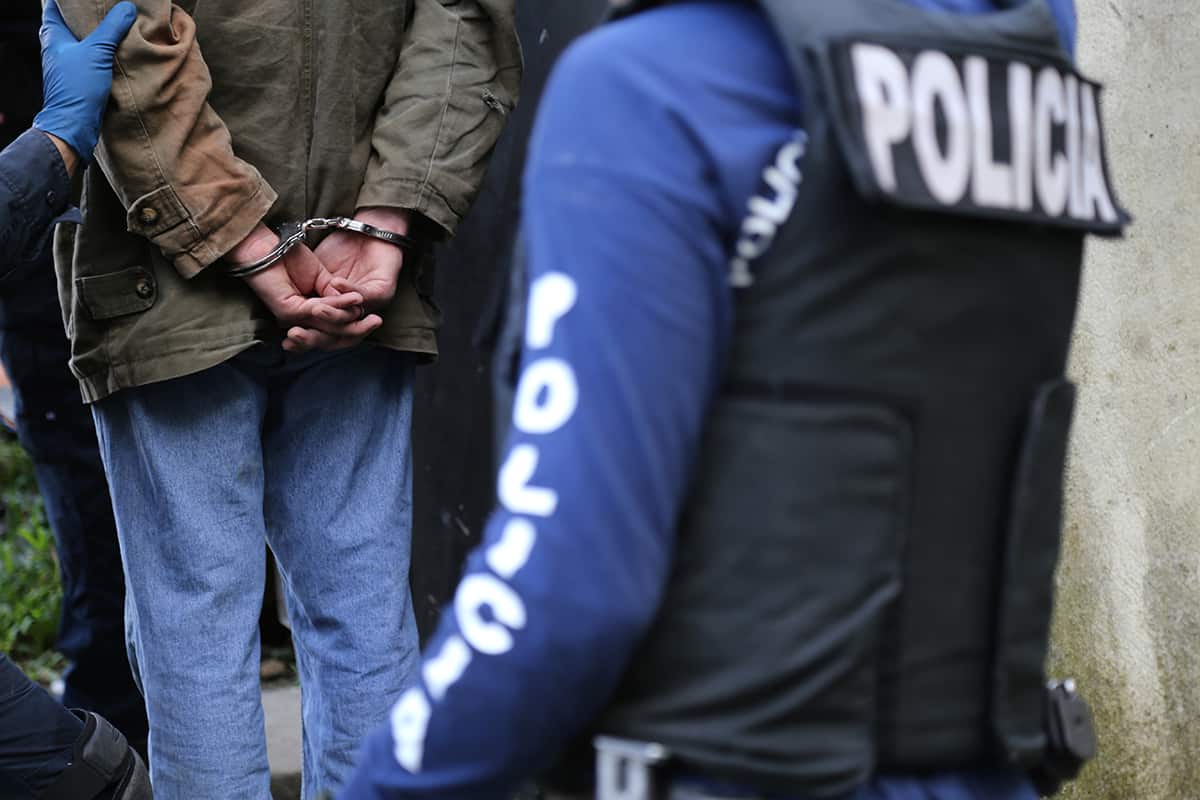
Costa Rica will put its Drug Control Police back inside the airports and border crossings, reversing a 2023 decision that pulled the specialized unit out of the nation’s ports of entry and handed its duties to the Border Police. President Laura Fernández announced the change Monday following the weekly meeting of “Fuerza Élite,” the security task force she convened at the start of her term to coordinate the government’s response to organized crime.
The order reverses the decision taken by former Security Minister Mario Zamora during the administration of Rodrigo Chaves, who removed the Drug Control Police, known by its Spanish acronym PCD, from ports, airports and borders and installed Border Police personnel in their place.
The first phase will be carried out at the San Jose Airport, where 11 specialized PCD officers will be permanently stationed, including — for the first time — an anti-drug analyst assigned full time to the terminal. Three additional agents from the Directorate of Intelligence and Security, or DIS, will join them to strengthen investigation and intelligence work against criminal groups. Fernández said the government plans to extend the same measure to the Liberia airport, Tobías Bolaños International Airport in Pavas, and to border posts elsewhere.
Fernández said the decision reflects how drug trafficking has changed since the officers were pulled out. “Security is led from where the challenges are,” Fernández said. “The government is engaged in a national crusade against organized crime, and that is why we have decided to strengthen security at the airport, because organized crime has structures in constant evolution, and right now the data tells us this is where the PCD’s presence is needed.” She added that the behavior of drug trafficking today does not resemble what it was four years ago, pointing to more advanced substances now in circulation, including pills and the chemicals used to manufacture synthetic drugs.
When the unit was withdrawn in 2023, the Chaves government argued that PCD officers would be more effective concentrating on investigations rather than standing posts at ports of entry. The decision drew immediate objections from within the force itself. Undercover PCD officers, backed by the National Association of Public and Private Employees, publicly denounced the removal at the time, and lawmakers on the legislature’s security and drug trafficking committee later issued a report criticizing the withdrawal of officers from docks, ports, airports and borders.
The enforcement numbers that followed have since become part of the argument for reversing course. PCD operations fell by half between January and May of 2024 compared with the same period a year earlier, when the force still maintained personnel at borders, ports and airports. Marijuana eradication figures compiled by the Costa Rican Drug Institute, which aggregates seizures by the PCD, the Judicial Investigation Agency, the Fuerza Pública and municipal police, peaked at roughly 816,000 plants in 2021 before falling in the years that followed.
The government has not announced any change to passenger screening, baggage inspection or checkpoint procedures at Juan Santamaría, and the officers described Monday are specialized and intelligence personnel rather than additional front-line screeners. Nor has the administration said whether the deployment will draw on existing PCD staffing or require new hires, or whether the reversal will be accompanied by broader changes to the national anti-drug strategy.
The move lands at a politically charged moment for the security institutions. Fernández took office in May promising a hard line against organized crime, and her administration has since ordered polygraph testing of senior police officials, removed seven police directors who did not pass those tests, and pushed legislation targeting landowners whose properties host clandestine airstrips used by traffickers. Costa Rica remains a significant transit point for cocaine moving north toward the United States and Europe, and the international airports and Caribbean ports have long been identified as pressure points in that supply chain.
What the redeployment restores, in practical terms, is a specialized anti-narcotics presence at the exact places where drugs and their precursors cross Costa Rica’s borders — a presence our country did without for nearly three years.





