
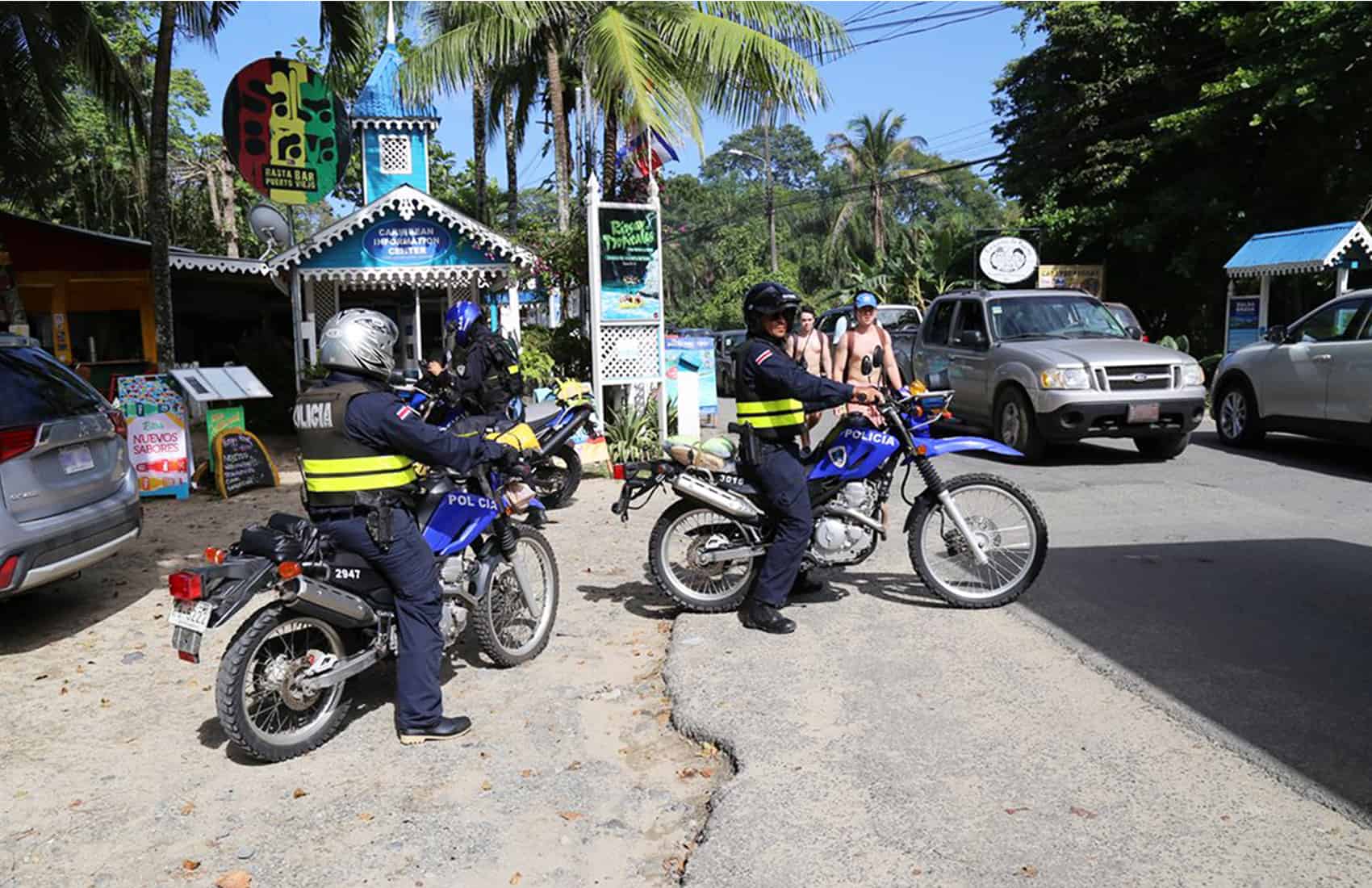
If you’re planning a trip to Cahuita or Puerto Viejo de Talamanca, own property along Limón’s south Caribbean coast, or even live there, you’ve probably seen the alarming news about a massive drug raid. Here’s a review of what happened, what it does and doesn’t change, and how to think about it.
What happened
Yesterday, Costa Rica’s Judicial Investigation Organization (OIJ) and the Public Prosecutor’s Office carried out what authorities are calling the largest police operation in our country’s history. It is known as the Riverside case — named, according to the OIJ, because the network allegedly operated in the strip of coast between the sea and a river.
The scale was unprecedented: roughly 1,500 agents, judges and prosecutors, executing about 97 raids across some 141 structures (some outlets reported the count as 146 search sites) concentrated in Limón — with Cahuita as the epicenter — and extending into Heredia, Cartago, Turrialba and Alajuela, plus two prisons, La Reforma and La Leticia.
The operation targets the organization allegedly run by Edwin López Vega, alias “Pecho de Rata.” López was extradited to the United States earlier this year on drug-trafficking charges. Investigators say the network kept operating after his extradition, allegedly directed by relatives and close associates, and that it functioned with the structure of a cartel — the second such organization dismantled in Costa Rica, after the “Caribe Sur” cartel in late 2025.
According to the OIJ, the group received cocaine and marijuana by boat from the Colombian Caribbean — in alleged partnership with a Colombian organization known as “Los Costeños” — landing shipments near Cahuita and the mouths of local rivers, then storing and distributing the product locally and onward to the U.S. and Europe.
The numbers (as reported by authorities)
Figures shifted through the day as the operation continued, so treat these as preliminary and attributed to the OIJ and prosecutors:
- Around 40–42 people detained in the operation, plus 18 already in custody from earlier phases, and additional arrest orders still pending.
- About 3.2 tons of marijuana and close to a tone of cocaine seized over the course of the multi-year investigation.
- An estimated illegal patrimony the OIJ put near ₡10 billion (the registry value of the real estate alone was cited at about ₡2.6 billion, roughly US$5.7 million).
- Roughly 84 properties and 106 vehicles linked to the network, plus boats, cash, jewelry, firearms and more than 300 head of cattle.
- Two penitentiary police officers are under suspicion of supplying phones that allegedly let the jailed boss keep communicating with the network.
Why Cahuita?
Cahuita sits in the center of Costa Rica’s laid-back south Caribbean — the same area that draws surfers, backpackers, digital nomads and a sizable foreign-resident community to neighboring Puerto Viejo, Cocles, Punta Uva and Manzanillo.
Authorities say that geography is exactly what made it valuable to traffickers: a long, lightly patrolled coast with beach landings and river mouths, close to Panama and on a maritime route up from Colombia. The OIJ has described Cahuita as a place where the network allegedly controlled local drug sales through several points and laundered proceeds through legitimate-looking businesses.
Which businesses were raided — and an important caveat
This is the part that worries visitors most, because some of the searched properties are ordinary, tourist-facing spots. Among the sites authorities say were searched or flagged:
- Six hotels, including at least one with direct beach access.
- Four vacation-rental homes marketed through online booking platforms.
- Restaurants and bars, a gym, a five-a-side soccer pitch, a game room, a concrete-prefab business, a quarry, a bull-fighting ring, cattle farms, and a waffle-and-ice-cream shop on Cahuita’s main street.
A few essential caveats before anyone draws conclusions about a specific business:
- Being searched is not a conviction. A raid means investigators believe a property is relevant to the case. Everyone named or linked is legally presumed innocent until a court rules otherwise. The legal process — formal charges, detention hearings, and eventually trials — is only beginning.
- The OIJ’s preliminary read is that the real estate was not taken by force. The agency’s interim director said early on that there were no preliminary reports of properties being taken through violence or dispossession; investigators believe they were bought gradually over years through ostensibly legal transactions and then allegedly used to launder money.
- Not every business in town is implicated. The raids hit a specific set of properties tied to one network. The overwhelming majority of hotels, sodas, tour operators and rentals in Cahuita and Puerto Viejo have no connection to the case.
What “immobilized property” actually means
You’ll see two different Spanish terms in the coverage, and they aren’t the same thing:
- Decomiso (seizure): This applies to the drugs, weapons, cash, vehicles and similar items physically taken during the operation. They’re in the state’s hands.
- Inmovilización / aseguramiento (immobilization or freezing): This is what typically happens to real estate in a money-laundering case. The property is placed under judicial control so it can’t be sold, transferred or mortgaged while the asset-forfeiture case proceeds. It is not the same as permanent confiscation.
In practical terms, an “immobilized” hotel or rental house is frozen as an asset on paper. Whether it keeps operating day to day depends on court decisions and on who is actually running it. Final forfeiture — the state permanently taking ownership — only happens if a court later rules the property was bought with criminal proceeds. That can take a long time.
Is tourism in the south Caribbean still running?
Honestly: the town is not shut down, and the vast majority of services are operating normally — but it’s fair to acknowledge a real, if narrow, disruption.
- During the pre-dawn raids, guests at one hotel tied to a suspect (reported as the Hotel Vaz) were evacuated around 3 a.m. when police entered. If you had a booking at a specific implicated property, it could be directly affected.
- Beyond the named sites, Cahuita, Puerto Viejo and the surrounding beaches function as usual. National parks, beaches, restaurants, tour operators and the great majority of accommodations are unrelated to the case and open for business.
- This was a planned, targeted law-enforcement operation, not a public-safety emergency, a natural disaster, or a travel-advisory event. It was aimed at a specific organization, not at the town or its visitors.
If you have an upcoming reservation, a reasonable step is simply to confirm directly with your hotel or host that they’re operating normally — the same thing you’d do anywhere after major local news.
So how safe is the south Caribbean, really?
A balanced answer matters here. Costa Rica’s homicide numbers in recent years have been driven largely by turf disputes in the local drug trade, and Limón province — including parts of the south Caribbean — shows up in those statistics. That violence is overwhelmingly between rival criminal actors, not aimed at tourists, and most visits to Cahuita and Puerto Viejo are uneventful.
The Riverside operation cuts both ways for how you read the situation. On one hand, it confirms that organized crime had embedded itself in the local economy. On the other, it represents a serious, coordinated state effort — built on more than two years of investigation and international cooperation, including with U.S. agencies — to dismantle that network.
Sensible precautions are the same ones that apply in any beach town with a nightlife and drug scene: don’t buy or carry drugs, keep valuables secured, avoid isolated areas late at night, use established tour operators and licensed transport, and stay aware in nightlife districts.
What happens next
The case is still developing. Prosecutors have signaled they will request preventive detention for those arrested, more arrests are expected (authorities have referenced additional suspects still being sought, including relatives of López Vega and at least one person reported to be abroad), and the asset-forfeiture process against the frozen properties will play out in the courts over months. Expect follow-up coverage as detention hearings happen and formal charges are filed.
What it means on the ground
For visitors, the immediate practical reality is that Cahuita and Puerto Viejo remain open. The raids were a planned, targeted enforcement action against a specific network rather than a town-wide shutdown, and beaches, national parks, tour operators and the overwhelming majority of accommodations are operating normally.
Anyone holding reservations at a specific implicated property — one hotel’s guests were evacuated during the pre-dawn operation — may see disruption, but otherwise the recommended step is the routine one of confirming directly with a hotel or host. Tourism operators and security officials have long urged the same beach-town precautions that apply regardless of this case: use licensed tours and transport, secure valuables, and stay aware in nightlife areas at night.
For the area’s sizable community of long-term renters and remote workers, daily life continues largely unchanged. The frozen properties represent a narrow slice of the local rental market, and residents whose homes are not among the named sites face no direct impact. Those who suspect their rental may be linked to the case can verify its status with their host or management company.
The operation carries a good lesson for any property owners and potential buyers out there. Investigators allege the network used legitimate-looking real estate — hotels, vacation rentals, restaurants and farms — to launder trafficking proceeds over a period of years, and money-laundering cases can freeze assets tied to a previous owner.
Therefore, Costa Rican attorneys consistently advise buyers to protect themselves through due diligence: retaining a reputable local lawyer, verifying clear title and the full chain of ownership in the National Registry, confirming the seller’s identity, and treating unusually cheap or rushed deals with caution. A clean, well-documented purchase history is the best defense against inheriting a prior owner’s legal problems.