

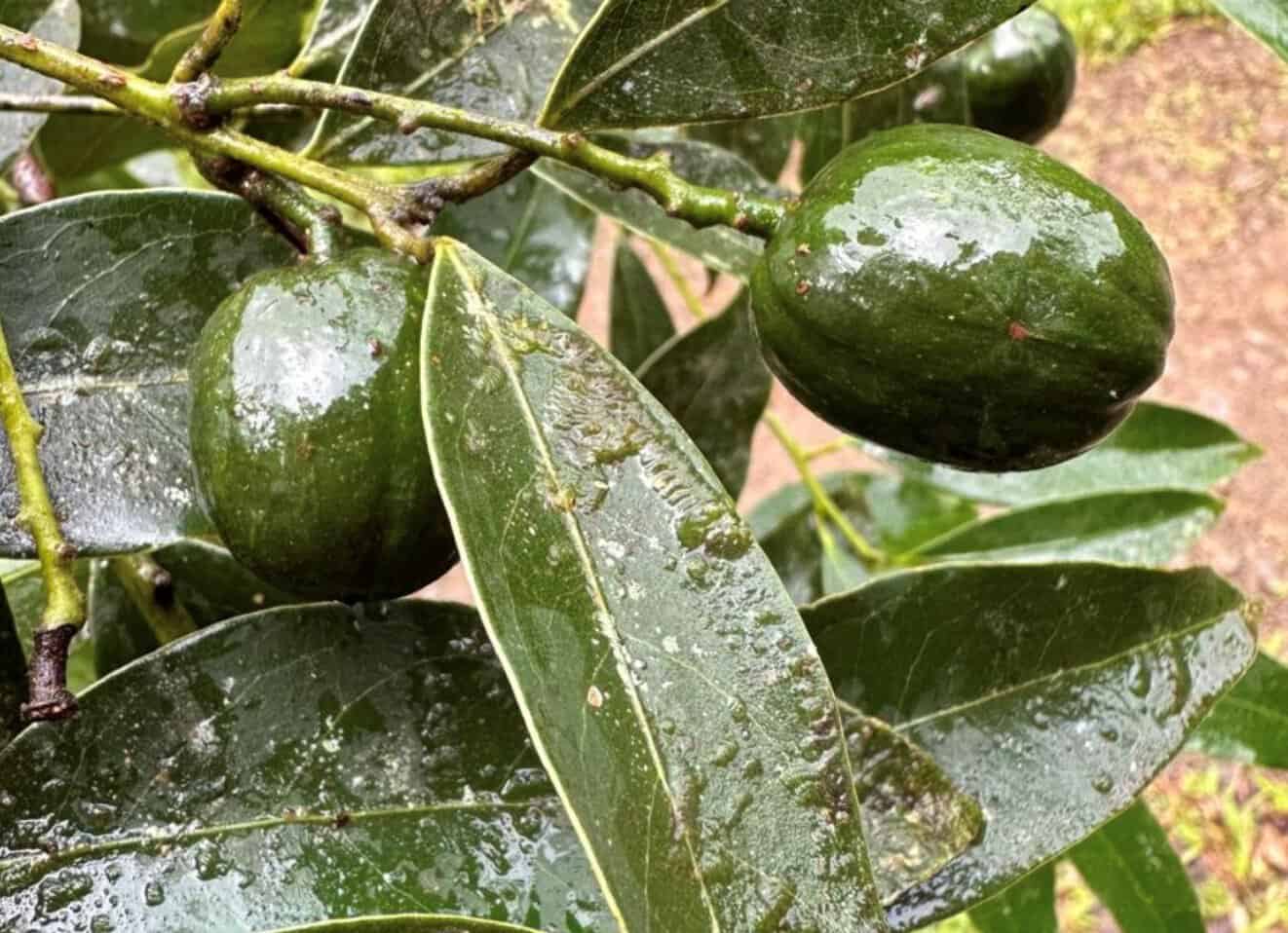
Scientists have confirmed the discovery of a new tree species in northern Costa Rica, a rare botanical find known so far from only a handful of trees in the Guanacaste Mountain Range. The species, Cryptocarya costaricana P.L.R.Moraes & N.Zamora, was described in Kew Bulletin by botanists Pedro Luís Rodrigues de Moraes and Nelson A. Zamora. It is considered endemic to Costa Rica, meaning it has not been found naturally anywhere else.
The discovery adds another layer to the importance of the Área de Conservación Guanacaste, or ACG, one of our country’s most important protected landscapes. The conservation area is best known for its dry forest, volcanoes and Pacific coastline, but the new species was found in wetter mountain forests on the slopes of the Guanacaste range.
Cryptocarya costaricana belongs to the Lauraceae family, the same plant family that includes avocados. The genus Cryptocarya includes about 360 species spread across tropical regions of the Americas, Africa, Asia and Oceania. Researchers say the Costa Rican species represents the northernmost known member of the genus in the Neotropics, the tropical region of the Americas.
So far, only five individual trees have been recorded, from at most four known locations. Three of those are within the Guanacaste Conservation Area, and one is in Tenorio Volcano National Park.
The tree grows in evergreen and seasonal rainforest between 459 and 1,500 meters above sea level, mostly on mountain slopes. It can reach 10 to 25 meters tall, or about 33 to 82 feet. Its fruits are round and bright green while on the tree, then turn black after falling to the ground.
Researchers were able to separate the species from related trees in Panama and South America by studying its flowers, leaves, fruit and reproductive structures. Those differences matter because plant discoveries often depend on small details that are easy to miss without flowering material.
That is one reason the confirmation took so long. The first known records of the species date back to 1991, but researchers needed years of field observation and the collection of flowering specimens before they could formally describe it as new to science. The type specimen, the reference specimen used to define the species, was collected in March 2015 on the slopes of Orosí Volcano inside Guanacaste National Park.
The study also highlights the work of ACG parataxonomists and field staff, who monitored the trees, followed fruit and seedling production, and helped gather the field information needed for the scientific description. In Costa Rica, parataxonomists have played a major role in documenting biodiversity, especially in remote forest areas where long-term observation is essential.
Although researchers did not identify any direct threats to the known trees or their habitat, the species’ tiny known range makes it vulnerable. The authors provisionally classified Cryptocarya costaricana as Near Threatened under International Union for Conservation of Nature criteria.
The finding is a reminder that here in Costa Rica protected areas are not just scenic landscapes or tourism draws. They remain active scientific frontiers. Even in a country famous for biodiversity, new species are still being documented, named and studied. For Guanacaste, the discovery also shows why conservation work cannot focus only on the best-known animals or most visited parks. Hidden among the mountain forests are species that may exist in only a few places, and in some cases, only a few known trees.





