

The numbers tell a compelling story. In the first four months of 2026, Costa Rica welcomed 173,349 Canadian tourists arriving by air, a jump of 26.6% compared to the same period in 2025. That growth rate is more than double the overall expansion of air tourism to Costa Rica during the same window, which came in at 10.5%. Canada is not just growing as a source market. It is outpacing nearly everything else.
The figures come from the Costa Rican Tourism Institute, and they have drawn attention from industry leaders who see in them the result of deliberate and sustained promotional investment rather than luck. Christian Doñas, president of Grupo Proimagen Costa Rica, described the Canadian market as showing very positive behavior during the first quarter and continuing to consolidate itself as one of the most important source markets the country has.
That language, consolidation rather than emergence, is significant. Canada is no longer a market Costa Rica is trying to develop. It is one the country is working to protect and deepen. Canada currently holds the position of second-most important source market for Costa Rica by visitor volume, a ranking that reflects years of promotional work and a natural alignment between what Canadian travelers seek and what the country offers.
The average Canadian visitor stays nearly 15 nights in Costa Rica, a figure that stands out sharply against shorter-stay markets and translates directly into higher per-visitor economic impact across hotels, restaurants, tour operators, and local businesses. Daily spending runs close to $203 per person, making Canadian visitors among the most economically valuable in the country on a per-night basis.
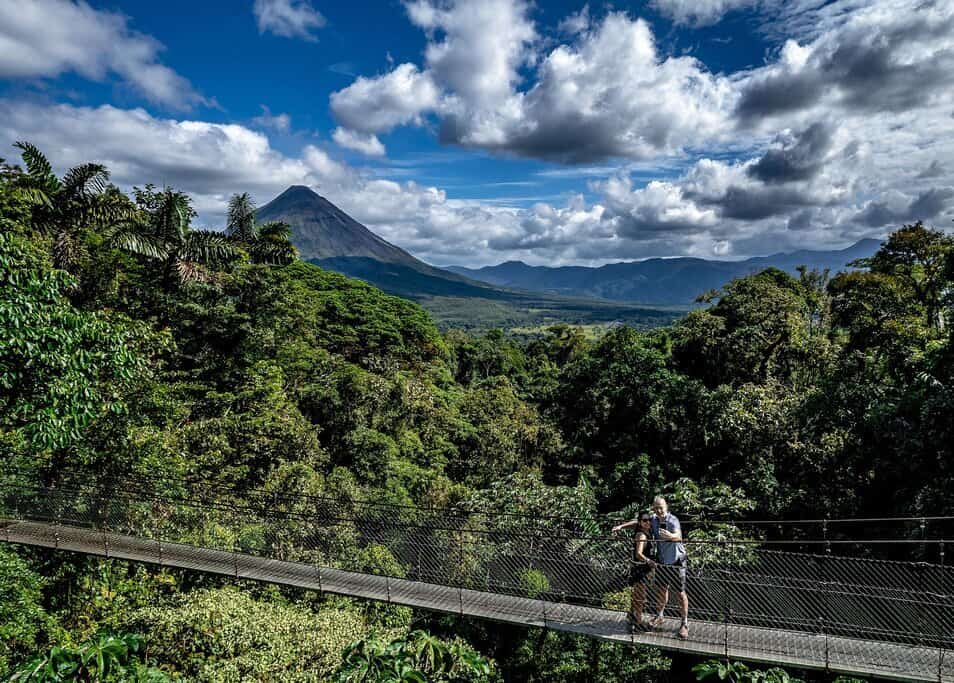
The activities that draw Canadians to Costa Rica align closely with the country’s core strengths. National park visits, volcano tours, canopy, whitewater rafting, and wellness experiences top the list of preferred activities, a profile that favors smaller operators and ecotourism businesses in addition to larger resort infrastructure.
These are travelers who come to engage with the country rather than simply sit on a beach, which spreads tourism revenue across a wider geographic and economic footprint than pure sun-and-sand visitors tend to generate.
The promotional machinery behind these numbers included a notable campaign that brought Costa Rican imagery directly into the daily commutes of Canadians in Calgary, Vancouver, and Toronto. The Costa Rican Tourism Institute placed advertising on tram systems in all three cities, putting landscapes and nature imagery in front of millions of urban commuters throughout the season.
It is the kind of ambient brand presence that builds long-term destination awareness rather than chasing short-term booking spikes. Proimagen Costa Rica and the Tourism Institute also organized a commercial roadshow to Toronto and Montreal, bringing Costa Rican travel companies into direct contact with retail and wholesale travel agents in both cities.
That kind of trade relationship building is less visible than advertising campaigns but often more durable in its effects, embedding Costa Rica into the booking habits and recommendations of agents who influence thousands of travelers annually.
For an industry that spent much of the early 2020s rebuilding after the pandemic, a 26.6% growth rate from a market that already spends well, stays long, and aligns with the country’s tourism brand is about as good a story as the sector could hope to tell heading into the second half of the year.





