

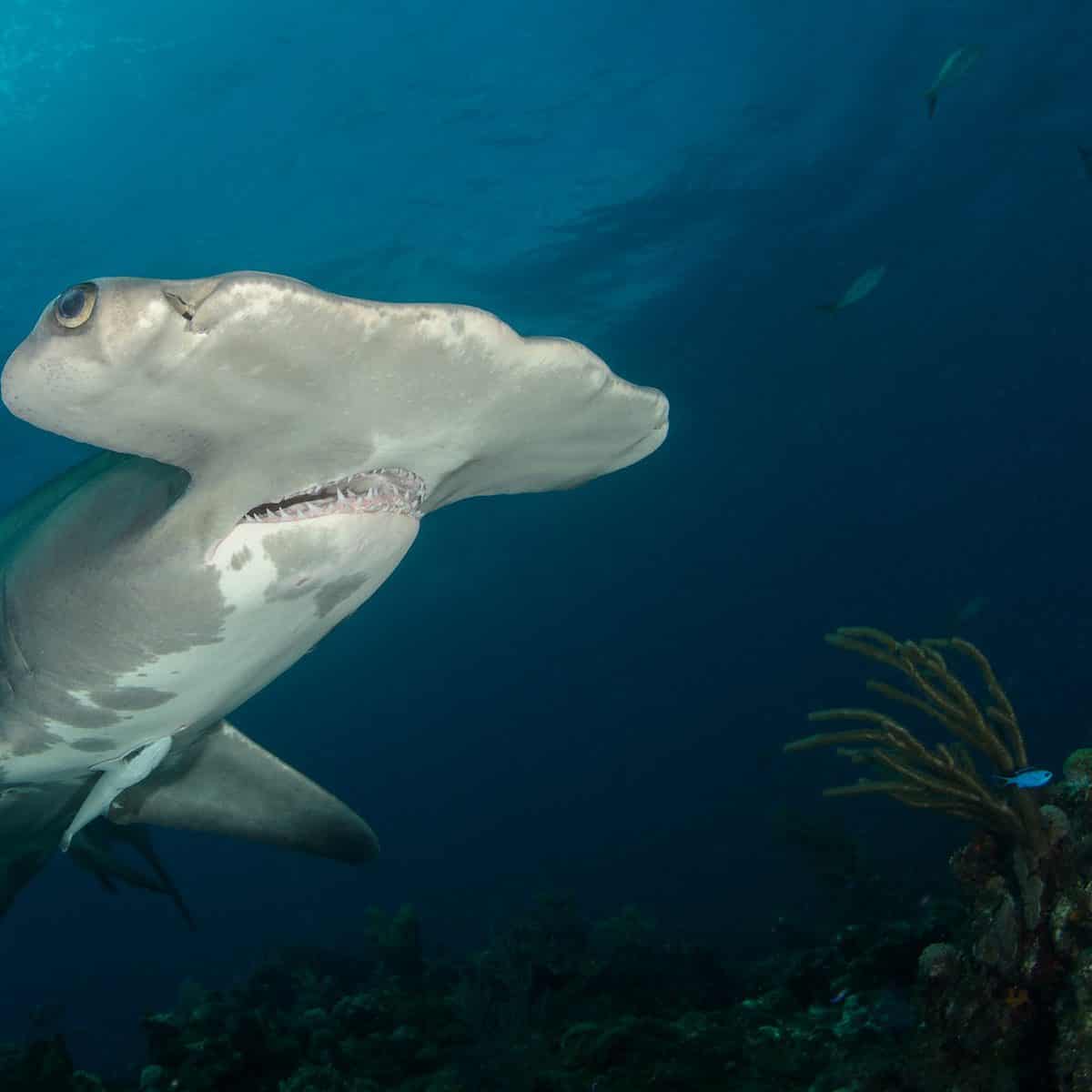
Costa Rica is moving to expand its payment-based conservation model into open-water marine protection, with a new program being designed to reward the protection and release of hammerhead sharks. The Ministry of Environment and Energy, through SINAC and in partnership with FUNBAM, is developing a Marine Payment for Ecosystem Services program, known as PSEM, aimed at recognizing the conservation value of releasing hammerhead sharks caught incidentally during fishing activity.
The measure is still in the design stage, but it marks a new step in Costa Rica’s effort to move its environmental payment system from forests and mangroves into broader marine conservation.
The proposal builds on Decree 43900-MAG-MINAE, which prohibits the capture, retention on board, transshipment, unloading, storage, transit, and commercialization of hammerhead shark products and byproducts. The decree also requires hammerheads caught incidentally in fishing gear to be released immediately and, when possible, unharmed. Captains of medium-scale and advanced commercial fishing vessels must record incidental hammerhead captures in INCOPESCA’s fishing log forms.
The regulation was later strengthened to include transit restrictions across Costa Rican territory, including ports, airports, and points of entry and exit. That reform is intended to block the movement of hammerhead products through the country, including fins from sharks caught abroad and destined for foreign markets.
Under the new PSEM proposal, fishers who follow conservation practices could receive economic recognition for helping protect hammerheads. The program is also expected to generate better information for marine management, especially from longline fishing vessels that interact with sharks during regular fishing operations.
Authorities are also considering the use of satellite tracking devices on participating vessels. These devices, known locally as balizas, would allow real-time vessel location and could also serve as an emergency alert tool for fishers at sea.
Hammerhead shark protection has been a sensitive environmental issue in Costa Rica for years. Conservation groups have warned that incidental catch, weak enforcement, and the trade in shark products continue to place pressure on vulnerable populations. The scalloped hammerhead, one of the best-known species in the region, is listed as critically endangered by the IUCN, largely because of steep global population declines tied to fishing pressure.
The new shark-focused proposal follows Costa Rica’s first steps into marine payments through mangrove conservation. The country began applying the model in 2024 with six organizations in the Gulf of Nicoya, reaching 157 families. The program has since grown along the Pacific coast and now covers 24,000 hectares of mangroves.
In the Térraba-Sierpe region, 129 new shellfish harvesters recently signed contracts to receive PSEM payments for mangrove conservation. They are organized into four cooperatives and receive payments through their associations, equal to about $216 per month. Their work includes sustainable harvesting, conservation actions, monitoring, and support for surveillance efforts in mangrove areas.
Across Costa Rica’s Pacific coast, 544 shellfish harvesters are now under marine ecosystem service contracts in 15 associations. The government’s projection is to reach 600 participants during 2026.
The hammerhead shark initiative would take that same payment concept farther offshore. Instead of paying only for the protection of mangrove ecosystems, the program would recognize actions by fishers that reduce harm to marine wildlife and help collect information needed to manage ocean resources.
For Costa Rica, the challenge will be turning the proposal into a system with clear rules, reliable verification, and enough funding to make participation worthwhile for coastal communities. If implemented well, the program could give participants a financial reason to protect hammerheads while giving authorities better data on what is happening at sea.





