

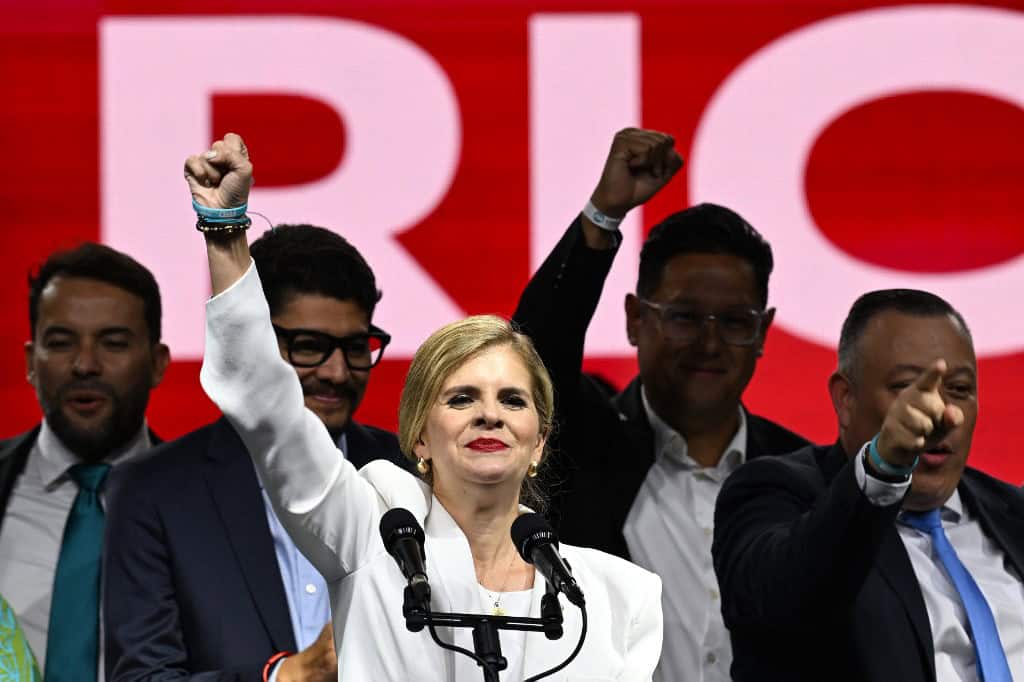
Laura Fernández won Costa Rica’s presidential election in the first round today, after early official results showed her clearing the 40% threshold required to avoid a runoff, according to the Tribunal Supremo de Elecciones. With most polling places reporting late Sunday, Fernández led by a wide margin over economist Álvaro Ramos, who conceded on election night as the count continued.
Fernández, a former cabinet minister and the handpicked successor of outgoing president Rodrigo Chaves, campaigned on a tougher security agenda as Costa Rica confronts a surge in violence linked to drug trafficking and organized crime.
Early returns also pointed to a major gain for the governing party in the 57-seat legislature, giving Fernández a stronger starting position than recent Costa Rican presidents typically enjoy, though not necessarily the supermajority needed for constitutional changes on its own.
Sunday’s vote drew international attention because it tested how far Costa Ricans were willing to go with a law-and-order approach that critics say could concentrate power and strain democratic checks and balances. Fernández’s opponents and civil society voices have warned that parts of the security debate, including proposals framed as emergency-style responses, risk eroding civil liberties and institutional independence if pursued aggressively.
The election itself unfolded calmly, with voting and counting proceeding without major incident, a point frequently emphasized by Costa Rican observers as the country’s electoral system again handled a high-stakes race.
Fernández will take office for the 2026–2030 term at a moment when Costa Rica’s traditional party system continues to fracture, and when public pressure for visible security results is intense. Analysts have described the campaign as a referendum on Chaves’s combative, anti-establishment style and on voter impatience with corruption and perceived government ineffectiveness.
What comes next is less about the final decimal points in the count and more about governing choices. The new administration will be judged quickly on whether it can reduce homicide and narco-linked violence without undermining the institutions that have long set Costa Rica apart in the region, including an independent judiciary and a political culture that prides itself on civilian rule





