

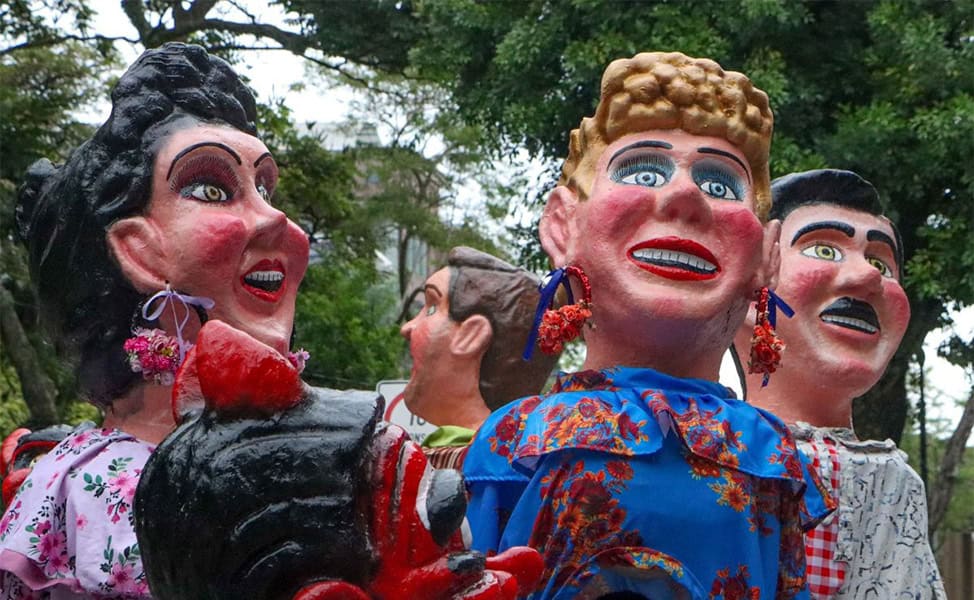
Streets across Costa Rica fill with color and music each October 31 as the nation marks Traditional Masquerade Day, a celebration that honors local heritage and sparks community spirit. This year, on Friday, parades, performances, and workshops bring families together to remember the roots of this lively custom.
The day traces back to 1996, when officials set October 31 as the National Day of the Traditional Costa Rican Masquerade through Executive Decree No. 25724-C. The goal focuses on sharing cultural practices that help build a stronger sense of identity among Costa Ricans. Parades feature oversized masks depicting figures from folklore, such as La Giganta, El Diablo, La Segua, and La Llorona, often joined by cimarrona bands playing upbeat rhythms that get crowds dancing.
“Every October 31, we celebrate Traditional Costa Rican Masquerade Day, an expression that represents the richness of our cultural identity and the creativity of our artisans. Masquerades are more than a tradition; they are a national symbol that unites communities, strengthens our roots, and allows us to pass on pride in our history from generation to generation,” said Jorge Rodríguez Vives, Minister of Culture and Youth.
This year’s highlights include a special event hosted by the Ministry of Culture and Youth at the Fidel Gamboa Amphitheater in the National Center for Culture, starting at 6 p.m. The lineup features artistic and musical shows by the Castella Conservatory, followed by a 7 p.m. concert from the San José National Band. The band draws inspiration from horror movie scores, tying into the day’s festive mood.
Communities nationwide join in with their own gatherings. In Escazú, a pasacalle kicks off at 7 p.m. from the Municipal Civic Center, complete with cimarrona music and masked performers. Santo Domingo de Heredia hosts a similar street parade at 6 p.m. in the central park, inviting families to participate.
Cartago, where the tradition originated during colonial-era bullfighting festivals, sees desfiles with bands and mascareros showcasing classic characters. Heredia and Alajuela add their flair, with local groups like Liga Deportiva Alajuelense sharing videos of masquerade-inspired fun.
The masquerade stands out as intangible cultural heritage for three main reasons. Makers draw on knowledge of natural materials to craft masks from items like clay and paper. They apply skilled techniques passed down through years of practice. And the events come alive with cimarrona tunes and dances that pull people into the celebration, fostering bonds in towns and schools.
Mascareros, the artisans behind the masks, keep the practice going. Juan Carlos Picado, a mask maker from Escazú with over a decade of experience, lives there with his wife and three children, who have also picked up the craft. His interest started when he joined a municipal course at his kids’ request.
“My passion for making masks began more than 10 years ago when the municipality offered a course, and my children, who wanted to learn how to make masks, asked me to accompany them. We took the course together, and some time later, I decided to get some clay to see how the masks would turn out. That’s where my passion was born,” Picado said.
He faces hurdles but pushes forward, now working on bolder designs. “For me, there is nothing more beautiful than seeing traditional masks, which is what we must instill in younger generations so that these traditions are not lost.”
Other mascareros echo this commitment, preserving the art in regions from Barva de Heredia to San José. Schools play a role too, with activities like mask-making workshops at places such as the National Library, aimed at children to teach hands-on skills. The masquerade reminds participants of our shared history while encouraging new creators to carry it forward.





