

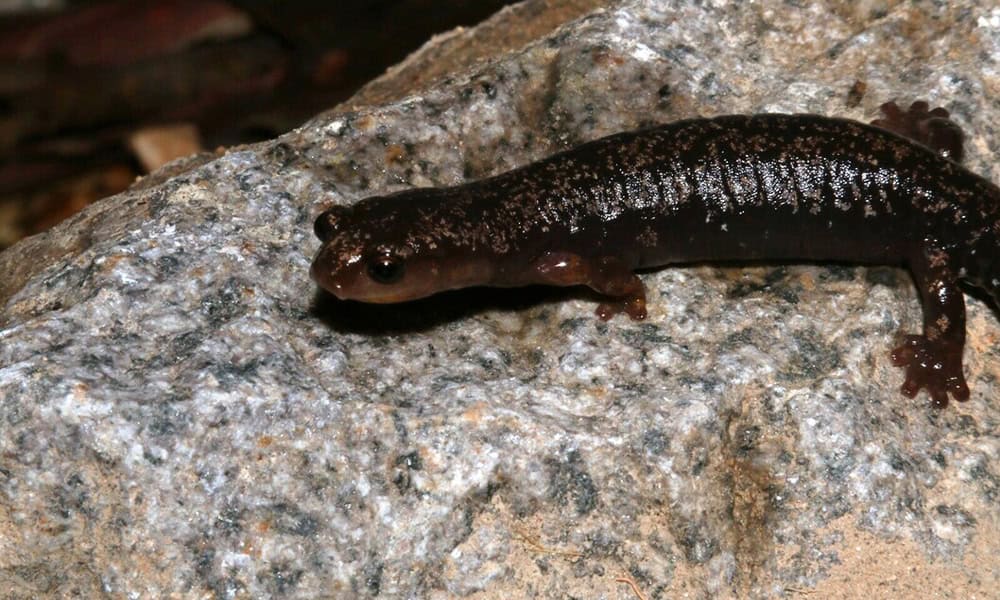
Scientists have identified a new salamander species in the remote páramo of Chirripó National Park, highlighting our country’s rich biodiversity and the pressing challenges facing high-altitude ecosystems. Named Bolitoglossa chirripoensis, this medium-sized amphibian stands out with its dark body marked by golden spots on the back and white flecks along its sides and tail.
Researchers from the University of Costa Rica first spotted the salamander in November 2019, just five meters from the entrance to the Crestones Base Refuge. The find came during fieldwork in the park’s high-elevation zones, where conditions test the limits of life. It took nearly five years to complete the studies, including detailed morphological exams and genetic tests, confirming it as a distinct species from others in the Talamanca range.
Jeremy Klank, a biologist and master’s student at the University of Costa Rica, led much of the work. He notes that the salamander’s body differs in size and build from related species. It measures as a sturdy, mid-range amphibian, adapted to the harsh páramo environment. Genetic differences set it further apart, showing it evolved in isolation on Chirripó’s peaks.
Chirripó National Park draws visitors for its dramatic features, including Cerro Chirripó, Costa Rica’s tallest mountain at 3,821 meters. Glacial lakes and open vistas surround the area, but the páramo habitat starts around 2,900 to 3,000 meters above sea level. Here, low temperatures, heavy rains, and a sharp dry season shape a landscape of shrubs and grasses, resembling a highland savanna without tall trees for cover.
This setting makes the salamander’s home fragile. Páramos exist only in the Talamanca mountains in Costa Rica, covering small patches prone to wildfires. So far, Bolitoglossa chirripoensis appears limited to a few hectares on Chirripó’s summit, with no signs of it elsewhere. A single fire could wipe out the entire population, researchers warn.
Climate change adds another layer of risk. Species like this one adapt to specific cool, moist conditions on mountain tops. As temperatures rise, these habitats shift upward, leaving animals with no higher ground to retreat to. The salamander’s limited range and low mobility compound the problem – it does not wander far, sticking to its scarce territory.
Biological traits also hinder the species’ survival. Drawing from studies on similar salamanders in Cerro de la Muerte, experts estimate Bolitoglossa chirripoensis grows slowly in the páramo’s chill and dampness, possibly taking one to two decades to mature. Reproduction happens infrequently, with small numbers of offspring, slowing any recovery from threats.
Human activity in the park poses direct impacts. Chirripó sees thousands of hikers each year, drawn to its trails and summits. Heavy foot traffic compacts the soil, hardening paths and disrupting the ground where salamanders burrow under rocks for shelter. This alters vegetation and blocks escape routes, making the animals more exposed.
Scientists have discussed options with the National System of Conservation Areas to manage tourism better. They suggest rules to reduce trail damage, such as limiting group sizes or promoting low-impact hiking. No major interventions are needed, but ending harmful habits could protect the habitat without restricting access entirely.
The International Union for Conservation of Nature tentatively classes the salamander as vulnerable, based on its tiny range and environmental pressures. This status calls attention to broader issues in Costa Rica’s highlands, where unique species face extinction from combined forces of nature and people.
Efforts to study and safeguard Bolitoglossa chirripoensis reflect ongoing work to document Costa Rica’s amphibians. The country hosts over 200 salamander and frog species, many endemic to its mountains. This discovery underscores the need for careful stewardship in protected areas like Chirripó, ensuring they remain places for rare life forms.





