
In a small village on the Panamanian Caribbean coast, Venezuelan Luis Montilla waits to pay for a boat on his return journey after failing to enter the United States. He prefers to sleep on the beach rather than be confined in migrant shelters: “We are not animals,” he said. Montilla, 28, and another fifty or so Venezuelans are stranded in the coastal town of Miramar, in Colón province, while relatives send them the 260 dollars that the boatman charges each person to take them to the border with Colombia before continuing on to their country or another destination.
They have crossed Mexico and Central America on foot and by bus as President Donald Trump tightened immigration policy and eliminated the CBP One application with which they requested appointments to apply for asylum. “Reverse migration is not a voluntary return, but a reflection of a larger crisis that has left thousands in limbo. It is a forced return flow,” said Diego Chaves, an analyst at the Migration Policy Institute based in Washington.
Neither Montilla nor the others wanted to join the plan announced this week by Costa Rica and Panama, which sends migrants, on buses they must pay for, to shelters in remote border areas. “They keep you there as if you were a criminal, you’re imprisoned. People prefer to walk,” says Víctor Díaz, 19. Like hundreds in the last month, Díaz prefers the danger of the sea to crossing the inhospitable Darién jungle, bordering Colombia, again. Most Venezuelans returned from Mexico. Along the way, Montilla has slept on cardboard in the street and eaten from charity.
Detention Centers
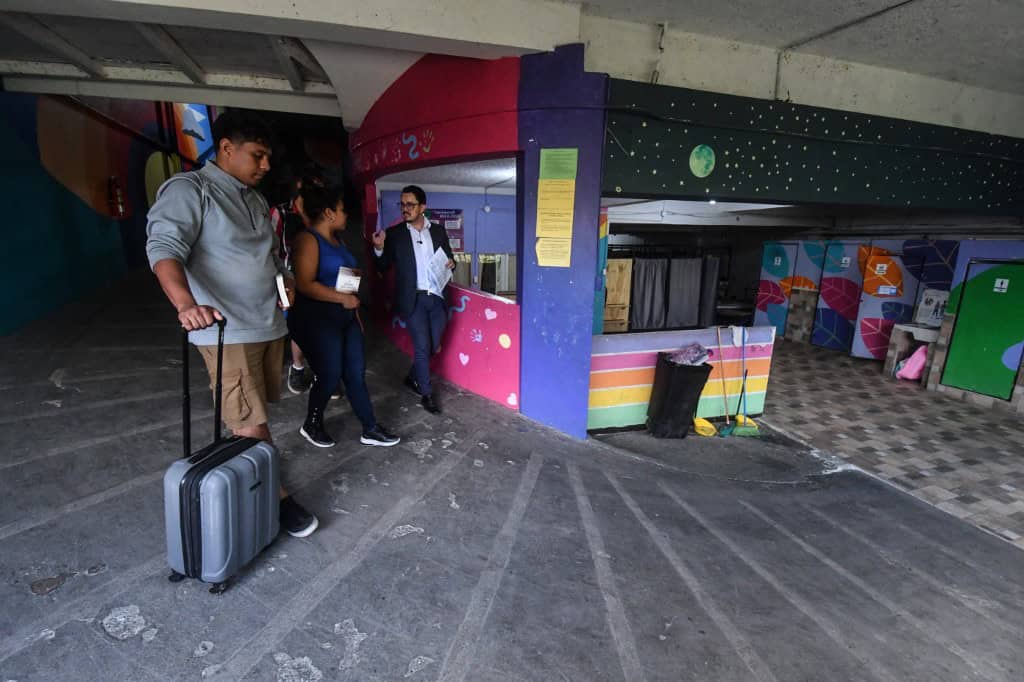
Jinnelis Navas, 50, arrived in Miramar with 10 relatives. They are many and are raising money for the boat. They were, she says, in a shelter in Mexico where they were treated “like dogs.” “That’s why we didn’t turn ourselves in” to the authorities of Costa Rica and Panama, she explained. Migrants arriving in Costa Rica from Nicaragua, after passing through the northern Central American countries, are sent by bus to the so-called “Catem” refuge, 360 km south of San José, on the border with Panama.
From there they board another bus that crosses Panama to two centers for migrants, Lajas Blancas and San Vicente, in Darién, 260 km from the Panamanian capital. From that area they would travel on humanitarian flights, but so far there have been none. Under pressure from Trump, Costa Rica and Panama are deportation “bridges.” In Catem and San Vicente there are now also more than 200 Asians deported by the United States who refuse to be repatriated, such as Afghans and Iranians. The International Organization for Migration (IOM) must find them another destination.
“Migrants are criminalized” and shelters in Costa Rica and Panama “are detention centers,” said lawyer Gabriela Oviedo from the Center for Justice and International Law (CEJIL). Guarded by police, in these centers migrants sleep in barracks, have food and basic services. They are also subjected to biometric controls to rule out criminal records.
Oviedo, coordinator of Human Mobility at CEJIL’s Central America and Mexico office, maintains that “migrants do not have access to defense or legal advice” and there should not be children locked up.
New Cycle of Precariousness
More than 2,200 migrants arrived in Panama in February in reverse flow, according to the government’s count a week ago. Many return in debt and incur more debt on the journey. They must pay for buses – about 120 dollars from the border with Nicaragua to Lajas Blancas – and boats. And that’s just part of the journey.
“Reverse migration will not be the end of the road for many, but a new cycle of precariousness and forced mobility,” said Chaves, who warned that a “regional strategy” is urgently needed to attend “to those who today are trapped in this process.”
The Ombudsman’s Office of Costa Rica assured that many migrants in Catem wish to go out to work informally and gather money to continue their journey. “They have the right not to have their freedom of movement arbitrarily restricted,” said Juanita Goebertus, director for the Americas of Human Rights Watch (HRW).
But a Costa Rican official said they prefer to keep them “controlled.” With their adventure northward frustrated, Montilla says, while waiting for the day to set sail, that they just want “help to move forward,” this time heading south.