

The depths of Antarctica sound like “spaceships” and a variety of “impressive” hums that serve to study its marine life, says Colombian scientist Andrea Bonilla during an expedition to the ends of the icy continent.
The biologist from Cornell University in New York submerges a titanium-covered hydrophone tied to a buoy, in the midst of the imposing ocean crowned by icebergs, in the archipelago of the South Shetland Islands.
The device – which detects sound waves under water – will allow her to understand the behavioral patterns of marine mammals and their movements in the area during the southern winter, a time when Antarctica becomes almost uninhabitable. It is a kind of trap camera, but for auditory purposes and for the aquatic environment.
“There are species here that sound impressive, literally like Star Wars, they sound like spaceships. Very few ears have the privilege of monitoring that type of species,” declares the 32-year-old scientist , aboard the Colombian Navy ship “ARC Simón Bolívar.”
Bonilla, who is pursuing a PhD in marine acoustics, has a dual task along with other scientists from Colombia’s 10th Antarctic expedition: to collect the hydrophones they left last year along with a Turkish mission for later analysis and also to submerge new devices.
The research will also be a thermometer on the impact on mammals by human activity, environmental pollution, and other risks they are exposed to despite inhabiting one of the best-preserved places on the planet.
Whale songs
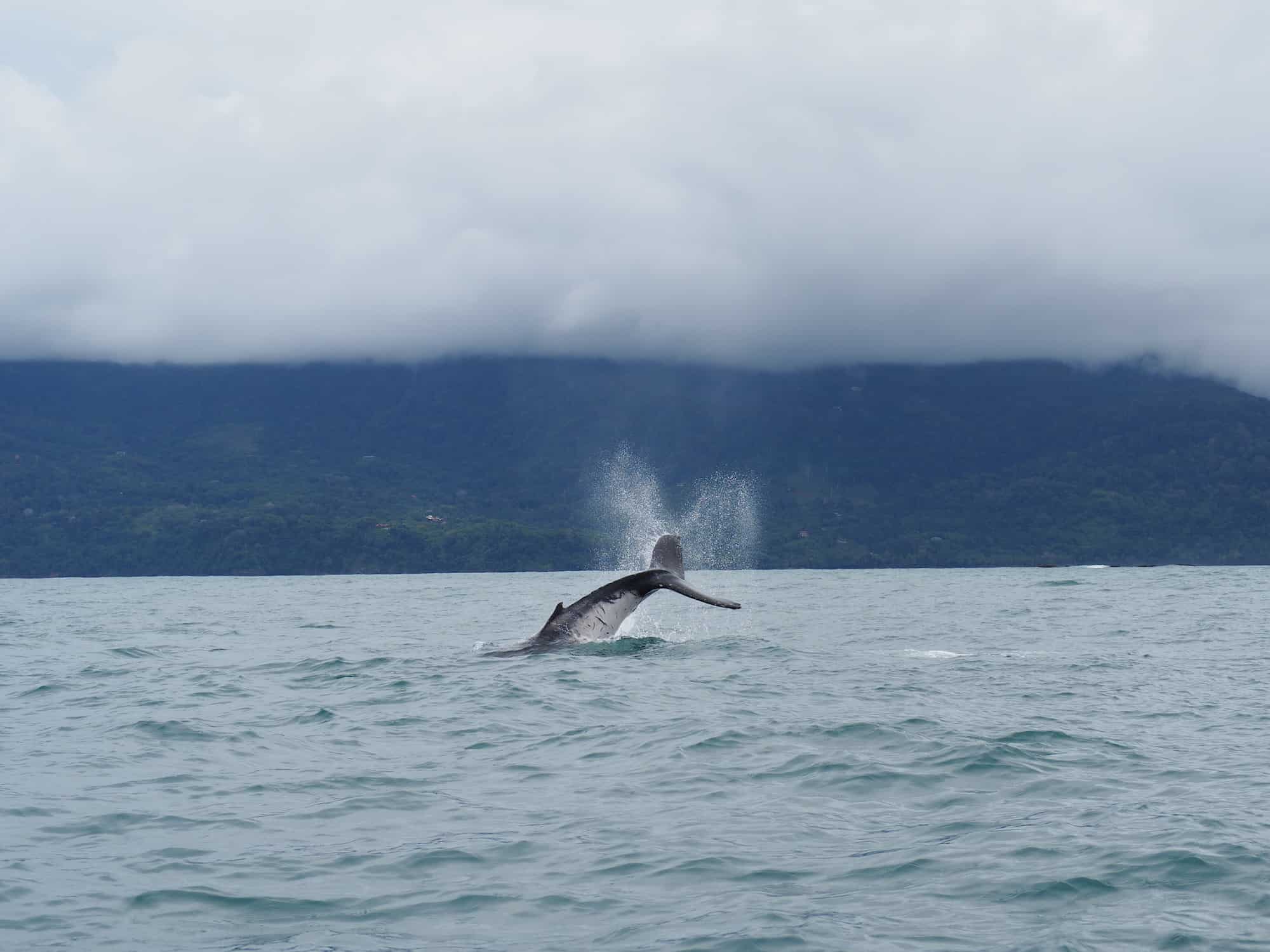
A colony of penguins walks on a giant ice block, shaped like a slide. Very close, the group of researchers observes a humpback whale that comes up for air on the surface, before winter drives it to warmer waters of the Pacific Ocean.
“My first encounter with a whale was with a singing whale and I think that changed my life,” Bonilla recalls.
After months of feeding in the Antarctic Peninsula and the Strait of Magellan, in Chile, thousands of these large cetaceans embark on a long journey to the warm waters of the tropics. Between June and October, they reproduce in a marine corridor that goes from southern Costa Rica to northern Peru.
But there are also “species that are only here,” the scientist explains. For example, Weddell and leopard seals, which emit sharp songs of different tones, harmonious compositions that provide information about their behaviors.
For Bonilla, “sound is fundamental in a marine environment.” Noise or auditory disturbances can affect the communication of species or prevent the normal development of natural activities such as hunting, adds the expert.
During the expedition, the scientists installed three microphones, two in the Bransfield Strait and one in the Drake Passage.
A sound year
Guided by established coordinates, the team follows the trail of the buoy left by Bonilla in the sea a year ago.
When they are within about 300 meters of the location point, the scientist can start to send remote signals to the hydrophone to locate it by means of a command box. Submerged at about 500 meters, the device responds to the waves transmitted by Bonilla and then to the order to release from the anchor attached and return to the surface.
Her colleagues, excited, give her small pats on the back for the feat that will yield scientific fruits. “Super excited because it was the first time we did this maneuver in these waters (…) Everything went super well,” Bonilla happily expresses after the procedure that took her eight minutes.
Once on solid ground, the Colombian scientist will analyze a year of recordings, which survived countless risks such as the device’s loss or technical problems.
This research has a subsequent purpose: “to support the proposal” promoted by Chile and Argentina since 2012 to turn the Antarctic Peninsula into “a protected marine area.”
Bonilla works with spectrograms that visually represent the sound frequencies. Her findings will not only serve for the monitoring of marine mammals but also for geophysical research.
The microphones capture low frequencies such as tectonic movements and melting ice, up to medium and high ranges that record animals of different sizes.
The scientist ties a new hydrophone to a buoy that has a red flag to be able to recognize it in the future. She makes the last adjustments and then… into the water, until next year.





