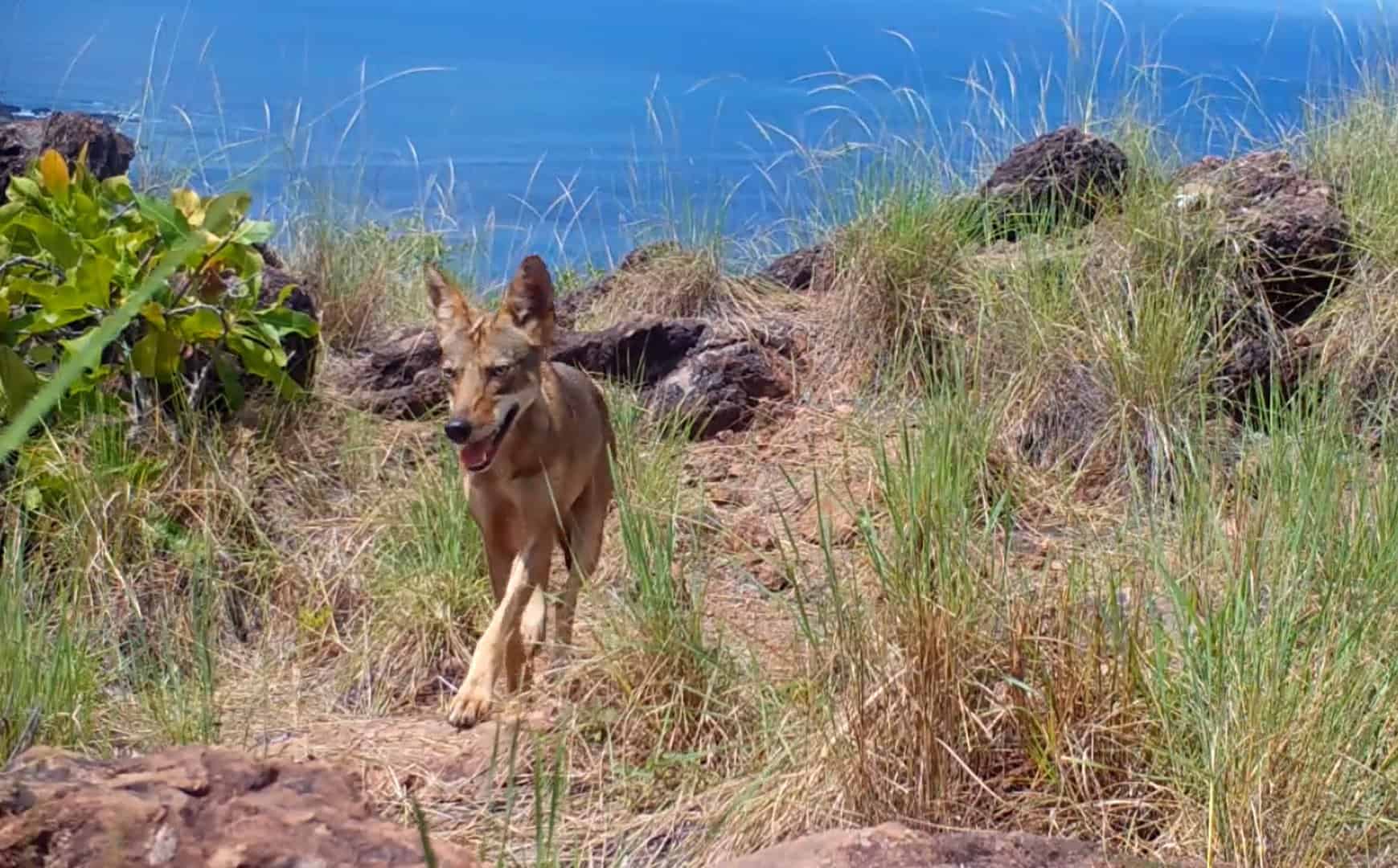
Don’t be upset that they’re skinny. They’re long-distance running athletes.
This is another animal that is very widely distributed throughout Costa Rica, and for reasons similar to the white-faced monkey, they eat a wide variety of food. If an animal’s diet can consist of more than a thousand different things, it can probably find a decent percentage of those items in about a hundred different habitats.
That is to say, if you eat everything, you can live just about anywhere. And that’s the deal with the coyotes; they’re omnivores. Which means they’ll eat: deer, raccoons, opossums, birds, snakes, turtles’ eggs, birds´ eggs, just eggs in general, fruit, grass, bugs, live stuff, dead stuff, and sometimes plastic stuff.
If it smells like something that maybe can be eaten, they’ll eat it. So where can you find the mammals, birds, reptiles and amphibians that make up the coyote’s diet? Pretty much throughout the entire country including, surprisingly, parts of San Jose and downtown Cartago.
Just because they’re willing to dine on just about anything doesn’t mean a full day’s worth of food comes easily. Coyotes cover large distances in search of something to eat. A study by biologist Kevin Lloyd from the Universidad Nacional investigating coyotes in northern Guanacaste found coyotes averaged several kilometers per day with a maximum of 40 kilometers in one day. In the same study, he tracked an individual coyote that covered an astonishing 450 kilometers in one month’s time.
If you’re busting out 40-kilometer days on the regular (just 2km shy of a marathon), your body is going to reflect that level of fitness. Meaning, coyotes are not fat. They come in at 8 – 15 kilograms or 17 – 33 pounds.
When most people think about coyotes, they picture something very similar to a domestic dog. Which is great, but if you’re picturing a rottweiler, you’ll be disappointed. It more closely resembles the skinny medium-sized dog sitting in the plaza of literally every town in Costa Rica. So don’t be surprised if one of your first thoughts when you actually see one is – Oh, neat a coyote! Wow, it’s skinny!
When I see coyotes in the wild, it feels more like they were out doing something and ran into me rather than the other way around. While checking cameras in the forest, I move at a slow and steady pace. I need to make sure I’m not stepping on snakes, bumping into wasp nests or grabbing a nice handful of a spikey tree.
The coyotes on the other hand are often moving at a steady trot, covering kilometers, looking for their next meal. The typical encounter is usually me bumbling around doing something, when they come trotting up a trail towards me. When we notice each other, we all freeze in surprise and then they run away.
I record coyotes frequently on my camera traps. Sometimes it’s a single individual, but more often than not it’s a pair or a pair with their current crop of juveniles.
In most videos they’re doing the business of what’s been described above – jogging steadily along in search of their next meal, chasing down a prey item or like on one occasion in Guanacaste, biting off the strap of my camera trap and playing with it like a puppy.
Please enjoy the following video of coyotes doing coyote things.
About the Author
Vincent Losasso, founder of Guanacaste Wildlife Monitoring, is a biologist who works with camera traps throughout Costa Rica. Learn more about his projects on facebook or instagram. You can also email him at: vincent@guanacastewildlifemonitoring.com