

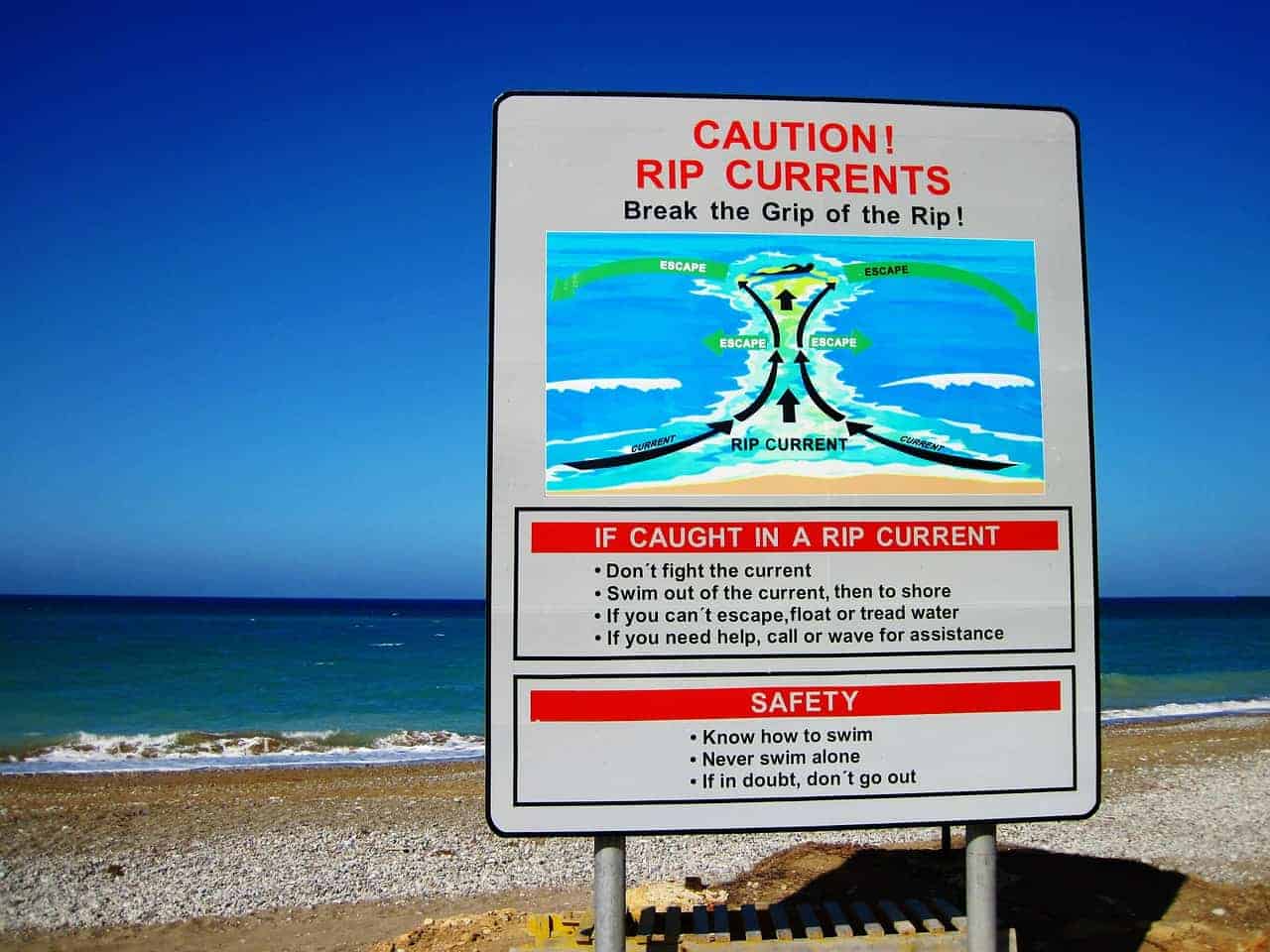
Rip currents (more commonly known as rip tides or undertows) are one of the most dangerous and ubiquitous members of Costa Rica’s beach communities. While many factors, including weather, alcohol and misinformation, contribute to ocean-related deaths, the root of most tragedies is rip currents.
Costa Rica recently established a National Lifeguard Corps, but many popular beaches remain unlifeguarded. Before entering the ocean in Costa Rica (or anywhere) it is necessary to have a basic understanding of rip currents. Ninety percent of Costa Rica’s 150-200 annual drowning deaths occur in just 30 of Costa Rica’s 600-some beaches, and 80% of those who drown were caught in a rip current.
With a little understanding of how the currents work, however, you can more safely enjoy the ocean.
What is a Rip Current?
Rip currents form when there is an influx of water brought to the shore by waves. The accumulated water then seeks or creates a channel back to the sea in the area with the least resistance, usually between sand bars or at the deepest part of the ocean floor. This forms a current that acts like a swift river flowing away from shore at up to 7 mph – faster than an Olympic swimmer.
The rip current consists of three parts:
- The feeder current
- The neck
- The head
The feeder current runs parallel to the beach and is the source of the outgoing water. To gauge if you’re in a feeder current, you need to note landmark beach locations to keep orientated. If you thought you were stationary and suddenly find yourself 100 feet down shore, you could be in a feeder current.
At the beginning of the channel back to sea starts the “neck,” which can be in water as shallow as your knees. If you feel the current pulling you out and you can touch bottom, walk parallel to the beach, jumping forward with each wave. If the surf is rough, turn sideways as the waves come in so as not to lose balance. Keep moving until you’re out of the current.
If you can’t touch, make sure you can float by arching your back, tilting your head back and pointing your nose in the air. Then, without panicking, let the neck pull you out to the head, which is where the current dissipates.
This is generally just beyond the breakers. Once out in more tranquil waters, swim calmly back to shore at a 45-degree angle around the neck to avoid being pulled back into the same current. Then you can ride the waves in. The key is remaining calm.\
Whatever you do, DO NOT ATTEMPT TO SWIM AGAINST THE CURRENT. This will only tire you out and cause more panic, which lower your chances of getting out easily.
How to Spot a Rip Current in Costa Rica
Rip currents may look like muddy rivers flowing away from the shore. If the ocean is rough with surf, there may be foam along the neck and head. Another warning sign is if there are areas where waves don’t break and are surrounded by breaking waves. Near hard, white-sand beaches the currents may be harder to see.
Always be wary when near a river estuary. A good test is to throw a buoyant object into the water and see where the current takes it. And as always, it’s a good idea to ask around locally to ascertain the dangers of local beaches. Remember, some beaches are frequented by surfers because the rip currents help them get out to the breakers; people in the water doesn’t necessarily mean that the area is safe.
What are the Types of Rip Currents in Costa Rica?
There are four main types of rip currents.
- A type-1, or fixed rip, is usually found near man-made structures that alter the natural wave pattern is altered.
- A type-2, or flash rip, is a short-duration, unpredictable current influenced by surf conditions.
- A type-3, or permanent rip, is focused around structures or river estuaries.
- A type-4, or traveling rip, is formed on long, open beaches and travels with the prevailing wave direction.
These currents can be aided by the tide. Local lifeguards recommend giving an hour before and after high tide to let the currents calm a bit. Information on tides can be found in the newspaper and through local residents. Ask around.
The University of Costa Rica (UCR) publishes tide forecasts on its website, and via iPhone and Android apps.
Keep this information in mind before going for a swim or hitting the waves in Costa Rica. Knowing how to recognize and handle these currents can make your stay more enjoyable and safe. This article first appeared in 2020





