

Colombian pilot Juan Salazar has gone from fighting the FARC guerrilla in his country to selling homemade bread in Panama as he faces the economic crisis caused by the coronavirus.
Salazar, who at three years old already knew he wanted to be a pilot in the Colombian army, still remembers the war and the moments when he had to transport ex-presidents Álvaro Uribe and Juan Manuel Santos by plane.
But now, at 40 and with two daughters, he has had his contract temporarily suspended at the Panamanian commercial airline for which he works.
“With the pandemic, I was going crazy at home doing absolutely nothing. Being here still made me angry, frustrated me, I didn’t know what to do,” Salazar told AFP.
Despite the uncertainty, Salazar decided to temporarily change his profession from pilot to baker — an area in which he had no prior experience.
With the help of his wife, Diana Carolina Montero, and a small oven, Salazar now makes pandebono, a bagel with a mixture of cheese and crispy starch on the outside that’s soft on the inside.
On his best day — taking orders through social networks — he sold 46 pounds of the traditional bread in Panama City.
“The pandemic has taught me not to stop believing that you can do something else,” says Salazar. However, despite his success, he warns: “It may be a spectacular business, but what I really want is to fly.”
In Costa Rica, a musician turned mechanic
Salazar’s story is repeated throughout Central America, where COVID-19 has caused more than 4,000 deaths and more than 160,000 infections in a region already punished by poverty and violence.
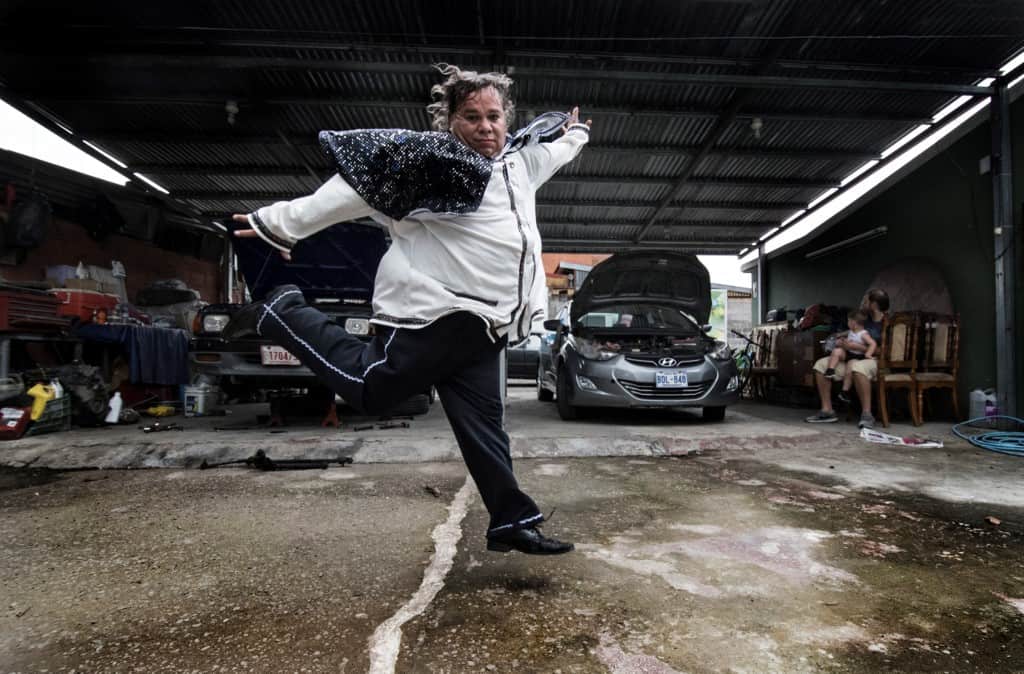
In Costa Rica, Alberto Lizano has gone from singing in bars and parties as a Juan Gabriel cover artist to changing tires and checking spark plugs as an assistant at a car shop.
Lizano, 48, once toured all of Costa Rica with his singing show dressed in extravagant costumes. But that changed when the coronavirus arrived.
“I had scheduled dates and suddenly they started to be canceled. I had dates in Jacó, in San José, in many places and they all canceled them,” recalls Lizano, popularly known as the “Juan Gabriel Tico.”
The bars where he used to sing were among the first places to close due to the pandemic. Finding himself without income, he first began working with a sister who makes crafts with discarded tires, with which they created figures of birds and other animals.
But that business didn’t last long either, and to survive he resorted to an old trade.
“I had once been a mechanic, so now I could dedicate myself to that,” says Lizano, who thinks longingly about the day when he will be able to revive his famous character.
From footballer to milkman
In El Salvador, Carlos Aparicio, 34, is a talented soccer player who had made a living with clubs FAS, Alianza, Chalatenango and Sonsonate. But the virus has suspended competitions.
In response, Aparicio and his wife, Danella, created a small business to sell dairy, honey and chocolate.
Danella, a publicist who has also been affected by the crisis, is in charge of obtaining the product, and Carlos is responsible for making home deliveries.
“It is a totally different routine, because one is used to living on the pitch all the time, but the pandemic imposed a new destination on us, and now I am delivering to the doorstep of houses,” Aparicio says.
The couple, with three children in their care, admits that at first they had to overcome the fear of simply going outside and interacting with others. They now use masks, gloves and disinfectants as biosecurity measures.
Despite initial doubts, Danella is clear: “It is a very intense experience. We started the pandemic in debt, and now we live calmly in chaos, because at the end of the day we have food, we pay our children’s schools and we can pay the bills.”





