


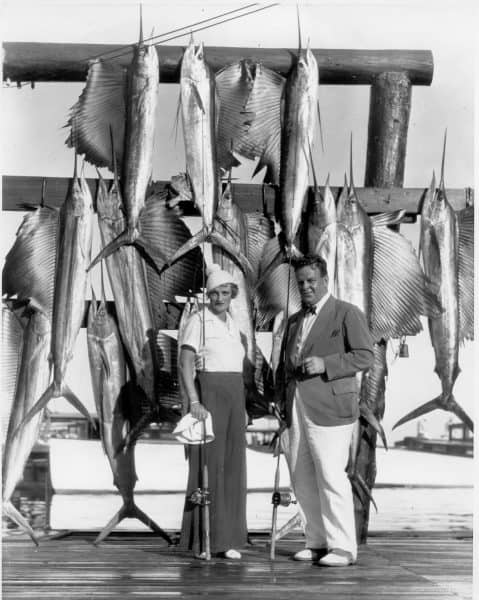
Did you know the picture above is now illegal in Costa Rica?
Ten years ago a regulation made it illegal for the sports fishing sector to take a billfish, sailfish and marlin, out of the water for a “hero shot” photo of their prized catch.
The web is full of photos that could potentially bring a 2 million colones fine ($3,250) to the offender who pulls a billfish out of the water. To date, I don’t know of anyone who has ever been arrested or prosecuted on this. In fact, after all these years, many still claim they don’t know about the law.
Not everyone agrees with it either.
Many charter captains feel it diminishes their chance to attract new business. When potential clients see happy people holding big fish, they want to do it too. Many tourists are not aware of the law and crews, who rely on tips, don’t want to disappoint them.
It seems that some people have appointed me the billfish cop and when a hero shot shows up on social media, someone sends it to me. I usually send a message to the person who posted the picture, explaining the law. Sometimes I get a thank you note, sometimes I get responses I couldn’t possibly print here.
While hero shots are all over the internet, they’ve been around for decades. They started with old black-and-white photos of multiple fish nailed to a board at the dock or a huge hanging marlin.
Eventually, it was decided it was even better to leave the fish in the water.
People think a couple of minutes out of the water is not harmful to the animal, but any amount of time out of the water is bad for the fish. It stresses the fish and removes the protective slime by dragging it onboard, making them susceptible to life-threatening bacteria.
It’s still possible to get a good hero shot without taking the fish out of the water. First, whoever was taking the photo should know how to operate the camera. I’ve seen many wasted minutes while a tourist fumbles with a fish and a crewmember fumbles with a new camera.
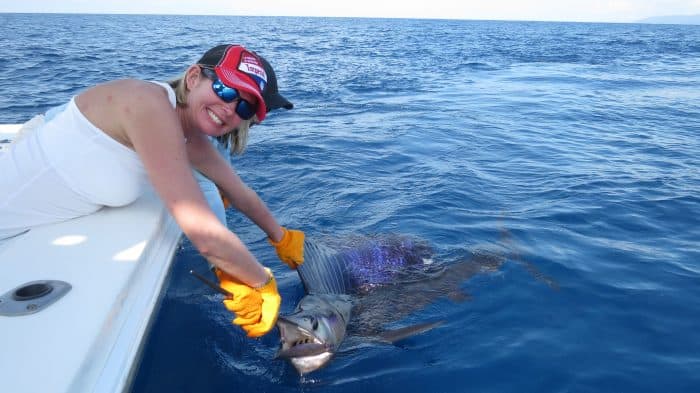
You can also give the client gloves so they can grab the fish by the bill. That way they can get a picture with a fish while it’s still in the water. The client can lean over with a big smile while someone snaps a few pictures. Then the fish can be safely released with minimum stress. This is more easily accomplished if the side of the boat is not very high off the water.
I think ego drives a person to get the photo with them up close and personal with a prized fish. I have certainly lifted my fair share of billfish out of the water, but after 10 years of not lifting one out, I have changed my mind.
New technology has given us something better than a hero shot.
Today almost everyone walks around with a high-resolution camera capable of video in their pocket. There are also Go-Pros or similar products that can be operated by remote or voice control. Clip one on to your canopy and you have a great view of the entire stern of the boat. Some of the best fishing videos and still pictures I have seen were taken from devices like the one we carry in our pockets.
I now personally think it is much more impactful to show your friends just how exciting these fish are to catch. An action video of your fish dancing across a cobalt sea is very impressive. It doesn’t have to be long, usually 15 to 30 seconds will tell the story. Try to get at least a few seconds of the angler on the rod or line screaming off the reel and your friends will think you are a pro.
So once again I remind anglers, in Costa Rica it is illegal to remove a billfish from the water by sport fishing enthusiasts. Commercial fishermen are allowed 15 percent incidental catch on sailfish.
Not everyone has the same opinion and Capt. Skip Smith, who is a world class captain and writer who now fishes in Quepos voiced his opinion on what is more harmful to billfish. You can read his article over at Marlin Magazine.
Todd Staley has run fishing sport operations on both coasts of Costa Rica for over 25 years. He recently decided to take some time off to devote full-time to marine conservation and is the communications director at FECOP. Contact him at wetline@hotmail.com.
This story was made possible thanks to The Tico Times 5 % Club. If only 5 percent our readers donated at least $2 a month, we’d have our operating costs covered and could focus on bringing you more original reporting from around Costa Rica. We work hard to keep our reporting independent and groundbreaking, but we can only do it with your help. Join The Tico Times 5% Club and help make stories like this one possible.





