

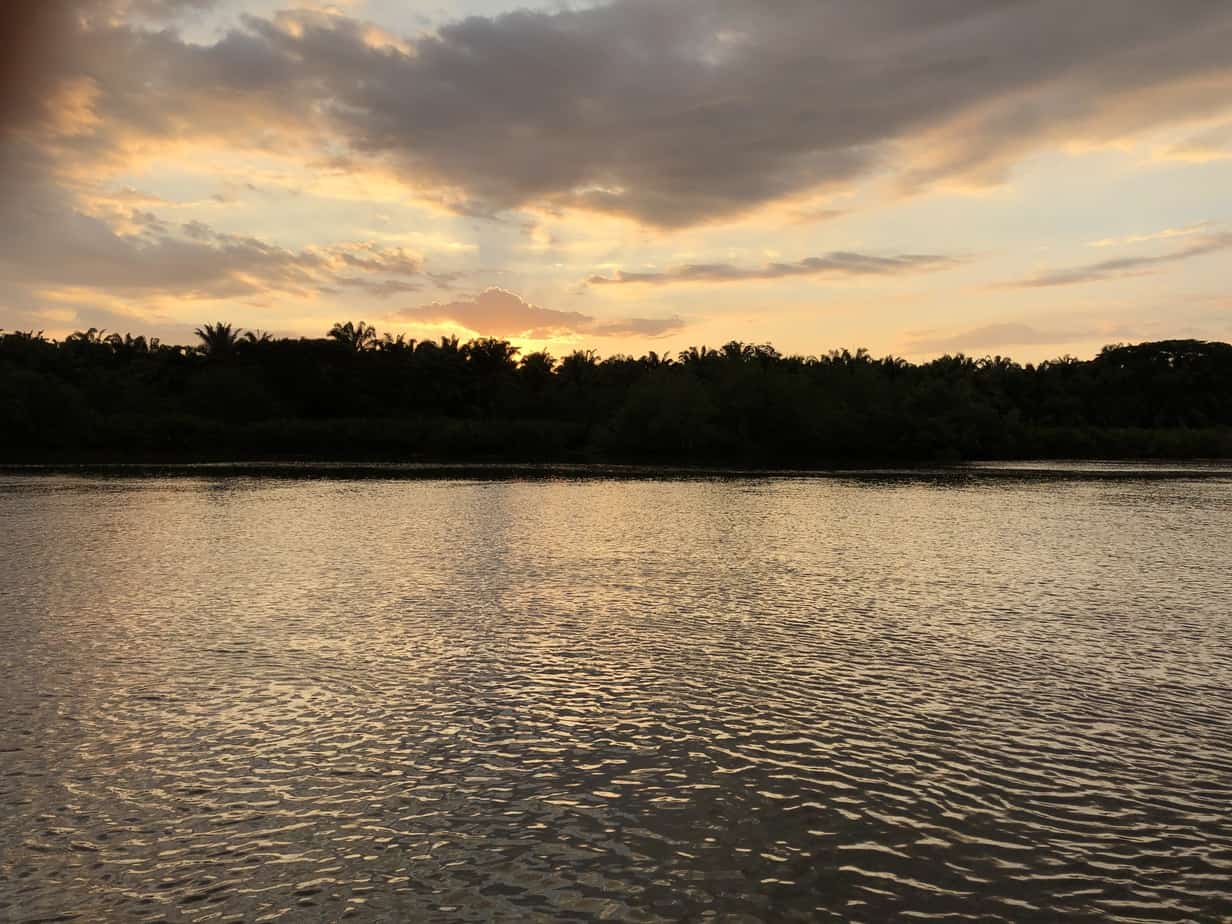
A company promoting an artificial intelligence data center in Limón plans to build it on land that official records show contains wetlands, forest cover, a protected aquifer zone and areas prone to flooding. The project, marketed as the Quantum AI Free Zone Campus, is backed by Quantum Development Inc. It would occupy a property of roughly 40.5 hectares (about 100 acres) in the central area of Limón.
Three wetlands listed in the 2018 National Wetlands Inventory of the National System of Conservation Areas (SINAC) lie within the property, according to resolutions issued by the National Environmental Technical Secretariat (SETENA). They include a flooded forest dominated by palms, a yolillo palm swamp and a herbaceous marsh.
SETENA flagged the issue as early as October 2020. In the resolution, the agency barred any earthworks, tree cutting or construction on the site until SINAC officially mapped the wetlands’ boundaries and issued an express technical opinion. SETENA had granted the developer environmental approval in 2018 for basic site preparation across 19 subdivided lots, covering streets, drainage, fill work, fencing and a wastewater treatment plant.
That approval did not include any buildings and it also required the company to fully conserve a yolillo swamp, a type of flooded palm forest native to Costa Rica’s Caribbean lowlands and mark its boundaries in coordination with SINAC. Records in the National Territorial Information System (SNIT), managed by the National Geographic Institute, show mature and secondary forest on parts of the land outside the wetland areas, based on the 2023 forest cover registry. The southern edge of the property borders the Limoncito River.
Part of the site also falls within flood-prone areas mapped by the National Emergency Commission (CNE). SETENA placed the property within Zone 3 of the Limón-Moín aquifer vulnerability study conducted by the national water utility, AyA. The northern section of the land lies inside an aquifer reserve belonging to that same system.
The permitting record shows repeated friction. In January 2021, the company submitted a SINAC opinion and a revised design that removed works from the yolillo areas. SETENA found that the opinion addressed only the yolillo wetland and not the other two, and in February 2021 it denied permission to begin construction.
Quantum appealed, and SETENA accepted the appeal in June 2021, ruling that the outstanding clarifications should be requested directly from SINAC. In August 2021, the agency again ordered the company to refrain from earthworks, tree removal or construction until the La Amistad Caribe Conservation Area and the SINAC National Wetlands Program issued an express ruling.
Whether SINAC has since issued that ruling has not been publicly confirmed. The project has also lost its tax incentives. The Ministry of Foreign Trade (COMEX) removed Quantum Development Inc. from Costa Rica’s free zone program, which grants tax breaks to qualifying investors, through a resolution dated May 15, 2026. The company had held free zone status since 2018 and the reason for the revocation has not been made public.
The Municipality of Limón promoted the start of the campus on social media. Mayor Ana Matarrita McCalla has said her administration began in May 2024 and that she would need to review the municipal legal archives on the matter, noting that Néstor Mattis was mayor when the earlier environmental resolutions were issued.
Representatives of Quantum Development Inc. have not publicly responded to questions about the environmental history of the property or the loss of its free zone status. The case comes as Costa Rica works to attract data center and technology investment while wetlands remain legally protected ecosystems. Any construction on the site will depend on whether regulators clear a project on land where government records identify wetlands, forest and flood risk.





