

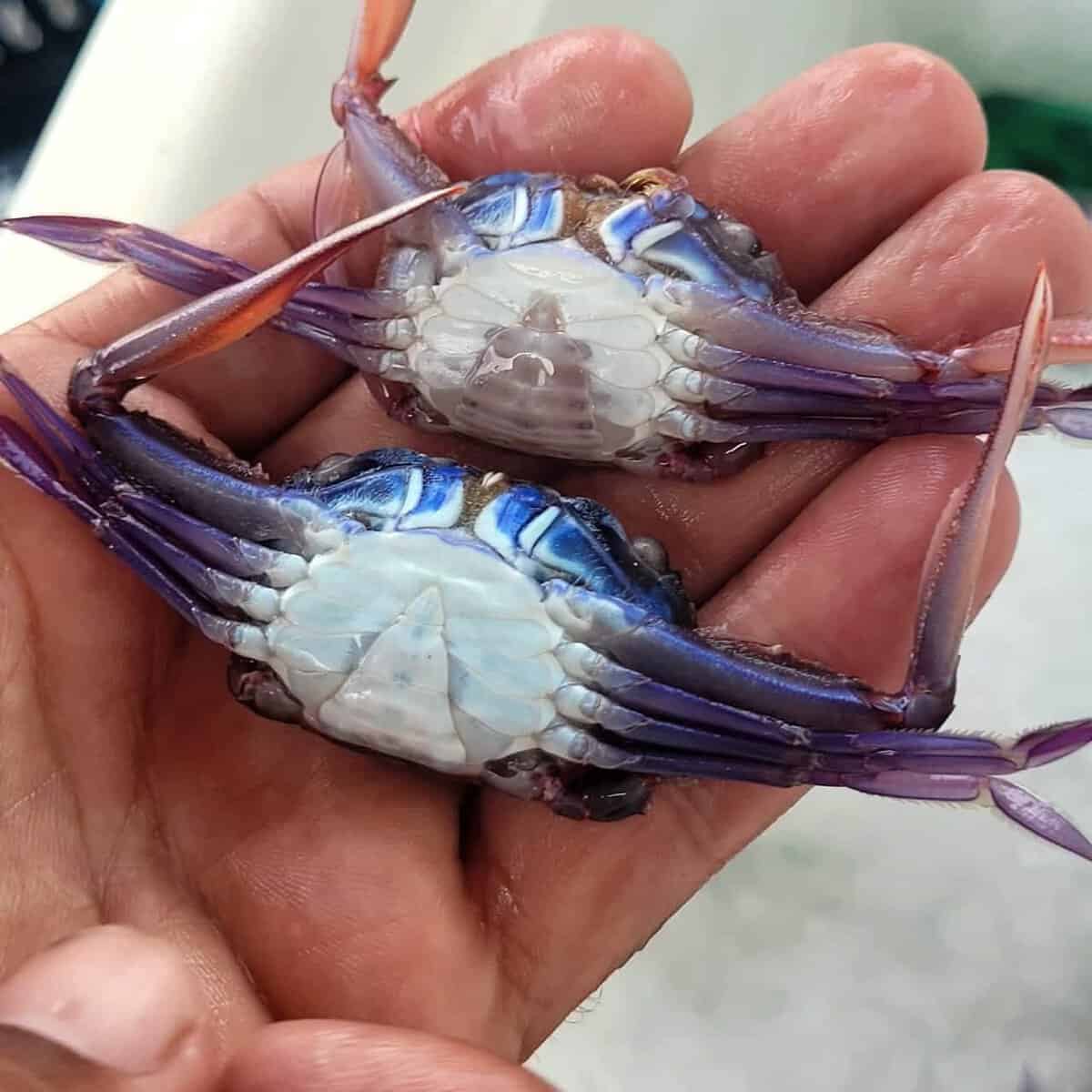
Scientists may have found an explanation for the mysterious mass deaths of crabs that washed ashore along several popular beaches in Guanacaste last month. Researchers from Costa Rica’s National University (UNA) found unusually warm ocean water in the Gulf of Papagayo, along with signs that the crabs had less food available. Combined with winds, currents and waves, those conditions may have weakened the animals and eventually pushed them toward shore.
One measurement in particular stood out. At a depth of 48 meters (157 feet), researchers recorded a water temperature of 26.39°C (79.5°F). That was approximately 9°C (16°F) warmer than measurements taken during the same period in previous years. The findings follow reports in August of large numbers of dead and dying pelagic swimming crabs, known scientifically as Euphylax dovii and known here locally as jaiba mora, appearing along Guanacaste’s Pacific coast.
The unusually warm water is now considered one of the main factors that may explain what the crabs experienced before reaching the coast. Johanna Rojas, of UNA’s Water Resources Center for Central America and the Caribbean (Hidrocec), said the available evidence points to several factors working together, including unusually high temperatures at depth, changes in the water column and reduced food availability.
Winds, currents and waves may then have pushed already weakened crabs toward shore. Taken together, scientists believe these conditions may have depleted the animals’ energy reserves and made it more difficult for them to swim and remain in favorable waters. However, researchers emphasized that they still do not have a definitive explanation for the mass deaths.
Monitoring was conducted in August off Playa Ocotal, Playa Potrero and Calzón de Pobre in the Gulf of Papagayo. Specialists examined water temperature, salinity, oxygen, pH and phytoplankton, among other conditions. They found low concentrations of chlorophyll-a and phytoplankton, which scientists use as indicators of biological productivity in the ocean.
In basic terms, there appears to have been less food available within the marine ecosystem. Researchers said the increase in ocean temperature, associated with El Niño conditions, may have altered that productivity and reduced the amount of food available to the crabs.
The research was conducted by specialists from Hidrocec and UNA’s Marine Phytoplankton Laboratory at the School of Biological Sciences, in collaboration with the Costa Rican Institute of Fisheries and Aquaculture (Incopesca). Scientists also detected low concentrations of Pyrodinium bahamense, a microalgae species that can be associated with toxic events.
However, researchers said its presence alone is not evidence that it caused the crab deaths. Rojas cautioned that detecting a species associated with toxicity does not automatically mean it was responsible for a mass mortality event. The evidence collected so far does not support identifying the microalgae as the cause.
Scientists say continued monitoring will be necessary to better understand how changes associated with El Niño affect marine species along Costa Rica’s Pacific coast. They particularly want additional measurements from deeper water to better understand what happened and rule out other factors that could have contributed to the deaths.
For now, the evidence points toward a combination of unusually warm deep water, reduced food availability and ocean conditions that may have left large numbers of crabs too weak to remain offshore.





