Playa Dominical has a well earned reputation as one of Costa Rica’s premier surfing spots. Its powerful and consistent beach break draws riders from all over the world. It regularly hosts stops for the official Costa Rican Surf Federation National Surf Circuit (Circuito Nacional de Surf) and also has its own highly competitive local tourneys.
It is also one of Costa Rica’s most dangerous beaches, with violently crashing waves, hazardous rips, and a topography underfoot that goes quickly from shallow to deep. The Rio Baru empties into the sea at the north end of the beach, adding to the turbulent mix. While experienced surfers navigate the challenging conditions, the ocean is not forgiving to those who venture in unprepared.
In the first half of the 1990s, Dominical averaged a startling twenty drownings per year. An untrained samaritan attempting to rescue a swimmer caught in the merciless rip sometimes resulted in a double tragedy.
As Dominical’s popularity grew throughout the 1990s, a small group of foreign residents – all California natives immersed in the surfing culture– decided to take action. The solution was evident: There was a clear need for trained lifeguards to stand watch and be ready to rescue swimmers unable to return to shore.
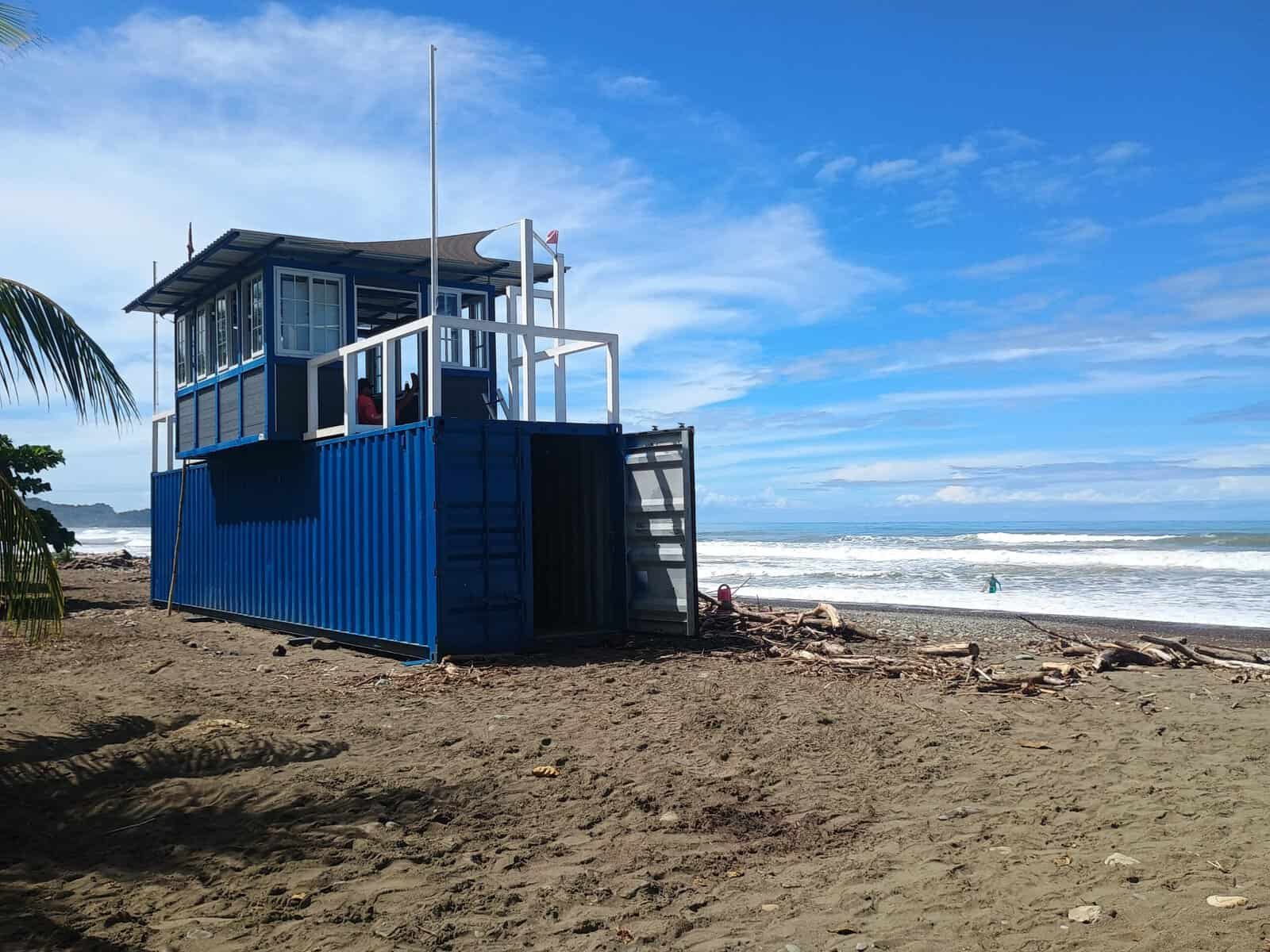
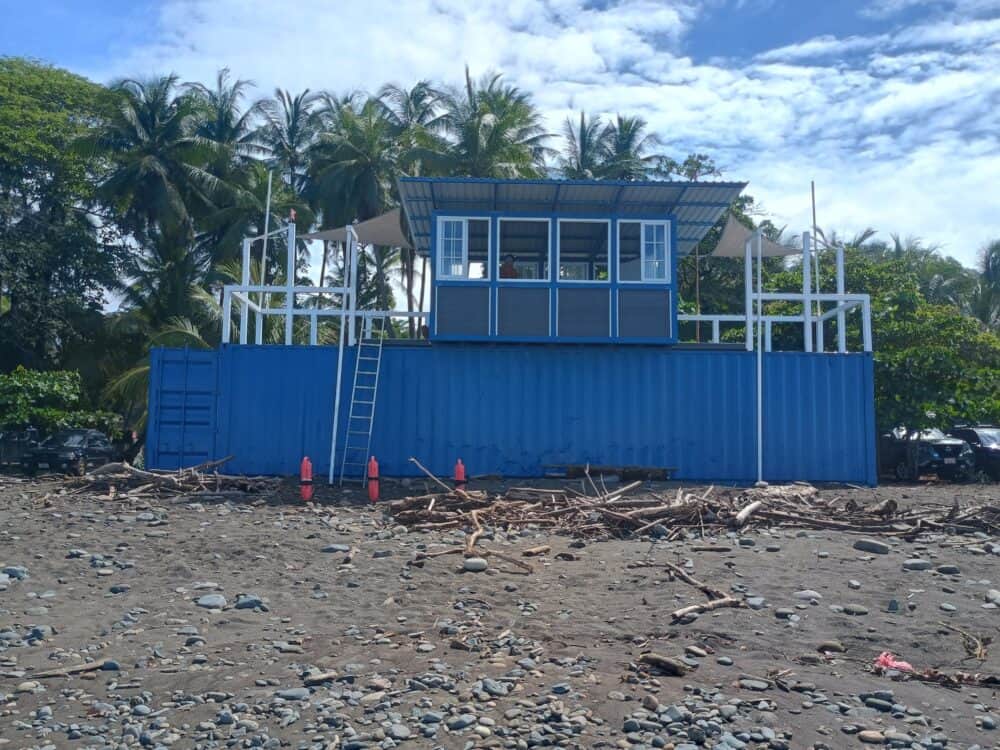
A search was made and in December, 1996, a veteran beach lifeguard arrived from the states, and the first professional lifeguard program in Costa Rica began. A team of eight longtime local Dominical area residents was trained and began manning shifts from the newly constructed lifeguard tower.
For the next five years, the program was kept afloat mainly through private donations. Beginning in 2002, an annual July 4th fundraiser was held to raise money for paying salaries of the workers and maintaining the necessary equipment. The beachfront Roca Verde Hotel hosted the event for many years and the community came together for a day of revelry and came through time after time with sufficient money to keep the lifeguard program afloat.
And with good reason: The number of annual preventable drownings in the areas patrolled was now zero. In the thirty years since the seeds of the idea were planted, the program has been active for all but a couple– there was a year with no captain, which led to some disorder, and then covid. For the first twenty years there was zero help from any branch of the government.
All of the necessary steps were taken to obtain assistance. A corporation was formed, paperwork was completed, and despite the obvious service that was being provided, it took several years for a response. Then briefly, between 2017-2022 there was help from the local municipality, which paid the salaries and caja for two full time lifeguards.
In 2024, with help from the muni suspended, it was time to seek out new sources. With the generous backing of a recent arrival to the area, the officially named Guardavidas Costa Ballena are now on full time watch. A new expanded and roofed guard building houses the workers. A second tower is up further down the beach.
Awareness has been raised. In 2025, over 200 people from throughout Costa Rica gathered at a hotel in Escazu. All were connected with various up and coming beach lifeguard programs.
In a country that sees between 150-200 drownings annually, many on beaches with challenging conditions, the fact that there have been no preventable drownings along the patrolled area for 29 years in Dominical is testament to the importance of having trained lifeguards on our beaches.
The ideal would be a Guardvidas Costa Ballena type organization patrolling every major beach up and down both coasts. The workstaff would be trained locals, paid a salary just as are the police and firefighters. The reality is far from the ideal: The bureaucracy crawls along indifferently, and the further you are from San Jose, the less help you should expect.
The example of Dominical is not to wait for the government to step in. The community stepped up, private donors made investments that benefit the area, and the trained lifeguards continue keeping the sheet clean with no preventable drownings in almost thirty years
Read more of Don Mateo’s writing from his newly published ebook.