

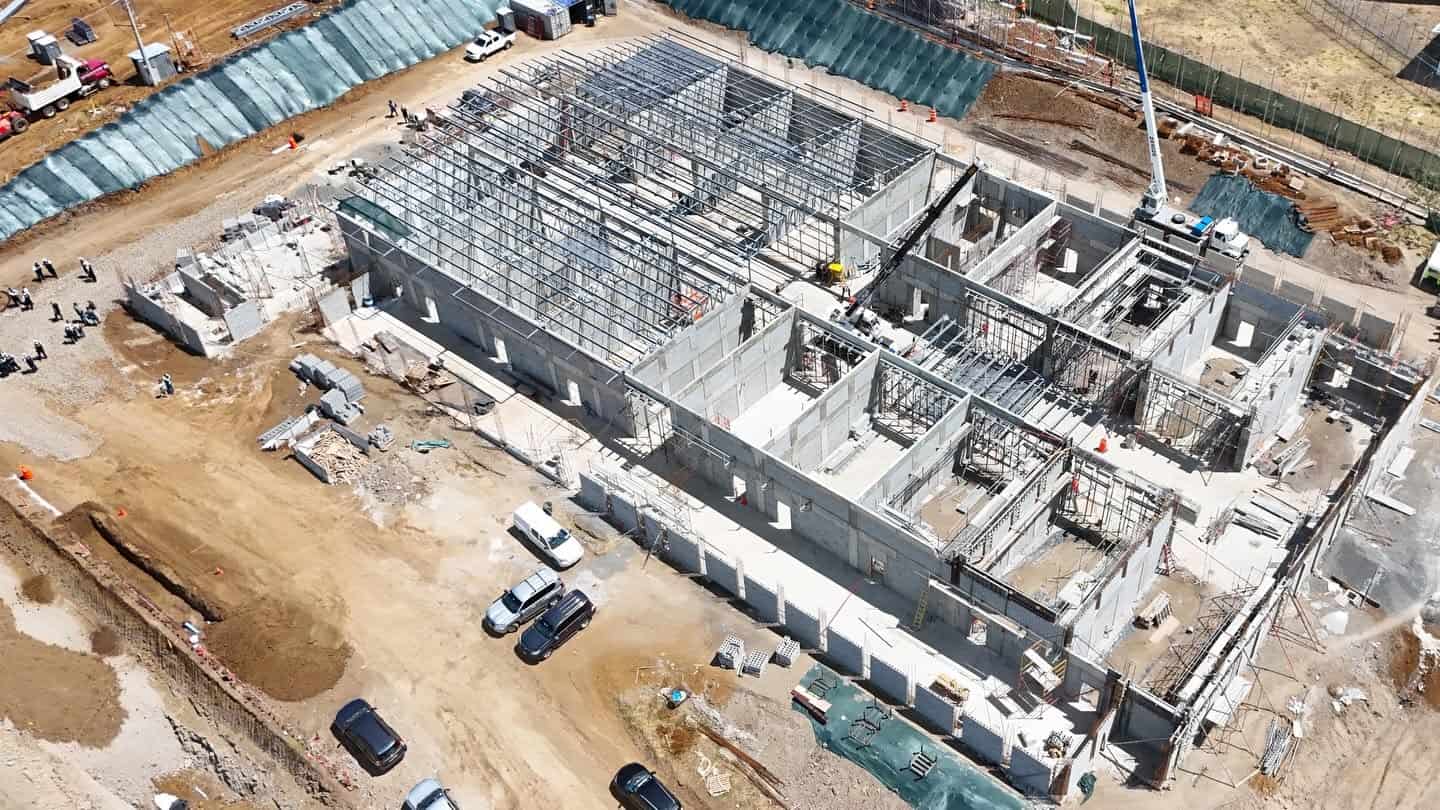
Costa Rica’s new high-security prison for organized crime suspects and convicted inmates will not be fully ready by the end of July, despite earlier government promises that the project would be completed this month. The Centro de Alta Contención contra el Crimen Organizado, known as CACCO, is being built next to La Reforma prison complex in Alajuela.
It has been promoted as the centerpiece of Costa Rica’s harder line against organized crime and prison overcrowding. Authorities now say the prison will be delivered in stages. The first two sections are expected to be ready by late July, while the remaining sections could be completed later, with full delivery projected around September.
That is a shift from the timetable promoted by former President Rodrigo Chaves and former Justice Minister Gerald Campos, who said during a January visit by Salvadoran President Nayib Bukele that the project would be completed in 195 days. That deadline falls on July 28.
Campos, who now serves as security minister, said the original timeline may have been too tight. He said the first two stages remain on schedule for late July, but the other sections could be finished later, allowing the entire facility to be delivered around September.
The government has also offered different figures for the project’s progress. Data from the Justice Ministry’s architecture inspection office placed physical progress at 54% in mid-June. This week, the government said construction had reached 64%. Current Justice Minister Gabriel Aguilar has defended the pace of construction, saying the work is moving according to the schedule provided by the construction company.
CACCO is designed to hold about 5,100 inmates in five independent modules. Officials say it will house people considered highly dangerous, including leaders of criminal organizations and inmates linked to drug trafficking, contract killings and other serious crimes.
The project is inspired in part by El Salvador’s maximum-security prison model, though Costa Rican officials have said it must be adapted to national law and constitutional protections. The Salvadoran government provided technical support for the design and security planning.
Costa Rica began pushing the prison project as homicides reached historic levels and authorities warned that criminal leaders were continuing to direct operations from behind bars. The government has argued that CACCO will help isolate high-risk inmates, increase prison capacity and reduce the ability of organized crime groups to operate from inside the prison system.
But the delay raises questions about when the prison will actually begin receiving inmates. Authorities have not yet announced a firm opening date or confirmed whether inmates will be transferred into the first completed sections while construction continues elsewhere in the complex.
The project has also become a political symbol. Chaves promoted the prison as proof of a tougher security policy, while President Laura Fernández has kept the project at the center of her administration’s crime agenda.
This week, Aguilar also announced that inmates assigned to CACCO will wear orange uniforms, a practice Costa Rica has not used in its prison system since the 1970s. The government says the uniforms will improve control inside the facility, make searches easier and reduce the internal trade of clothing.
The uniforms will be made by women inmates at the Vilma Curling prison, also known as El Buen Pastor, using materials donated by the private sector. Even once CACCO is completed, the prison is not expected to solve Costa Rica’s broader prison-capacity problem by itself. The system remains under pressure from overcrowding, rising detention levels and the growing number of inmates linked to organized crime.
For now, the government’s most visible security project remains a work in progress, with the first sections expected this month and the full facility likely pushed into September.





