

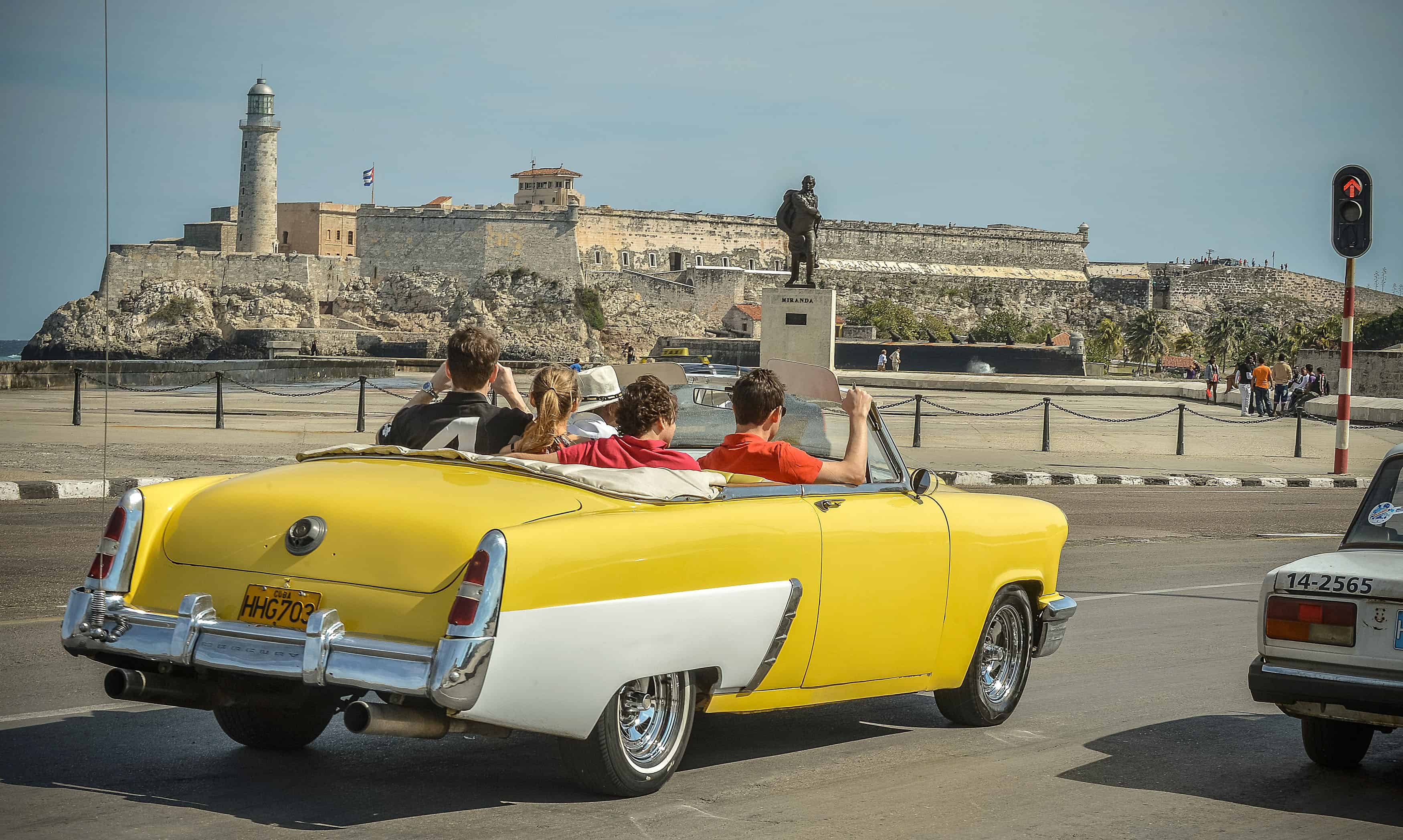
Cuba’s tourism industry is facing one of its sharpest collapses in decades, with visitor numbers plunging, major hotel brands pulling back, airlines cutting service and new U.S. sanctions adding another layer of pressure to an economy already strained by fuel shortages and rolling blackouts.
The signs are visible across the island. In Havana, international hotel brands that once symbolized Cuba’s tourism ambitions are now part of a broader retreat. In the beach resorts, properties that depended heavily on Canadian and European visitors are closing, reducing operations or being handed back to Cuban state-linked operators. What was once one of the Caribbean’s most important tourism markets is now fighting to stop a rapid decline.
The numbers show how fast the crisis has accelerated. Cuba received 328,608 international tourists between January and April 2026, a drop of 55.8% compared with the same period last year. The first quarter was also sharply lower, with arrivals down nearly half from 2025 levels. Canada, historically Cuba’s largest source market, has been one of the biggest losses, with travel demand falling as airlines and tour operators reduce exposure to the island.
Hotel occupancy has fallen across the country, and the impact is being felt most heavily in resort areas that were built around large all-inclusive properties. In Cayo Santa María, the closure of hotels operated by the military-linked tourism group Gaviota reportedly left more than 7,000 hospitality workers without regular employment. For an island where tourism has long been one of the few major sources of hard currency, the damage reaches well beyond hotels and airports.
The airline pullback has deepened the crisis. Air Canada and Russia’s Rossiya have suspended flights, while Sunwing Vacations and WestJet Vacations extended their suspension of Cuba operations until further notice. Other routes have become more difficult to maintain because of weak demand, operational costs and fuel concerns. Cuba’s jet fuel shortage has forced some carriers to use technical refueling stops outside the country, making flights more expensive and less attractive.
Hotel’s have been hit just as hard. Spanish chain Meliá, one of the most important foreign hotel operators in Cuba, announced it would stop managing, marketing and providing brand services for 15 of its 34 hotels on the island. Iberostar has also reduced its Cuban operations, while Canada’s Blue Diamond Resorts, which operates Royalton properties, has moved to exit or scale back its presence.
The immediate trigger for much of the corporate retreat is a new U.S. sanctions order signed on May 1. The measure increases legal risk for companies doing business with entities connected to GAESA, the Cuban military-run conglomerate tied to major parts of the island’s tourism, finance and commercial sectors. For foreign hotel companies, the problem is simple: many of Cuba’s best-known hotels are linked to state or military-controlled partners, leaving operators exposed to possible U.S. penalties.
The sanctions have also hit the payment system foreign visitors rely on. Cuba’s Central Bank said Visa and Mastercard transactions would be suspended starting June 6 after a foreign banking partner ended its relationship with Fincimex, a financial company linked to GAESA. That move removes one of the basic tools many travelers use to pay for hotels, restaurants, transportation and services while abroad.
The result is a tourism sector being squeezed from several sides at once. Fewer flights make Cuba harder to reach. Fuel shortages make operations more expensive. Power outages damage the visitor experience and create negative social media attention. Hotel closures reduce confidence among tour operators. Payment restrictions make travel more complicated. Sanctions raise the legal cost for foreign companies that stay.
Cuban officials have tried to project confidence. Prime Minister Manuel Marrero used the FITCuba 2026 tourism fair to promise continued investment and a stronger winter season. The government has also said it will allow Cuban investors at home and abroad to manage some hotels as international companies leave.
But the trend is moving in the other direction. Cuba’s tourism peak came in 2018, when the island received more than four million international visitors. Since then, the sector has been weakened by the pandemic, U.S. restrictions, a deep domestic economic crisis, energy shortages, inflation, poor service conditions and growing competition from other Caribbean destinations.
The collapse now unfolding is different because several failures are hitting at the same time. Cuba is losing visitors, flights, hotel partners, payment systems and confidence from the companies that once helped sell the island abroad.
For Cuba, this is not only a tourism problem. It is a foreign currency problem, an employment problem and a political problem. Tourism was one of the pillars of the country’s post-Soviet survival strategy. If the sector continues to shrink, the pressure on Cuba’s already fragile economy will only grow.
The hotels are closing. The flights are stopping. The payment systems are breaking down. And with every passing week, Cuba’s tourism industry looks less like a temporary downturn and more like a full-scale collapse.





